
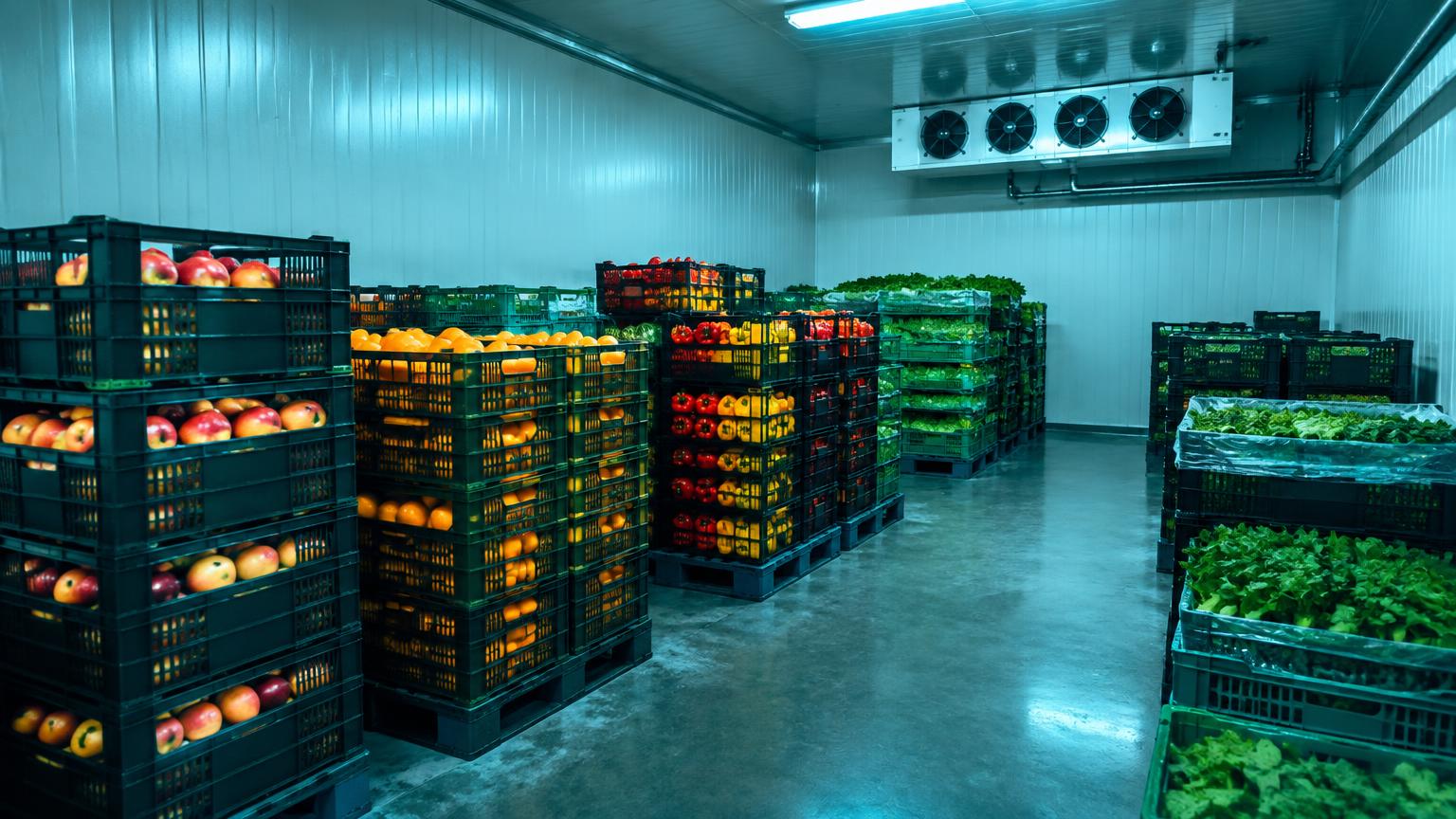
Quick answer
How growers, packhouses and exporters plan post-harvest cold storage: pre-cooling, temperature and humidity by crop, sizing, energy and supplier RFQs. It depends on the crop. Most temperate fruit and vegetables keep best near 0 °C at 90–95% humidity, while tropical crops such as bananas, mangoes and tomatoes need roughly 7–13 °C to avoid chilling injury. Check product-specific ranges before fixing room numbers.
Key takeaways
- What temperature should fruit and vegetables be stored at? It depends on the crop.
- Do I need pre-cooling as well as cold storage? For most fresh produce, yes.
- Can different crops share one cold room? Only if their temperature, humidity and ethylene requirements are compatible.
- How do I size a post-harvest cold store? Size for peak weekly intake, packing format, stacking height and storage duration, then size refrigeration for daily pull-down of warm product.
Reviewed: Oct 2026 · ColdMatch Group
Between a quarter and a third of fresh produce grown worldwide is lost before it reaches a consumer, and a large share of that loss happens in the first days after harvest. Field heat, slow cooling, the wrong humidity and mixed storage of incompatible crops shorten shelf life long before a truck leaves the farm. Post-harvest cold storage is therefore not a building purchase; it is the tool that decides how much of a season's work can actually be sold, and at what price. This guide explains how growers, cooperatives, packhouses and exporters plan a post-harvest cold store that pays for itself, and how to turn that plan into a request that suppliers can quote accurately.
Short answer: remove field heat fast with pre-cooling, store each crop at its own temperature and humidity, size rooms for peak harvest rather than average volume, design for your climate and power supply, and compare suppliers on energy use and service — not just equipment price.
Why the first hours matter most
Fresh produce keeps respiring after harvest. Respiration produces heat and consumes sugars, water and flavour, and its rate roughly doubles or triples with every 10 °C rise in temperature. A crop picked at 30 °C and left in the shade for a day can lose more shelf life than it will lose in a week of correct cold storage. That is why serious post-harvest operations separate two jobs: pre-cooling, which pulls field heat out quickly, and holding storage, which keeps the product stable afterwards.
Pre-cooling methods include forced-air cooling, where fans pull cold air through pallet stacks; hydrocooling with chilled water for crops that tolerate wetting; vacuum cooling for leafy greens; and package icing for some vegetables. Forced-air cooling is the most versatile choice for mixed operations. A room that is designed only for holding cannot remove field heat fast enough, so one of the most common buyer mistakes is to order a large holding room and expect it to pre-cool.
Temperature and humidity by crop
There is no single correct storage temperature for produce. Apples, grapes, berries, leafy greens, carrots and most temperate crops store best close to 0 °C with high relative humidity of 90–95%. Tropical and subtropical crops such as bananas, mangoes, avocados, tomatoes, cucumbers and peppers suffer chilling injury at low temperatures and need roughly 7–13 °C depending on crop and ripeness. Onions and garlic want cold but dry air, while potatoes need different conditions for seed, table and processing use.
Ethylene adds another layer. Crops such as apples, bananas and tomatoes release ethylene, while lettuce, broccoli, kiwifruit and many flowers are damaged by it. Storing them together accelerates yellowing and softening. A practical facility therefore has several rooms or zones rather than one large chamber. Our storage temperature chart lists recommended ranges by product and is a good starting point before you fix the number of rooms.
Sizing for the harvest peak
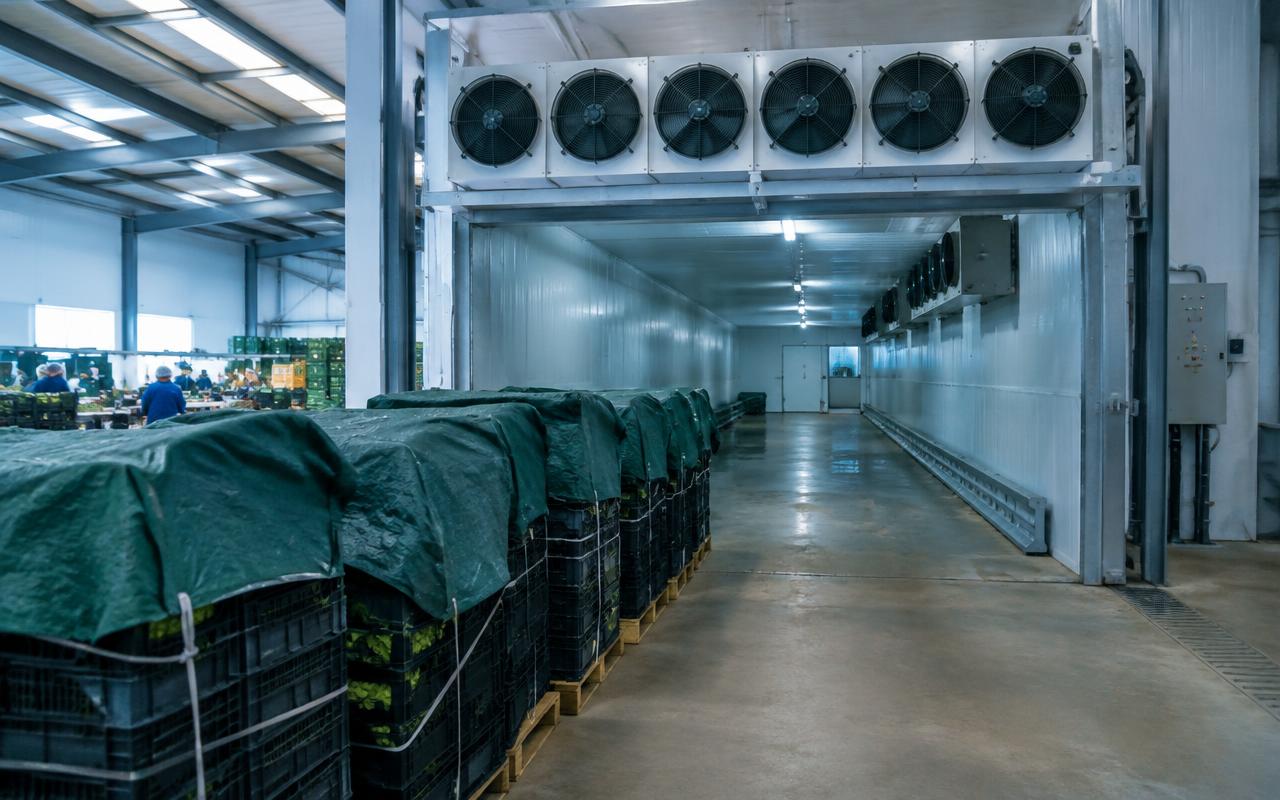
Rooms should be sized for the busiest weeks of the season, not for the annual average. Start from expected tonnage per week at peak, packing format (bins, crates or pallets), stacking height and the number of days product will stay in storage. Add space for aisles, quarantine and growth. The cold room size calculator converts volume into room dimensions, the facility sizing calculator helps when several rooms and a packhouse are involved, and the cooling load calculator estimates the refrigeration capacity needed for daily loading and product heat.
Underestimating the daily intake is the second classic mistake. A room can hold 500 tonnes comfortably and still fail if 120 tonnes of warm product arrive in one afternoon. The refrigeration plant must be sized for pull-down, not only for holding.
Climate, power and rural sites
Many agricultural cold stores sit far from strong grids. Hot climates raise condensing temperatures and energy use; unstable power can trip compressors and leave rooms warming overnight. Buyers in these conditions should ask about wide-voltage equipment, soft starters, generator backup sized for refrigeration, thermal storage and solar contribution. The backup generator calculator helps size standby power, and the electricity cost calculator shows how tariff and climate affect running cost over a year.
Insulation matters more in hot regions. Thicker panels, insulated floors, rapid doors and loading-dock seals reduce the heat load that the plant must remove every hour. Each of these items may appear as an option in one quotation and be missing from another, which is why scope must be written down before prices are compared.
The business case
A post-harvest cold store earns its return in three ways: lower losses, longer selling windows and access to buyers who require cold-chain evidence, such as supermarkets and export markets. Storing a crop for a few extra weeks can move sales out of the harvest glut into a better price period. The fruit and vegetable cold storage ROI calculator estimates the payback from reduced losses and better timing, and the cold storage OPEX estimator adds energy, maintenance and staffing so the business case reflects real operating costs. For budget ranges, use ColdMatch's cold storage cost guide, which draws on the site's published cost baseline.
What to include in your supplier request
- Crops, varieties and intended storage duration for each.
- Peak weekly intake and daily loading pattern.
- Required temperature and humidity per room, and any ethylene control.
- Pre-cooling method and target cooling time.
- Packing format, stacking height and handling equipment.
- Site location, design ambient temperature, power supply and backup expectations.
- Packhouse, grading or ripening rooms if included.
- Installation, commissioning, training and local service expectations.
- Timeline before the next harvest and budget band.
The RFQ builder guides you through these points and the RFQ readiness check highlights what is still missing.
Common mistakes to avoid
- Storing everything at one temperature: it is simpler to build but damages chilling-sensitive crops and wastes energy on hardy ones.
- Ignoring humidity: low humidity causes weight loss and wilting; every percentage point of water lost is product you can no longer sell.
- No ripening or ethylene control: for bananas, avocados and mangoes, controlled ripening rooms turn storage into a value-adding step.
- Building too late: refrigeration equipment, panels and installation crews have lead times. A project started two months before harvest often misses it.
- Skipping training: operators who understand loading patterns, door discipline and defrost cycles protect quality more than any extra kilowatt of capacity.
Where ColdMatch fits — and where it does not
ColdMatch Group focuses on the cold chain: pre-cooling, cold rooms, controlled storage, refrigeration plant and the infrastructure around them. Seed sourcing, animal feed, aquaculture and hatcheries are handled by the specialist sister platforms of Global B2B Group — SeedMatch, FeedMatch, FishMatch and HatchMatch. For post-harvest projects from USD 250K upward, a ColdMatch specialist reviews your request, prepares a structured brief and introduces qualified cold-storage suppliers so proposals arrive on the same basis. There is no sourcing fee for qualified buyers. When your harvest plan is ready, start your project.
Run the numbers
Calculators for this project type
Indicative planning figures only — final sizing belongs to the supplier's or consultant's detailed design.
Fish & seafood cold storage calculator
Chilled and frozen volume, ice demand and storage capacity for landing sites and processing plants.
Energy & backup powerSolar & backup power calculator
Solar-assisted cooling, generator run hours and indicative savings where grid supply is unstable.
Frequently asked questions
Plan the numbers before you send an RFQ
The reference pages buyers use most before requesting quotes.