
Quick answer
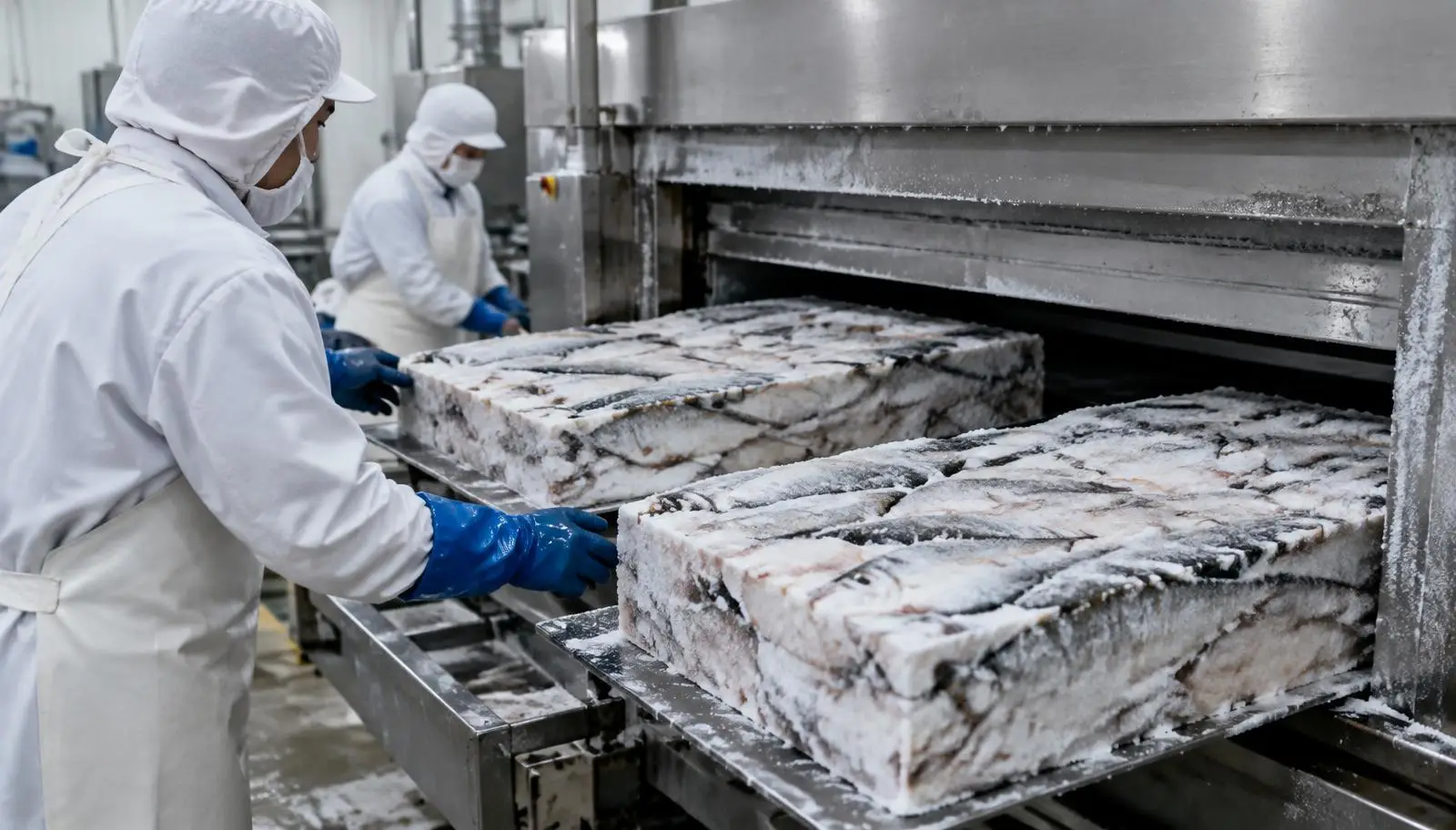
From landing to export container: pre-cooling, plate and blast freezing, glazing, frozen storage sizing and the documentation export markets expect. Yes. Seafood projects typically combine pre-cooling or ice, blast or plate freezing, glazing and frozen storage. ColdMatch helps define tonnage, freezing method, core temperature target and dwell time before approaching suitable suppliers.
Key takeaways
- Can ColdMatch support seafood blast freezing? Yes.
- What is the difference between cold storage and blast freezing? Cold storage holds product that is already at temperature, so the load is mostly infiltration, lighting and small heat gains.
- What details are needed for a cold-chain project quote? Product type, temperature range, storage or throughput capacity, country and site status (new build, existing building or retrofit), refrigeration preference, power and backup situation, monitoring or…
- Can ColdMatch support USD 250,000+ projects? Commercial and industrial projects of roughly USD 250,000 and above are the core focus.
Reviewed: Sep 2026 · ColdMatch Group
Seafood quality is lost in hours. The cold chain must start at landing or harvest and hold without interruption to the export container.
Checklist
- Peak landing or harvest tonnage per day, not the annual average
- Species, product format and packaging
- Pre-cooling method: ice, chilled seawater or chill room
- Freezing method: plate, blast tunnel or IQF
- Target core temperature and allowed pull-down hours
- Glazing and packing requirements
- Frozen storage days of cover, including delayed containers
- Export market temperature and traceability documentation
Sizing on peaks, not averages
Freezing capacity sized on averages fails exactly when the catch or harvest arrives. Peak-day intake is the design number.
Tools and guides
Use the Seafood Cold Chain Planner, then read the Seafood Cold Chain and Blast Freezing Guide.
ColdMatch Group is an independent industrial refrigeration and cold-chain project sourcing and RFQ platform. We are not a refrigeration manufacturer, cold storage operator, EPC contractor, installer, engineering firm, lender, broker-dealer, investment advisor or financial advisor. Supplier and project partner outreach is handled only after a commercial project brief is reviewed.
Run the numbers
Calculators for this project type
Indicative planning figures only — final sizing belongs to the supplier's or consultant's detailed design.
Blast freezer cost calculator
Size freezing capacity and indicative cost from daily tonnage, entry and target core temperature.
Energy & backup powerEnergy & backup power cost calculator
Annual energy spend from load and running hours, plus the cost of generator hours during outages.
Frequently asked questions
Plan the numbers before you send an RFQ
The reference pages buyers use most before requesting quotes.