
Quick answer
2–8 °C, frozen and ultra-low storage: monitoring, redundancy, backup power, alarms, calibration, validation and the evidence trail auditors expect. Yes, as a sourcing and RFQ platform. We help structure requirements such as 2–8 °C or frozen storage, redundancy, backup power, monitoring, alarms, calibration and validation expectations, so suppliers quote on a comparable basis. Validation and qualification remain the responsibility of the owner and their appointed specialists.
Key takeaways
- Can ColdMatch support pharma cold-chain projects? Yes, as a sourcing and RFQ platform.
- What details are needed for a cold-chain project quote? Product type, temperature range, storage or throughput capacity, country and site status (new build, existing building or retrofit), refrigeration preference, power and backup situation, monitoring or…
- What affects cold room CAPEX? Cold room CAPEX depends on product type, temperature range, storage capacity, insulation, refrigeration system type, evaporators, compressors, backup power, monitoring, automation, building condition,…
- Why does ColdMatch review the project before contacting suppliers? Because incomplete briefs produce non-comparable quotations.
Reviewed: Sep 2026 · ColdMatch Group
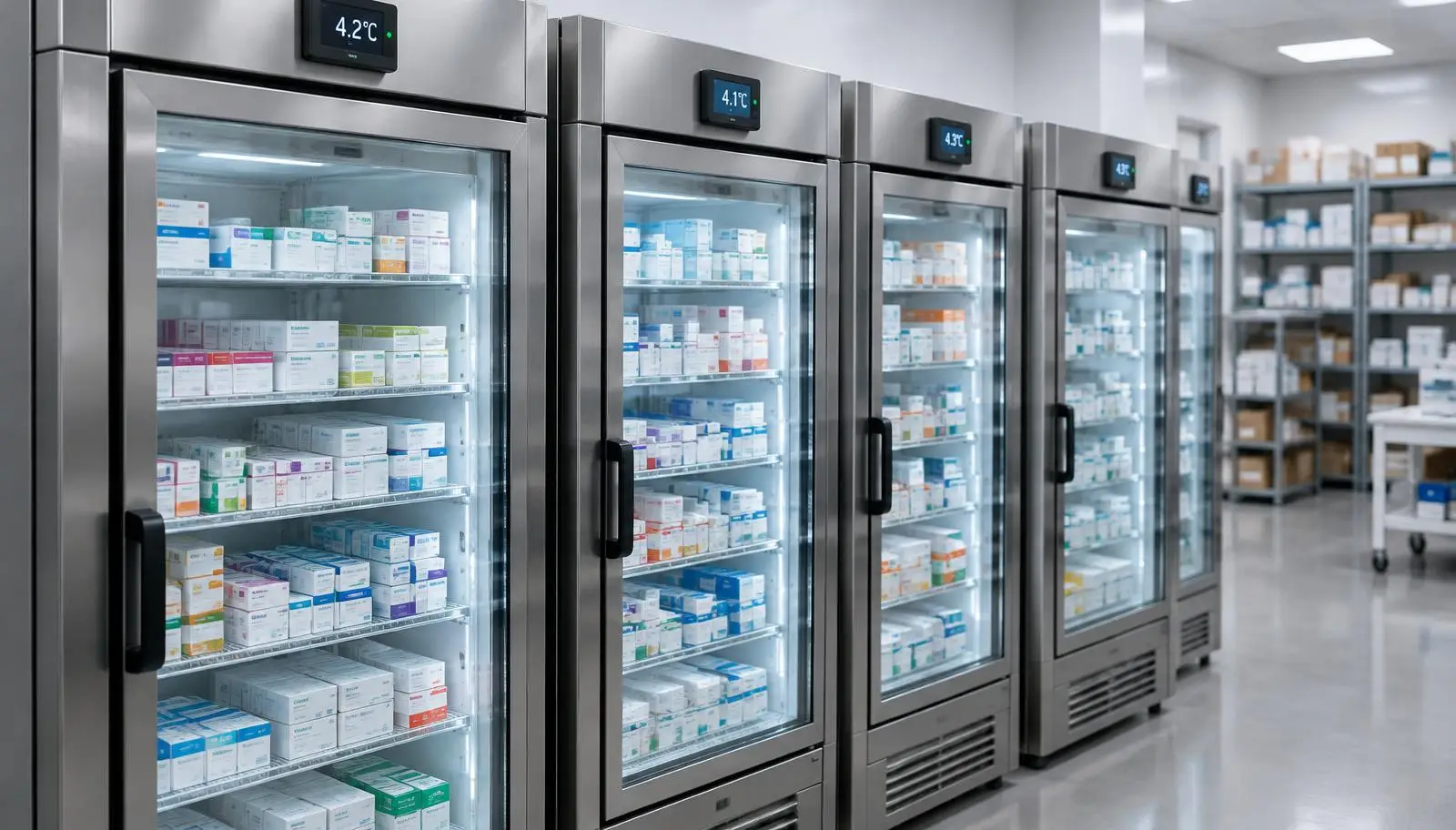
Pharmaceutical cold storage is judged on temperature integrity and on the evidence that temperature was never lost. Refrigeration capacity alone never satisfies an audit.
Temperature bands
2–8 °C is the most common requirement, with frozen (−20 °C) and ultra-low (−60 to −70 °C) storage used for specific products. Recovery from failure is slowest at the coldest bands, which is why redundancy scales with temperature.
Redundancy and backup power
Define the redundancy level (commonly N+1), generator autonomy in hours, UPS coverage for monitoring, and which loads must remain live during a transfer.
Monitoring, alarms and records
Calibrated sensors, defined logging intervals, escalation lists, out-of-hours response and record retention should all be specified before suppliers quote.
Validation responsibility
Mapping, IQ/OQ/PQ and SOPs remain with the owner and their appointed specialists. Suppliers should state exactly which documentation and support they provide.
Plan it
Use the Pharma Cold Chain Readiness Planner and the Pharma Cold Chain Storage Guide.
ColdMatch Group is an independent industrial refrigeration and cold-chain project sourcing and RFQ platform. We are not a refrigeration manufacturer, cold storage operator, EPC contractor, installer, engineering firm, lender, broker-dealer, investment advisor or financial advisor. Supplier and project partner outreach is handled only after a commercial project brief is reviewed.
Run the numbers
Calculators for this project type
Indicative planning figures only — final sizing belongs to the supplier's or consultant's detailed design.
Medical cold chain calculator
Vaccine, pharma and ULT storage volume with redundancy and monitoring requirements.
Energy & backup powerEnergy & backup power cost calculator
Annual energy spend from load and running hours, plus the cost of generator hours during outages.
Frequently asked questions
Plan the numbers before you send an RFQ
The reference pages buyers use most before requesting quotes.