
Quick answer
Plan refrigeration procurement around product needs, load profile, route stages, ambient heat, monitoring and backup power to cut avoidable cold-chain losses. Typically gaps at transfer points: slow pre-cooling, open dock doors, incompatible products stored together, undersized systems at peak intake, and failures without alarms or backup. The exact causes differ by product and route.
Key takeaways
- What causes most cold-chain losses? Typically gaps at transfer points: slow pre-cooling, open dock doors, incompatible products stored together, undersized systems at peak intake, and failures without alarms or backup.
- Can new refrigeration equipment guarantee lower spoilage? No.
- What data should I collect before requesting quotes? Product requirements, daily and peak intake, incoming temperature, pull-down time, route stages, design ambient, monitoring needs, outage history and the redundancy you require.
- Do I need backup power for a cold store? It depends on outage frequency, how long product stays in range without power and the value at risk.
Reviewed: Oct 2026 · ColdMatch Group
Short answer: most avoidable cold-chain losses happen where the product's needs, the real load and the route were never written down before equipment was chosen. To reduce that risk, map each product's temperature and humidity requirements, its daily intake and incoming temperature, every storage and transport stage, the hottest ambient conditions, how temperatures will be monitored and what happens when power fails — then buy refrigeration that is specified against that map. No equipment choice guarantees a lower loss rate; good planning removes the gaps where losses usually start.
What is a cold-chain loss, and where does it start?
A cold-chain loss is product that is downgraded, rejected or discarded because it spent too long outside its safe temperature or humidity range, or was damaged by handling while chilled or frozen. The FAO's food loss and waste platform describes how losses occur at every stage from harvest to retail. In practice, risk concentrates at transfer points: field to pre-cooling, pre-cooling to store, store to truck, and dock doors left open while loading.
Step 1: which product requirements must be fixed first?
Write down, for every product family: the target storage temperature and tolerance, the relative humidity range, whether it is chilled, frozen or needs ripening or controlled atmosphere, its sensitivity to ethylene or odour, the maximum storage duration and the temperature at which it arrives. Mixing incompatible products in one room is one of the most common avoidable causes of quality loss. Recognised codes of practice, such as those published by Codex Alimentarius, and your buyers' specifications are the right references; a qualified food technologist should confirm values for your products.
Step 2: what does the real load profile look like?
Refrigeration is sized for heat, not floor area. The biggest variables are how much product enters each day, how warm it is on arrival, how quickly it must be brought down to temperature, and how often doors open. A store filled once and left closed behaves very differently from a distribution hub with constant traffic.
| Load input | Why it matters for losses |
|---|---|
| Daily intake (t/day) | Peak harvest days can exceed average capacity |
| Incoming product temperature | Warm product needs pull-down capacity, not just holding |
| Pull-down time required | Slow cooling shortens shelf life |
| Door openings and dock design | Warm, humid air raises load and causes ice and condensation |
| Peak season pattern | Systems sized for averages fail at peaks |
Test these values with the free refrigeration load calculator and the door infiltration load calculator. Results are planning estimates, not engineering designs.
Step 3: how do you map every storage and transport stage?
Draw the route from origin to customer and list each stage: harvest or slaughter, pre-cooling or blast freezing, holding store, dispatch dock, transport, cross-dock and final delivery. For each stage, record the target temperature, typical time spent, who controls it and what equipment is involved. The weakest stage sets the outcome: an excellent store cannot recover product that was not pre-cooled quickly enough.
- List each stage and its duration.
- Mark the target range and the allowed time outside it.
- Identify who is responsible at each handover.
- Note what is measured and recorded at each stage.
- Highlight stages with no cooling or no monitoring — these are the first procurement priorities.
Step 4: why do ambient conditions and site constraints matter?
Condensers, insulation and doors must cope with the hottest, most humid days at your site, not the annual average. Altitude, dust, coastal corrosion and solar exposure also affect equipment selection. Record the design ambient you want suppliers to use and ask each one to state the conditions behind their capacity figures.
Step 5: how should temperatures be monitored?
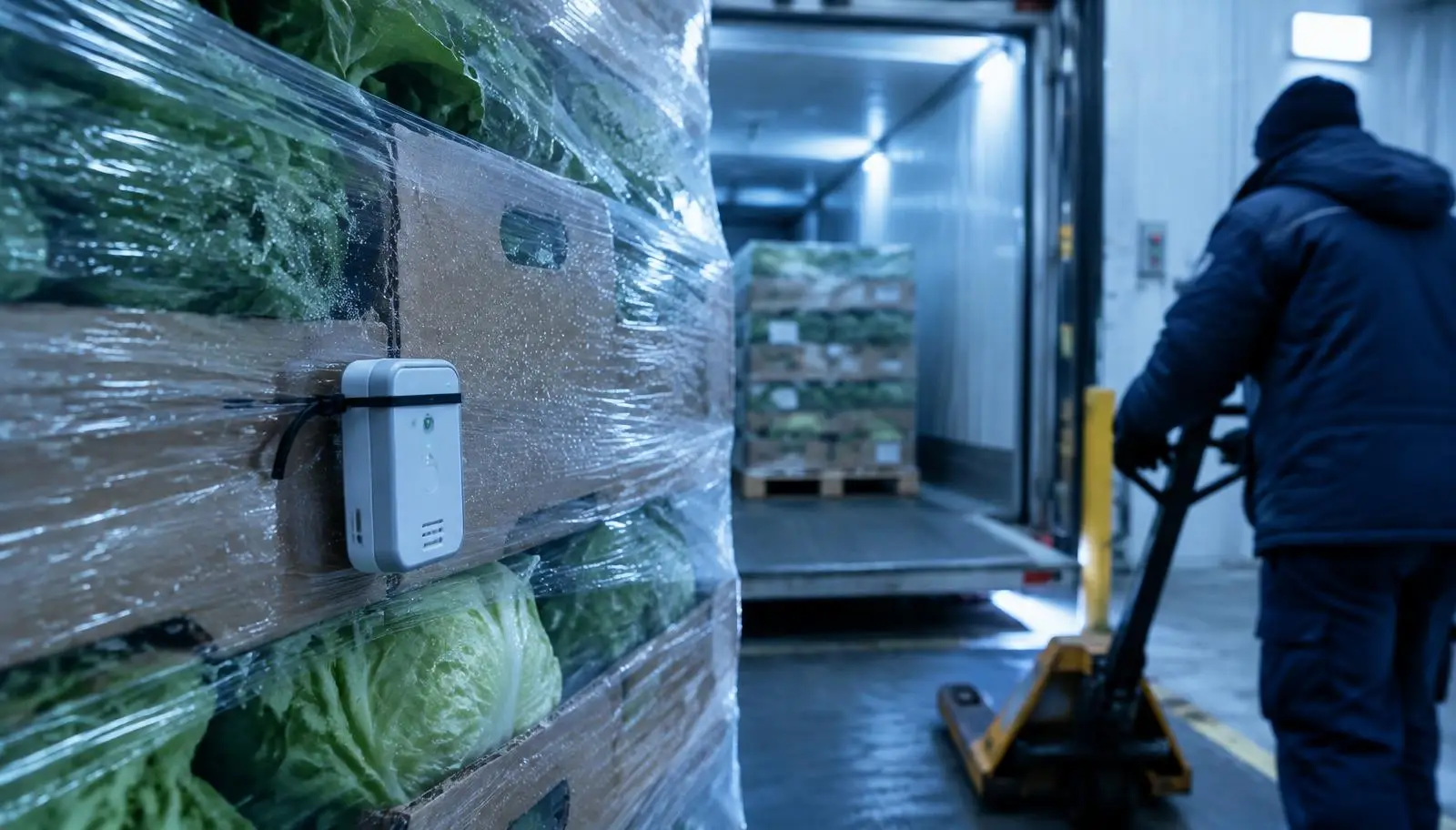
Monitoring turns a loss into an early warning. Specify what is measured (air and, where relevant, product temperature, humidity, door status), where sensors go, how often values are logged, who receives alarms and how quickly someone must respond, and how long records are kept. See ColdMatch's overview of cold-chain monitoring. For regulated products, monitoring and temperature mapping requirements should be confirmed with the competent authority.
Step 6: what backup power and redundancy do you need?
Ask how long product stays within range if power fails, how often outages happen at the site, and what would be lost if a compressor stopped during peak season. Options include split refrigeration circuits, standby compressors, generators and alarm-triggered response procedures. The backup generator calculator gives a first sizing estimate, and the cold storage reliability review helps identify single points of failure.
Step 7: which operating practices protect product after handover?
Equipment only performs as well as it is operated. Plan loading procedures, door discipline, stock rotation (first-expired, first-out), defrost scheduling, cleaning, staff training and preventive maintenance. Ask suppliers what training, documentation and service response they include, because these determine performance long after commissioning.
Common avoidable mistakes
- Sizing for average intake instead of peak harvest days.
- Storing incompatible products together.
- Skipping pre-cooling and expecting the holding store to do pull-down.
- Ignoring dock doors and loading time.
- Buying monitoring without assigning who responds to alarms.
- No plan for power outages or compressor failure.
- Comparing quotes that assume different ambient and intake values.
Illustrative example: mapping risk for a produce pack-house
*Illustrative only — no real project or measured loss figures.* A packer receives fruit at field temperature in the afternoon, holds it in a single chilled room and ships the next morning. Mapping shows three gaps: no dedicated pre-cooling, a dock without a door seal, and no alarm outside working hours. The brief therefore asks suppliers to price a separate pre-cooling stage, dock sealing and remote alarms as options, each with stated assumptions, so the buyer can weigh risk against budget.
Pre-procurement checklist
- Product list with temperature, humidity, compatibility and storage duration.
- Daily and peak intake, incoming temperature and pull-down time.
- Route map with every stage, duration and responsible party.
- Design ambient conditions and site constraints.
- Monitoring points, alarm recipients and record retention.
- Outage history, tolerable hold time and redundancy requirement.
- Operating practices, training and service expectations.
- Items for review by a qualified engineer and the relevant local authority.
How ColdMatch helps you turn the map into an RFQ
ColdMatch is a supplier-neutral procurement platform. You can use the free calculators and the RFQ builder without obligation. If you submit a project (qualified commercial projects from USD 250,000), the ColdMatch team reviews and structures your request, approaches suitable suppliers on your behalf and organises their responses so you can compare them on the same basis. ColdMatch does not manufacture, install or finance equipment, and does not promise prices, availability or loss reductions. For comparing the offers you receive, see the guide to comparing refrigeration proposals on lifecycle cost.
*Prepared by the ColdMatch Group editorial team. Calculator methods are described in our calculation methodology. Last reviewed: 12 October 2026. Final design must be confirmed by qualified engineers and checked against local regulations.*
Run the numbers
Calculators for this project type
Indicative planning figures only — final sizing belongs to the supplier's or consultant's detailed design.
Meat cold room calculator
Chilling, carcass hanging and frozen storage capacity from daily throughput.
Energy & backup powerSolar & backup power calculator
Solar-assisted cooling, generator run hours and indicative savings where grid supply is unstable.
Frequently asked questions
Plan the numbers before you send an RFQ
The reference pages buyers use most before requesting quotes.