
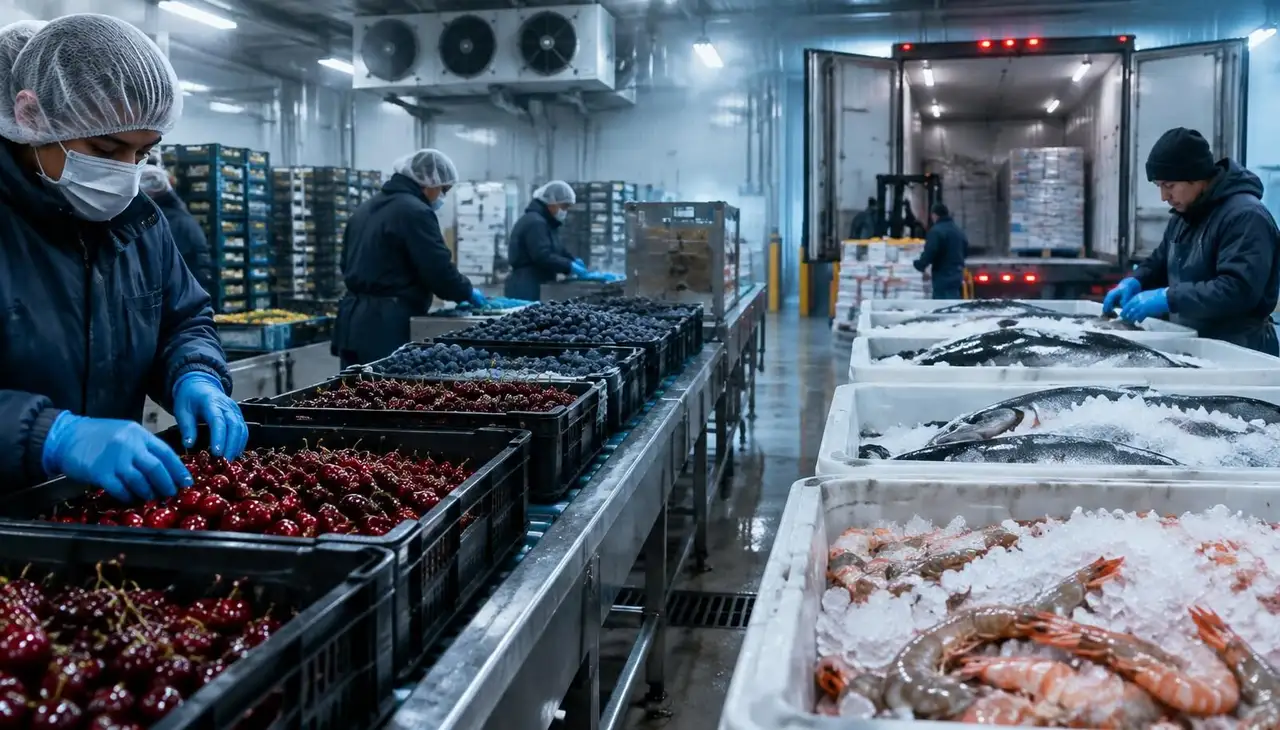
Quick answer
soft fruit and seafood need different cold-chain briefs. For cherries and berries the RFQ should focus on fast field-heat removal, humidity, gentle handling and short holding; for chilled or frozen fish and shrimp it should focus on hygiene, ice or freezing capacity, frozen-store stability and traceable temperature records. Product owners and qualified operators must supply the actual temperature and handling requirements — for example from UC Davis produce fact sheets or the applicable Codex codes of practice and national rules. ColdMatch helps scope the infrastructure; it does not set product conditions or guarantee freshness.
Key takeaways
- Will ColdMatch tell me the correct storage temperature? No.
- Can one cold store hold berries and frozen shrimp? They normally need separate rooms or zones with different conditions and hygiene controls.
- Does ColdMatch sell fruit or seafood? No.
Reviewed: 2026-10-19 · ColdMatch Group
Short answer: soft fruit and seafood need different cold-chain briefs. For cherries and berries the RFQ should focus on fast field-heat removal, humidity, gentle handling and short holding; for chilled or frozen fish and shrimp it should focus on hygiene, ice or freezing capacity, frozen-store stability and traceable temperature records. Product owners and qualified operators must supply the actual temperature and handling requirements — for example from UC Davis produce fact sheets or the applicable Codex codes of practice and national rules. ColdMatch helps scope the infrastructure; it does not set product conditions or guarantee freshness.
Key terms in one line each
Pre-cooling removes field heat from fresh produce soon after harvest, before storage. Chilled seafood is kept cold without freezing, usually with ice or refrigeration; frozen seafood has been frozen and is held in frozen storage. Cold chain is the unbroken sequence of temperature-controlled packing, storage and transport. An RFQ (request for quotation) is the written brief suppliers price against — its quality decides whether quotes can be compared.
Why one brief does not fit both
Fresh fruit is alive and respiring after harvest, so delays and rough handling matter; seafood is a food-safety-controlled animal product where hygiene and hazard controls dominate. Pre-cooling, storage and transport requirements therefore differ by product, variety, maturity, packaging and destination market rules (FAO).
Questions for cherries, berries and other soft fruit
Ask suppliers to respond to your confirmed figures for: daily peak intake and harvest window; time from harvest to cooling you can achieve; pre-cooling method you are considering (forced-air, hydro-cooling or room cooling) and packaging that allows airflow; required temperature and relative humidity per product as confirmed by your agronomist or buyer specification; mixed-product storage and ethylene compatibility; condensation control at doors and docks; and gentle conveyor, crate and pallet handling.
Questions for chilled fish and shrimp
State the product forms (whole, gutted, fillet, shrimp head-on or peeled), daily volumes, ice supply or slurry needs, washdown and drainage, separation of raw and finished areas, and the temperature limits defined in your HACCP plan or by your competent authority. The US FDA hazards and controls guidance and Codex fish code are examples of references your quality team may apply.
Questions for frozen seafood
Specify freezing method under consideration (plate, blast, spiral or IQF), product thickness and packaging, required freezing time and final product temperature as confirmed by your quality specification, frozen-store capacity and stock rotation, defrost strategy, and door/dock design to limit warm-air entry.
Shared questions: site, power, monitoring and transport
For both categories, include site location and climate, available electrical supply and backup power, refrigerant preferences and local regulations, temperature monitoring with calibrated sensors and alarm escalation, record retention, reefer truck or container loading interface, and the scope you expect each supplier to price (design, equipment, installation, commissioning, training, service).
What this guide does not decide
This page gives questions, not answers. It does not state setpoints, shelf-life, losses avoided or savings. ColdMatch reviews qualifying projects of about USD 250,000 or more, organises the brief and approaches suitable suppliers on the buyer's behalf after review; outcomes depend on the product, operations and the suppliers selected.
Run the numbers
Calculators for this project type
Indicative planning figures only — final sizing belongs to the supplier's or consultant's detailed design.
Blast freezer cost calculator
Size freezing capacity and indicative cost from daily tonnage, entry and target core temperature.
Energy & backup powerEnergy & backup power cost calculator
Annual energy spend from load and running hours, plus the cost of generator hours during outages.
Frequently asked questions
Plan the numbers before you send an RFQ
The reference pages buyers use most before requesting quotes.