
Quick answer
Step-by-step guide to designing cold stores for hot regions: site, envelope, condensers, refrigerant choice, power backup, water and service capability. Use the local peak summer ambient, not the average. Ask suppliers to state plant capacity at that condition.
Key takeaways
- What design temperature should I use in a hot climate? Use the local peak summer ambient, not the average.
- Is CO₂ refrigeration suitable for hot climates? It can be, with designs specifically for high ambient.
- Do I need backup power for a cold store? In most hot regions, yes.
- Are evaporative condensers a good idea? They lower condensing temperature but need reliable water and treatment.
Reviewed: Oct 2026 · ColdMatch Group
Short answer: To plan cold storage in a hot climate, design for peak outdoor temperature rather than averages, reduce solar and door heat gains through orientation, shading and dock design, size condensers and refrigeration for the hottest days, choose a refrigerant and system your local technicians can maintain, and secure reliable power and water. These choices protect product and keep running costs under control.
Hot regions — the Gulf, North Africa, Sub-Saharan Africa, South Asia, parts of Latin America — have strong demand for cold storage, but they are unforgiving of designs copied from temperate countries. A plant that works well in Northern Europe can lose capacity on a 45 °C afternoon exactly when product arrives warm from the field or port. This how-to guide sets out the steps buyers should follow.
Step 1: Choose and orient the site
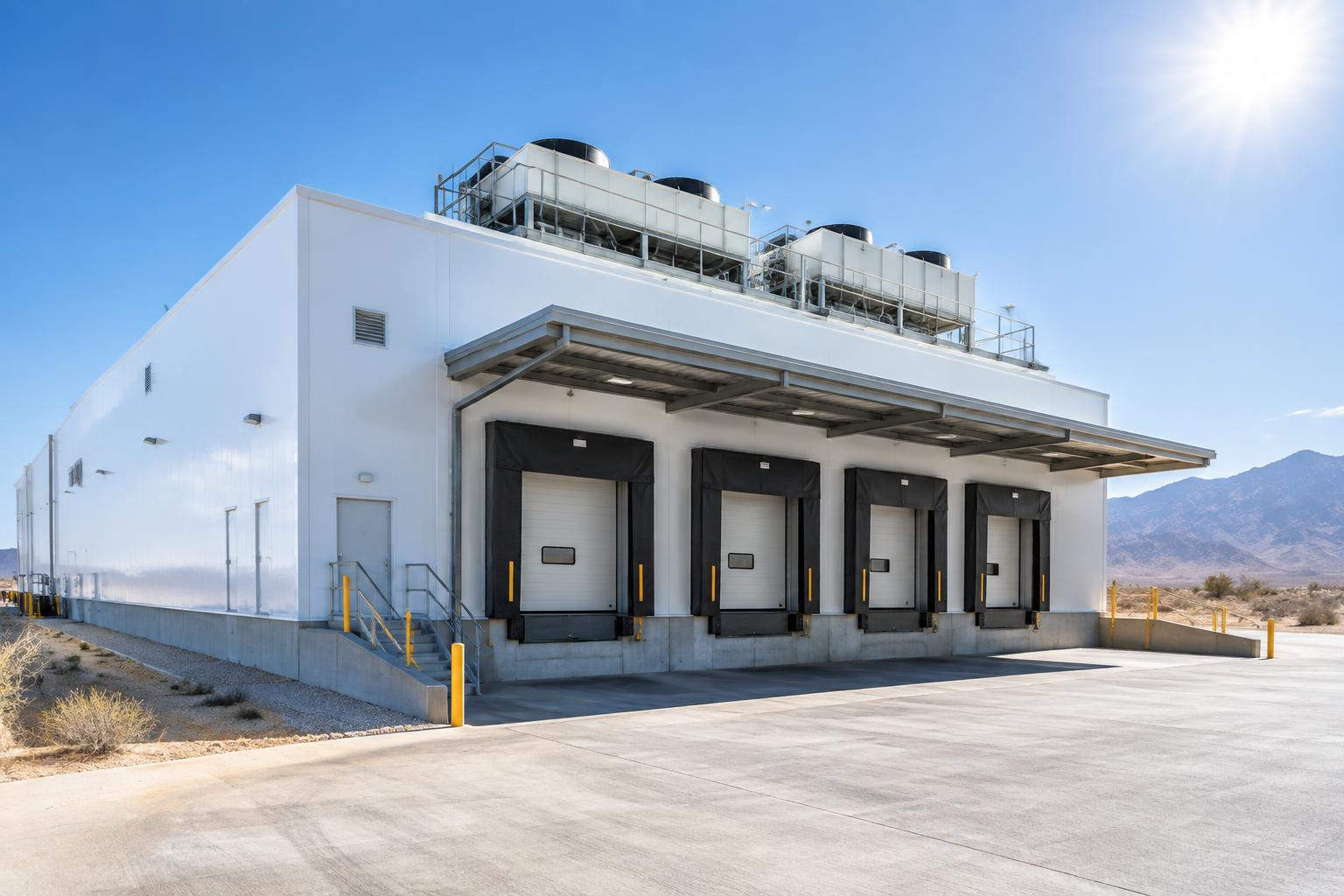
Where possible, orient the building so long walls face away from the strongest sun and loading docks are shaded. Leave space around condensers for free airflow and future expansion. Check flood risk, road access for refrigerated trucks, and distance to reliable grid connections. A light-coloured, reflective roof significantly reduces solar heat gain.
Step 2: Strengthen the envelope and docks
In hot climates, every square metre of wall and roof carries more heat into the building. Specify thicker insulation than you would in a cool climate, careful vapour sealing and a ventilated roof void or reflective coating. Our guide to choosing insulated panels and doors explains the options.
Docks are critical. Use enclosed, chilled loading areas or dock shelters so goods move from truck to store without passing through hot air. Fast doors and air locks reduce infiltration. The door infiltration load calculator shows how much load a hot, humid doorway adds.
Step 3: Size condensers and plant for peak ambient
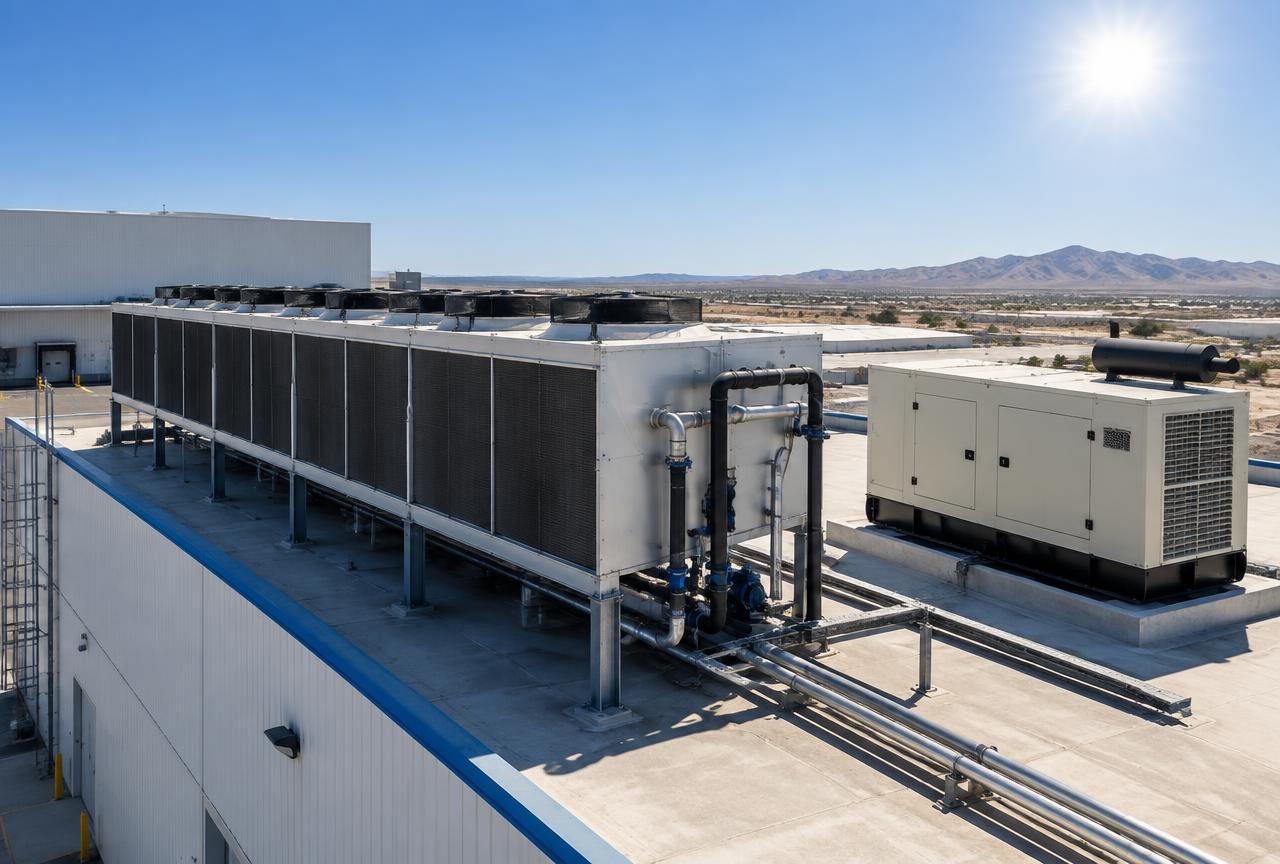
Refrigeration capacity falls and power use rises as outdoor temperature climbs. Ask suppliers to state plant capacity at your design peak ambient, not at a standard rating condition. Condensers should be sized generously, kept out of direct sun where possible, and arranged so hot discharge air does not recirculate.
Adiabatic or evaporative condensers can lower condensing temperature but need water and water treatment. Where water is scarce, larger air-cooled condensers may be the better choice. Use the cooling load calculator with your real ambient conditions and product intake temperatures.
- Specify design ambient temperature and humidity in the RFQ.
- Ask for capacity and power at that condition.
- Include product arriving warm — field heat or port delays — in the load.
Step 4: Choose a refrigerant and system you can support
Refrigerant choice in hot climates involves trade-offs. CO₂ systems need specific designs to perform well at high ambient temperatures; ammonia is efficient but requires trained staff and safety measures; some synthetic low-GWP options are simpler for smaller plants. The right choice depends on project size, local regulations and above all on local service capability. Read our NH₃ vs CO₂ buyer's guide for detail.
Step 5: Secure power, backup and water
Grid reliability varies widely. Plan backup generation sized to keep critical rooms at temperature, with automatic transfer and fuel storage for realistic outage durations. Rooftop solar can offset daytime peaks, which coincide with the highest refrigeration load. Where water is used for condensers or cleaning, confirm supply, quality and cost.
Step 6: Plan maintenance and spare parts locally
A sophisticated plant without local support becomes a risk. Ask each supplier who will service the plant, how fast technicians can reach the site, and which spare parts will be stocked locally. Include training for your own staff. The cold storage health check helps teams track condition once the store is running.
Common mistakes to avoid
- Rating plant at standard conditions instead of local peak ambient.
- Open docks exposed to sun and hot air.
- Choosing a refrigerant without local technicians to support it.
- Undersized backup power or no fuel plan.
- Ignoring field heat when sizing rooms for fresh produce.
An example from a hot region
A fruit exporter in a hot region plans a pre-cooling and chilled store. The first supplier quotes plant capacity at a standard rating condition. During review, design ambient is fixed at the local summer peak, field heat of incoming fruit is added, and docks are enclosed. The revised specification asks for capacity at that peak, larger condensers placed in shade, and generator backup for the pre-cooling rooms. Suppliers now quote comparable, realistic plants.
Designing for humidity as well as heat
Many hot regions are also humid, especially near coasts. Humid air entering through doors condenses and freezes on evaporator coils, increasing defrost frequency and energy use. It can also create condensation on products and packaging when goods leave the store. Dehumidified air locks, well-sealed docks and properly designed anterooms reduce these effects. Include outdoor humidity in your design conditions alongside temperature, and ask suppliers how their design handles latent load.
Phasing a hot-climate project
Demand in fast-growing markets often rises quickly. Plan the site and plant room so capacity can be added in phases: space for additional condensers, spare electrical capacity and a building layout that allows extension. Phasing reduces initial investment while avoiding a costly redesign later.
Pre-cooling fresh produce
Fruit and vegetables harvested in hot weather carry a lot of field heat. Placing them directly into a storage room overloads the plant and slows cooling. Dedicated pre-cooling rooms or forced-air tunnels remove field heat quickly, then product moves to storage rooms held at a stable temperature. See our post-harvest cold storage guide for more detail.
Next steps
For projects of USD 250K and above, ColdMatch Group reviews hot-climate requirements, prepares a brief with clear design conditions and introduces vendor-neutral suppliers with experience in similar climates. Indicative ranges are in the cold storage cost guide; start your brief in the project request form.
Plan it with ColdMatch tools
Turn this guide into project numbers with these planning tools. Results are estimates from your own inputs, not supplier quotations.
- Submit your project for a reviewed supplier brief — For commercial projects from USD 250,000, ColdMatch reviews the brief before introducing independent suppliers.
Related reading: Cold Room Panels and Doors: How to Choose and Specify · Natural Refrigerants for Industrial Cold Storage
Sources and how to read this guide
Regulatory and technical statements refer to the official sources below. Project-specific values such as capacities, loads and costs must be confirmed by your engineer and supplier proposals.
Run the numbers
Calculators for this project type
Indicative planning figures only — final sizing belongs to the supplier's or consultant's detailed design.
Fruit & vegetable cold storage ROI calculator
Pre-cooling and storage capacity plus indicative payback from spoilage reduction.
Energy & backup powerSolar & backup power calculator
Solar-assisted cooling, generator run hours and indicative savings where grid supply is unstable.
Frequently asked questions
Plan the numbers before you send an RFQ
The reference pages buyers use most before requesting quotes.