
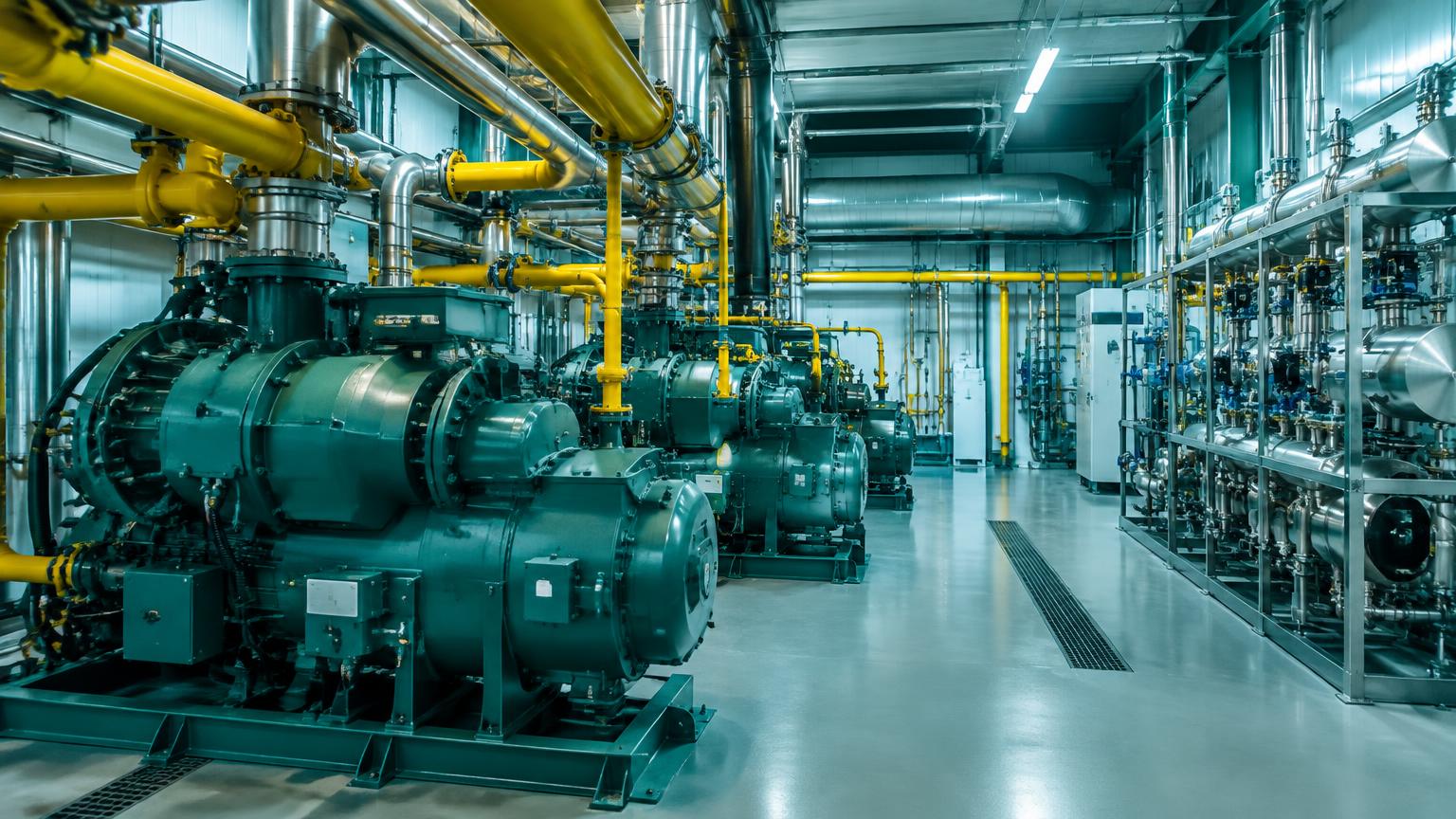
Quick answer
Ammonia or CO₂ for your cold store? Compare efficiency, safety, cost drivers, climate fit and supplier questions before you issue a refrigeration RFQ. Ammonia is generally more efficient at low temperatures and in hot climates. CO₂ transcritical systems can match or approach it in cool and temperate climates, especially with heat recovery, ejectors or parallel compression. Ask suppliers for annual energy modelled on local weather data.
Key takeaways
- Is ammonia or CO₂ more energy-efficient? Ammonia is generally more efficient at low temperatures and in hot climates.
- Is CO₂ refrigeration safer than ammonia? CO₂ is non-toxic and non-flammable, which simplifies use near people, but it runs at very high pressure and can displace oxygen in enclosed spaces.
- What is an NH₃/CO₂ cascade system? A cascade uses ammonia in a compact high-temperature stage and CO₂ in the low-temperature stage or as a secondary fluid.
- Are both refrigerants future-proof under F-gas rules? Yes.
Reviewed: Oct 2026 · ColdMatch Group
Choosing between ammonia (NH₃, R717) and carbon dioxide (CO₂, R744) is one of the most consequential decisions in an industrial refrigeration project. Both are natural refrigerants with zero ozone depletion potential and negligible global warming impact, so both are future-proof against F-gas phase-downs. The difference lies in how each behaves in your climate, at your temperatures, in your building and with your local service market. This guide explains those differences in buyer terms, lists the questions that separate a good proposal from a risky one, and shows how to turn the decision into a comparable request for quotation.
Short answer: large central plants with stable loads, low temperatures and trained operators usually favour ammonia for its efficiency. Distributed systems, occupied spaces, retail-adjacent sites and projects where ammonia permitting is difficult often favour CO₂. Many modern plants combine both — an NH₃ high stage with a CO₂ low stage or secondary loop — to keep ammonia charge small and out of occupied areas.
How the two refrigerants differ
Ammonia has excellent thermodynamic properties. At typical cold storage and freezing conditions it delivers a high coefficient of performance, works at moderate pressures and has been used in food plants for more than a century. Its drawbacks are toxicity and flammability at certain concentrations, which bring stricter rules on machine-room design, ventilation, detection, charge limits and operator competence.
CO₂ is non-toxic and non-flammable, which simplifies placement near people and products. It operates at much higher pressures, so piping, valves and vessels must be rated accordingly. CO₂ has a low critical point of about 31 °C; above that ambient condition the system runs transcritical, and efficiency drops unless the design adds measures such as parallel compression, ejectors, adiabatic gas coolers or heat recovery.
Efficiency and climate fit
Climate is the first filter. In cool and temperate regions, CO₂ transcritical systems reach efficiency close to — and in some cases above — conventional systems over a full year, especially when heat recovery is used for underfloor heating, process water or offices. In hot regions such as the Gulf, North Africa, South Asia and parts of Latin America, a CO₂-only plant spends many hours above the critical point. Modern ejector and parallel-compression technology narrows that gap, but buyers in hot climates should ask every supplier for annual energy modelled on local weather data, not just a design-point COP.
Ammonia keeps its efficiency advantage in high ambient temperatures and at low evaporating temperatures, such as blast freezing and frozen storage at −25 °C to −30 °C. That is why large frozen distribution centres and food processing plants in warm climates still widely choose NH₃, often with a CO₂ low-temperature stage to reduce ammonia charge. Use the CO₂ vs ammonia comparison calculator and the electricity cost calculator to test the difference at your own tariff.
Safety, permits and building design
Safety drives cost in ways that rarely appear in the headline equipment price. An ammonia plant typically needs a dedicated machine room, emergency ventilation, gas detection, alarm systems, an emergency response plan and, depending on the jurisdiction, notification to authorities above certain charge thresholds. Local codes based on standards such as EN 378, ISO 5149 or IIAR guidance set the rules. Permitting timelines can add months in some countries.
CO₂ removes toxicity concerns but introduces high-pressure risk. Pressure relief, rated components, leak detection in enclosed spaces (CO₂ displaces oxygen) and technicians trained for high-pressure work are mandatory. For sites with staff working inside refrigerated areas — picking, packing, retail-facing operations — CO₂ often makes the safety case simpler.
Low-charge ammonia packages and NH₃/CO₂ cascade systems sit in between: the ammonia stays in a compact, contained unit outdoors or on the roof, while CO₂ circulates through the occupied building.
Cost drivers buyers should compare
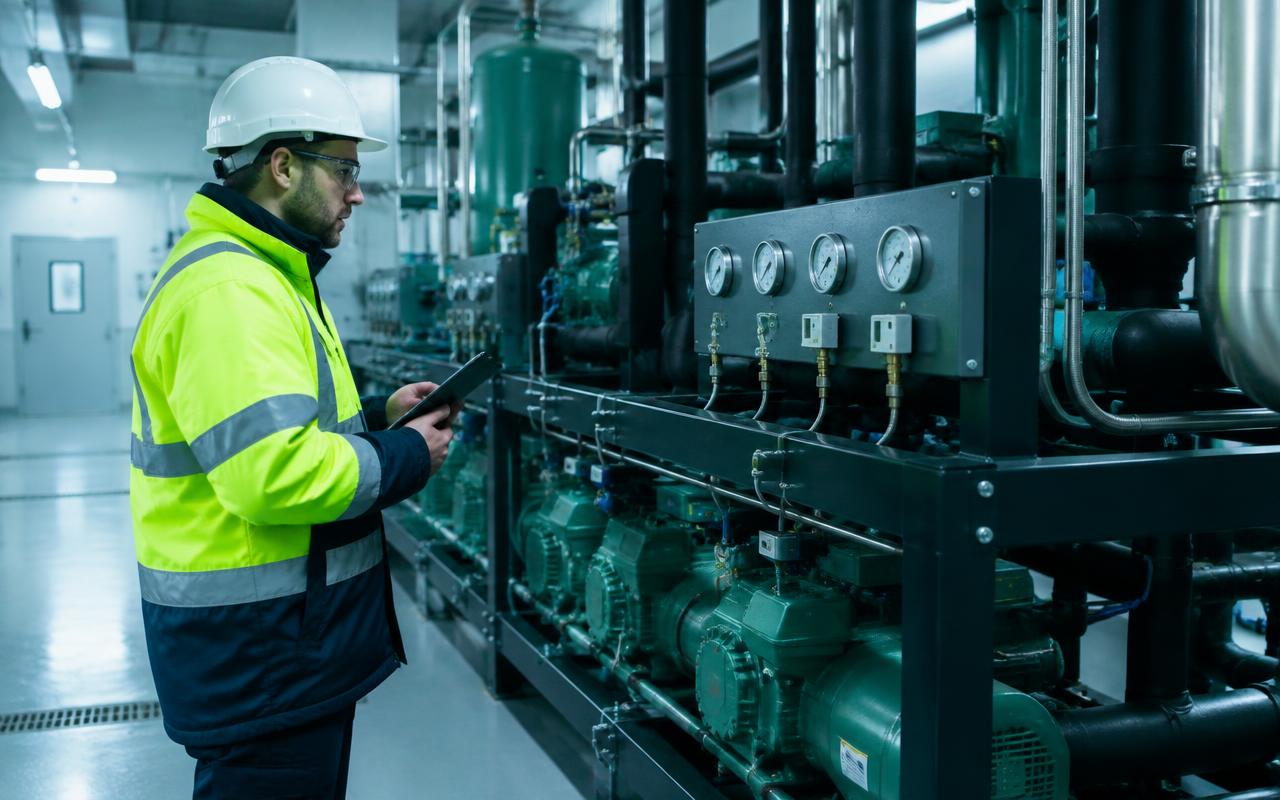
Rather than comparing a single price, compare the cost components that change between the two options:
- Plant and pipework: CO₂ uses smaller pipe diameters but higher pressure ratings; ammonia uses steel pipework and larger vessels.
- Building works: machine room, ventilation and detection for ammonia; pressure-rated routing and relief for CO₂.
- Energy: annual consumption at your climate and temperature levels — usually the largest lifecycle cost.
- Permits and compliance: engineering studies, authority approvals and insurance requirements.
- Service: availability of qualified technicians within reach of your site, spare parts and response times.
- Heat recovery value: CO₂ can supply useful hot water; ammonia systems can too with a heat pump stage.
For budget-level numbers based on ColdMatch's published baseline, start with the cold storage cost guide and the cold room CAPEX estimator. Treat any figure as a range until suppliers have quoted against a defined scope.
Service and skills: the hidden decider
A plant is only as good as the people who maintain it. In markets with an established ammonia industry, qualified NH₃ technicians are easy to find. In markets dominated by supermarket refrigeration, CO₂ skills may be more common. Ask each supplier who will commission the plant, who answers a fault call at night, how far the nearest trained technician is, and which parts are stocked locally. A slightly less efficient system with strong local service usually outperforms a theoretically better plant that waits a week for a technician.
Which option fits which project
- Large frozen distribution centre, hot climate: NH₃ central plant, or NH₃/CO₂ cascade to keep ammonia out of the storage halls.
- Food processing with blast freezing or IQF: NH₃ or NH₃/CO₂ cascade for low-temperature efficiency.
- Multi-temperature logistics hub in a temperate climate: CO₂ transcritical with heat recovery is a strong candidate.
- Pharmaceutical warehouse: either can work; the choice is usually driven by redundancy design, occupied-space safety and validation — see our pharma GDP cold storage guide.
- Urban or occupied site with strict permitting: CO₂ or low-charge ammonia packages.
Questions to put in your RFQ
A strong request lets suppliers propose either technology on the same basis. Include: product types and temperature zones; pallet positions and daily throughput; design ambient temperature and local weather data; available power and tariff; any limits on ammonia charge or machine-room location; redundancy expectations (N+1 compressors, dual circuits); heat recovery needs; required standards; and who provides installation, commissioning and the first years of service. Ask each bidder to state annual kWh, refrigerant charge, footprint, permit assumptions and exclusions.
The RFQ builder walks you through these fields, and the compressor sizing calculator helps you sanity-check capacity before you send it.
How ColdMatch supports the decision
ColdMatch Group is a supplier-neutral procurement platform, not a manufacturer or contractor, and has no preference for either refrigerant. A specialist reviews your request, prepares a structured brief and introduces qualified suppliers of NH₃, CO₂ and cascade systems for projects from USD 250K upward. Proposals come back on a comparable basis, so you can judge efficiency, safety and service — not just price. There is no sourcing fee for qualified buyers. When you are ready, start your project.
Run the numbers
Calculators for this project type
Indicative planning figures only — final sizing belongs to the supplier's or consultant's detailed design.
Blast freezer cost calculator
Size freezing capacity and indicative cost from daily tonnage, entry and target core temperature.
Energy & backup powerEnergy & backup power cost calculator
Annual energy spend from load and running hours, plus the cost of generator hours during outages.
Frequently asked questions
Plan the numbers before you send an RFQ
The reference pages buyers use most before requesting quotes.