
Quick answer
How to choose a blast freezer: blast rooms vs tunnels, spiral and IQF freezers, sizing by product and throughput, refrigerants, energy and supplier RFQs. A blast freezer uses much colder air at high speed to freeze warm product quickly, protecting quality. A normal storage freezer is designed to keep already frozen product cold and freezes new product too slowly.
Key takeaways
- What is the difference between a blast freezer and a normal freezer? A blast freezer uses much colder air at high speed to freeze warm product quickly, protecting quality.
- How long does blast freezing take? It depends on product thickness, packaging, entry temperature and air temperature.
- What temperature does a blast freezer run at? Air temperatures around −35 to −40 °C are common, with product frozen to a core temperature of −18 °C or colder before it moves to storage.
- Should I choose a spiral freezer or a blast room? Spiral freezers suit continuous high-volume lines of similar products; blast rooms suit varied products and batch production.
Reviewed: Oct 2026 · ColdMatch Group
Freezing speed decides product quality. When food freezes slowly, large ice crystals form, damage cell walls and cause drip loss, texture change and weight loss when the product thaws. Blast freezers push very cold air at high velocity across the product so that it passes through the critical zone between roughly −1 °C and −5 °C quickly, then reaches its storage temperature before it enters the cold store. Choosing the right blast freezer is therefore a decision about product quality, line capacity and energy use at the same time. This guide explains the main types, how to size one, and what to put in a request so suppliers can quote accurately.
Short answer: match the freezer type to your product and flow (batch blast room, tunnel, spiral, or IQF), size it from throughput in kg per hour, entry and target core temperatures and product thickness, check refrigerant and power, and compare suppliers on freezing time, energy use per kg and hygiene design, not price alone.
Blast freezing vs storage freezing
A cold store is designed to hold product that is already frozen; its refrigeration is sized for heat entering through walls and doors. A blast freezer is designed to remove a large amount of heat from warm product quickly, so it uses much colder air (often −35 to −40 °C) and far higher air speeds. Putting warm product directly into a storage freezer overloads it, raises the temperature of stock already stored and freezes the new product too slowly. The blast freezing and cold storage guide explains how the two work together.
Main blast freezer types
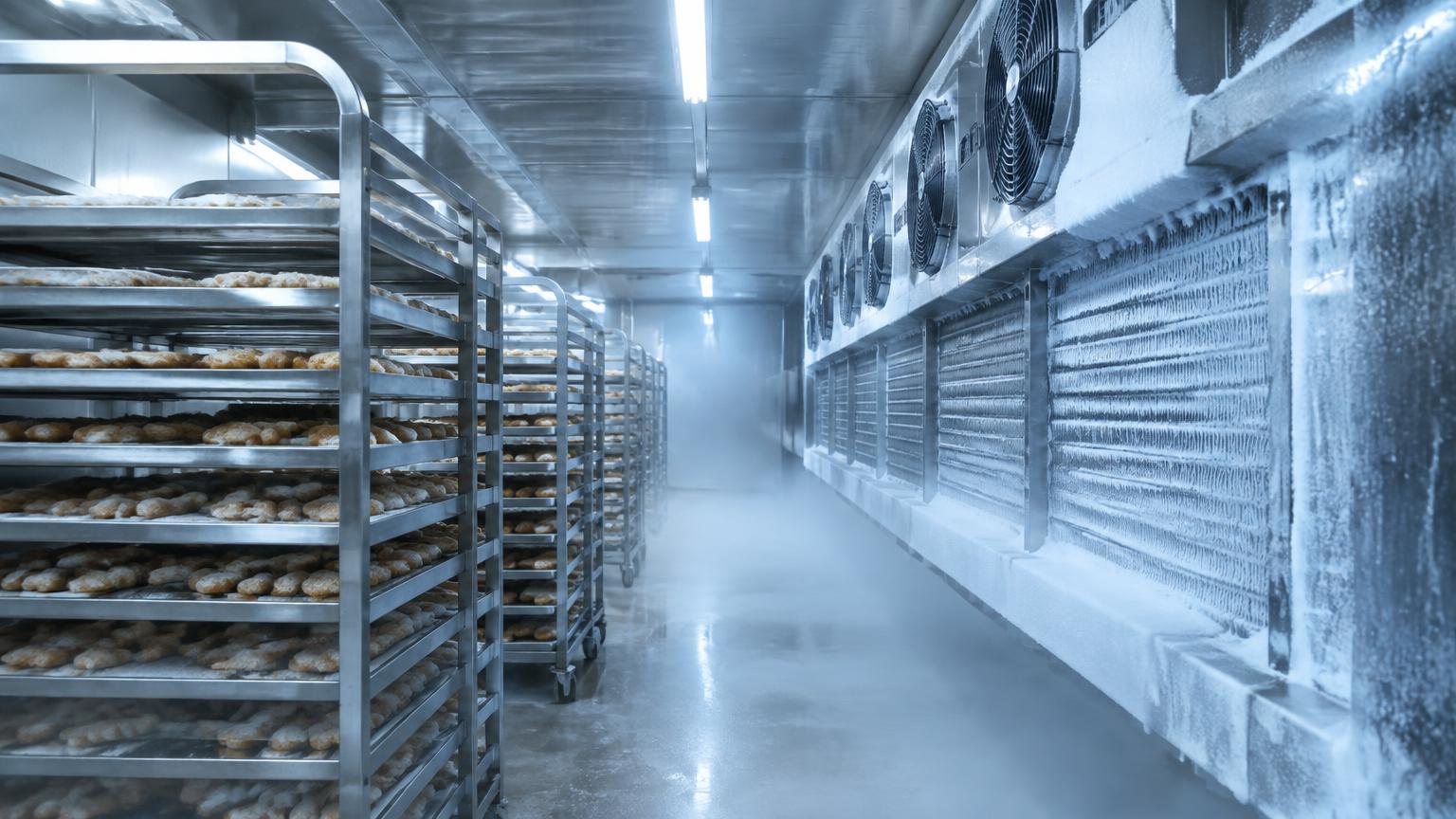
- Batch blast rooms or cells: product on trolleys or pallets is loaded, frozen, then moved to storage. Flexible for varied products such as meat cuts, ready meals and bakery.
- Tunnel freezers: trolleys or conveyors move through a long insulated tunnel; good for medium volumes of similar products.
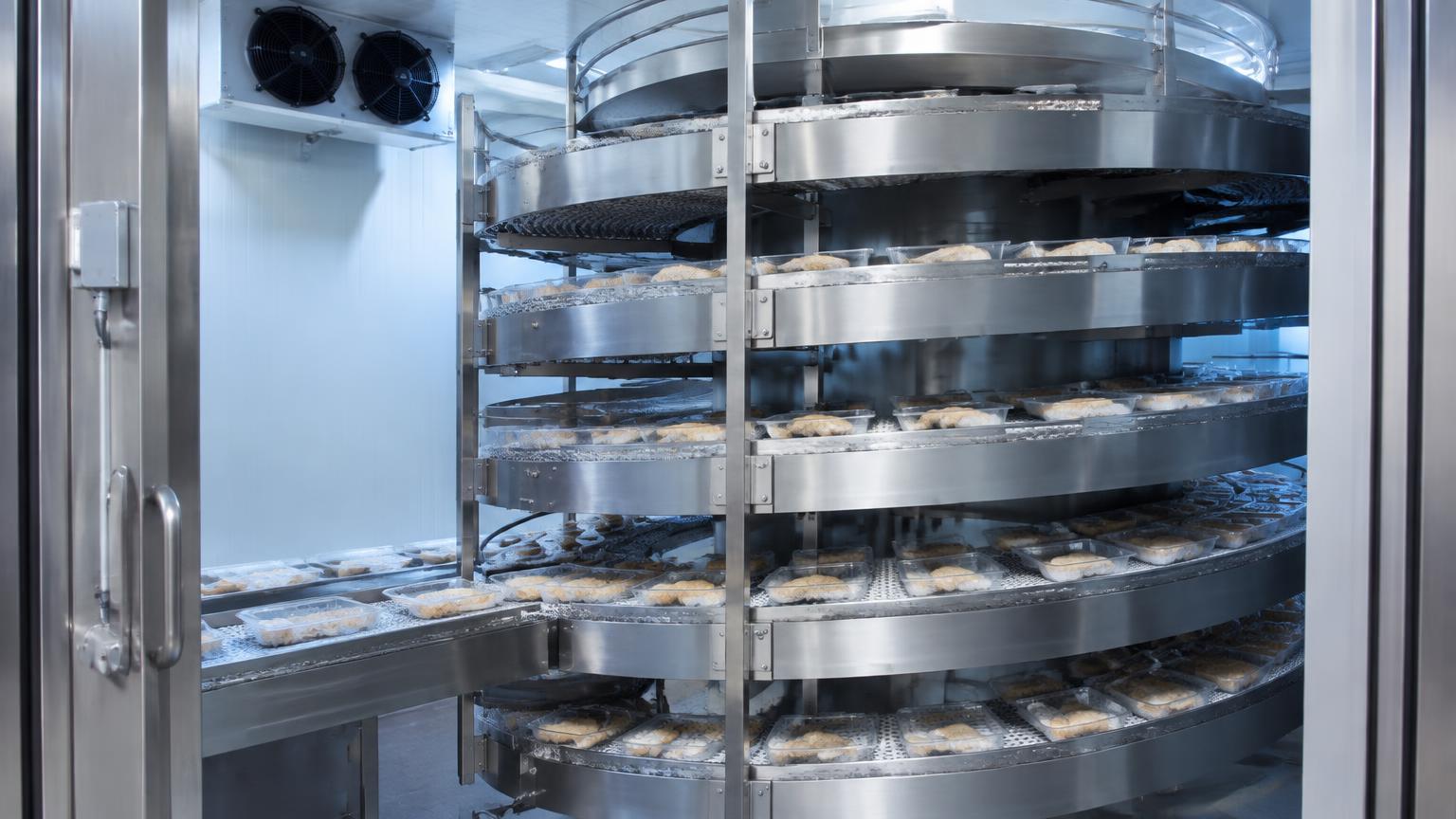
- Spiral freezers: a conveyor belt spirals inside a compact enclosure; suited to continuous, high-volume lines such as poultry portions, bakery and ready meals.
- IQF (individual quick freezing) freezers: fluidised-bed or belt freezers that freeze small pieces separately — vegetables, berries, shrimp, diced products — so they flow freely in packs.
- Plate freezers: product is pressed between refrigerated plates; efficient for blocks of fish, meat or pulp.
- See our blast freezer overview for applications by industry.
How to size a blast freezer
Sizing starts from how much product must be frozen and how fast. Key inputs are: - Throughput: kg per hour for continuous lines, or kg per batch and batches per day for blast rooms. - Entry temperature: product coming from cooking or processing at high temperature needs far more heat removed than product pre-chilled to +4 °C. - Target core temperature: usually −18 °C or colder at the centre before transfer to storage. - Product thickness and packaging: freezing time rises sharply with thickness; cartons and stacked packs slow freezing compared with open product. - Product type: water content and density change how much heat must be removed. The blast freezer cost calculator and the IQF freezer sizing calculator turn these inputs into a first estimate of capacity.
Refrigeration, energy and defrost
Blast freezers operate at low evaporating temperatures, so the refrigeration system strongly affects energy use. Larger plants often use ammonia (NH₃) or CO₂, including NH₃/CO₂ cascade systems, for efficiency at low temperatures — compare them in our NH₃ vs CO₂ guide. Ask suppliers for energy consumption per kg of product frozen at your conditions, the defrost method and frequency (frost builds quickly when warm, moist product enters), and fan power, which can be a significant share of total load.
Hygiene, safety and operations
Food plants need freezers that can be cleaned thoroughly. Look for stainless steel construction, sloped surfaces, open belt designs, clean-in-place systems on spirals and IQF freezers, and easy access for inspection. Operator safety includes emergency release on doors, alarms, and safe access in very cold environments. Plan where frozen product goes next — a short, temperature-controlled path into the cold store avoids temperature rise during transfer.
Blast room, spiral or IQF? A quick guide
- Many different products, moderate volume: batch blast room.
- Steady line of packaged or unpackaged items: tunnel or spiral.
- Small free-flowing pieces (vegetables, berries, shrimp): IQF.
- Flat blocks of fish or meat: plate freezer.
- Many plants combine types, for example IQF for vegetables plus a blast room for occasional batches.
What to include in your RFQ
State product types, throughput, entry and target core temperatures, product dimensions and packaging, available floor space and ceiling height, power and refrigerant preferences, hygiene requirements, integration with existing lines and cold store, and the scope you expect (installation, commissioning, training, service). Use the RFQ builder to structure it; ColdMatch Group reviews each brief before introducing qualified suppliers. For budgets, use the planning ranges in the cold storage cost guide.
Choosing a supplier
Blast freezers are engineered equipment, and proposals often differ in what they assume. When you compare offers, check that every supplier has used the same throughput, entry and core temperatures and product dimensions. Ask for guaranteed freezing time and capacity at your conditions, not catalogue figures; references from plants freezing similar products; local service coverage and spare-parts stock; delivery and installation schedules; and how the freezer will be tested at commissioning. A supplier that asks detailed questions about your product is usually a better sign than the fastest quote.
Energy tips that pay back
- Pre-chill cooked products where food safety allows, so the freezer removes less heat.
- Load trolleys and belts evenly so air reaches every product.
- Use variable-speed fans and compressors to follow real load.
- Recover condenser heat for hot water or underfloor heating.
- Schedule defrosts on demand rather than on fixed timers.
- Small operating changes like these can noticeably reduce energy per kg over the life of the freezer.
Common mistakes
- Using a storage freezer to freeze warm product.
- Sizing from average instead of peak throughput.
- Ignoring product thickness and packaging when estimating freezing time.
- Underestimating defrost needs and frost load.
- Comparing price without energy per kg and hygiene design.
Run the numbers
Calculators for this project type
Indicative planning figures only — final sizing belongs to the supplier's or consultant's detailed design.
Blast freezer cost calculator
Size freezing capacity and indicative cost from daily tonnage, entry and target core temperature.
Energy & backup powerEnergy & backup power cost calculator
Annual energy spend from load and running hours, plus the cost of generator hours during outages.
Frequently asked questions
Plan the numbers before you send an RFQ
The reference pages buyers use most before requesting quotes.