Pull to refresh
ColdMatch Group — industrial cooling and cold chain procurement platform
ColdMatchGroupMulti-Bid Cold Chain Sourcing
SolutionsIndustriesKnowledge CenterMarketsToolsFinancingLogistics
ColdMatch Group — industrial cooling and cold chain procurement platform
ColdMatchGroup
SolutionsIndustriesKnowledge CenterIntelligence Center & CalculatorsIndustry IntelligenceExecutive Knowledge CenterPlanning CenterEquipment IntelligenceInnovation & TechnologyProcurement AcademyCase StudiesMarkets by CountryTools & CalculatorsCertificationsFind SuppliersFinancingLogisticsGet Free Quotes
DashboardPrepare a Professional RFQ
DashboardSign inPrepare a Professional RFQ
Cold-chain project financing.Financing for qualified cold-chain projects — introduced to independent financing partners.FinancingFinancing Center
Home

Offline — reconnect before saving or submitting. Changes on this page have not been sent.

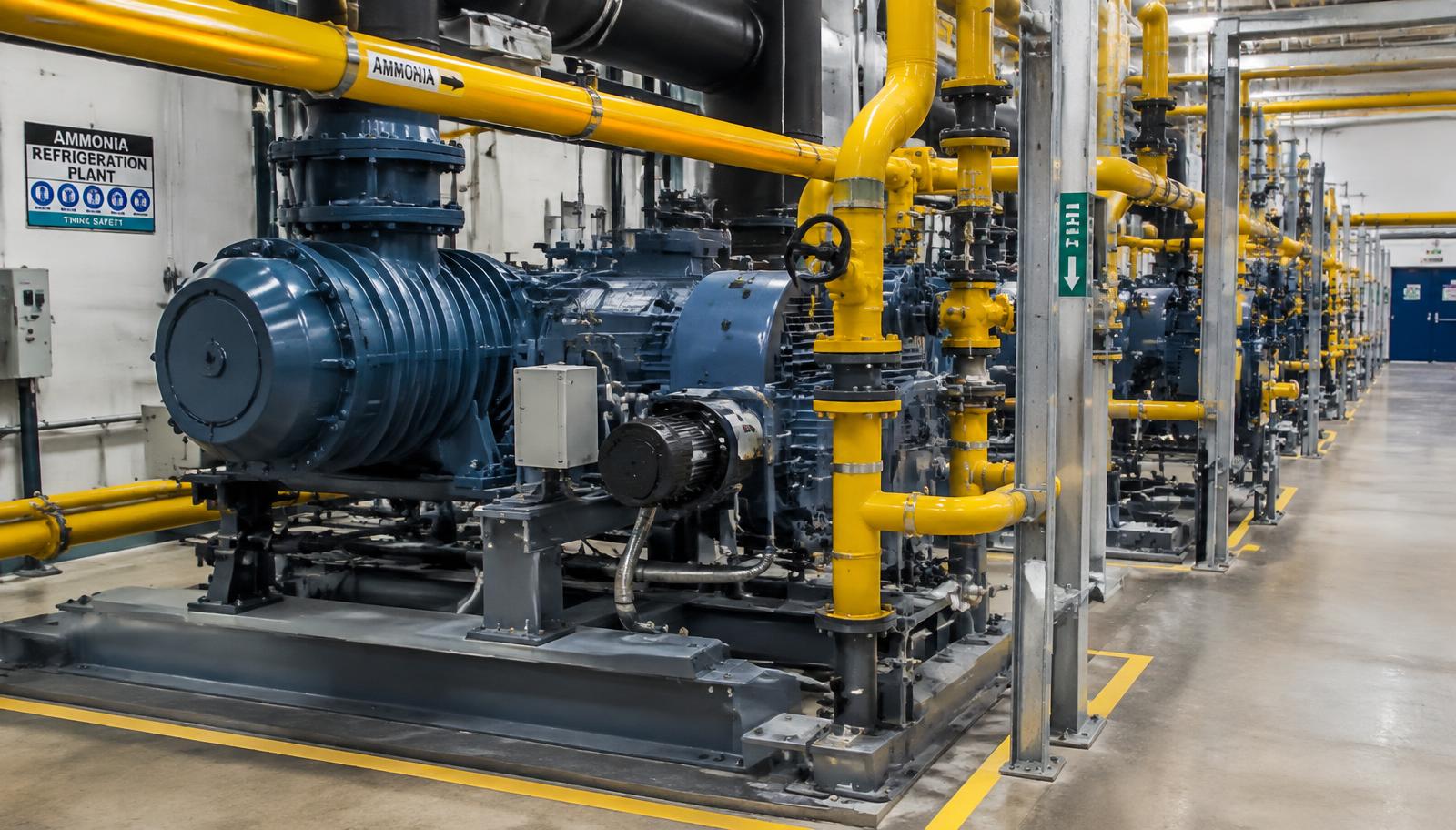
Industrial cold-storage refrigeration plant room with insulated pipework, compressor packages and a technician inspecting a control panel.
← Insights
Refrigeration Technology Oct 2026·6 min read

Natural Refrigerants for Industrial Cold Storage

Why ammonia and CO2 are gaining ground in industrial cold storage—and how buyers should weigh efficiency, safety, regulation and cost.

EnglishالعربيةPortuguês (Brasil)עבריתРусскийfi

Quick answer

Why ammonia and CO2 are gaining ground in industrial cold storage—and how buyers should weigh efficiency, safety, regulation and cost. Not in every application. Ammonia can be highly efficient for large central plants, while CO2 can perform strongly in appropriate low-temperature and cascade configurations. Compare annual energy models using the same loads, ambient conditions and system boundaries. Refrigerant choice alone cannot establish which proposal will consume less electricity.

Key takeaways

  • ▸Is ammonia more efficient than CO2 for industrial cold storage? Not in every application.
  • ▸Do F-gas phase-downs mean existing synthetic systems must be replaced? Not necessarily.
  • ▸Are natural refrigerants safe inside a cold-storage facility? They can be used safely with appropriate engineering and operating controls, but neither is risk-free.
  • ▸When is an ammonia/CO2 cascade system worth considering? Consider it when substantial low-temperature loads and a preference to limit ammonia to a designated plant area align with the site’s operating strategy.

In this article

  1. 01. Why are F-gas rules changing refrigerant decisions?
  2. 02. How do efficiency and climate benefits strengthen the case?
  3. 03. Where do ammonia and CO2 fit best?
  4. 04. What safety, skills and maintenance trade-offs matter?
  5. 05. When do synthetic or hybrid systems still make sense?
  6. 06. How should buyers compare lifecycle value?
  7. 07. What are the next steps for your cold-storage project?
  8. 08. Plan it with ColdMatch tools
  9. 09. Sources and how to read this guide

Reviewed: Oct 2026 · ColdMatch Group

Short answer: Ammonia and CO2 are increasingly chosen for industrial cold storage because they reduce exposure to HFC phase-down pressures and can deliver strong lifetime performance. Neither is automatically the best option: climate, temperature duty, safety engineering, maintenance capabilities and whole-life cost should determine the specification.

# Why Natural Refrigerants Are Winning in Industrial Cold Storage

For long-life cold-storage assets, refrigerant selection is a business decision as much as an engineering choice. It affects energy demand, serviceability, permitting and future conversion risk. Natural refrigerants are gaining ground because buyers increasingly evaluate these factors together rather than selecting the lowest equipment price.

Why are F-gas rules changing refrigerant decisions?

HFC phase-down programmes and regional F-gas requirements are changing the outlook for many synthetic refrigerants. Depending on the jurisdiction, buyers may face restrictions on particular equipment, tighter servicing requirements or reduced availability of higher-global-warming-potential refrigerants. The implications differ by refrigerant, application and location.

A phase-down is not a universal ban on every synthetic system. Nevertheless, a cold store expected to operate for many years needs a credible refrigerant supply and maintenance strategy. Equipment that remains serviceable today may present a less attractive lifecycle proposition if its refrigerant becomes harder to source or its permitted uses narrow.

Ammonia and CO2 avoid the HFC phase-down issue, but they do not avoid regulation. Pressure-equipment rules, building and fire requirements, occupational safety obligations and environmental permits still matter. Ask suppliers to identify applicable local requirements and explain both present compliance and foreseeable servicing constraints.

How do efficiency and climate benefits strengthen the case?

Refrigeration has two distinct climate impacts: direct emissions from refrigerant leakage and indirect emissions associated with electricity consumption. Ammonia has no direct global-warming impact as a refrigerant, while CO2 has a much lower direct climate impact than many conventional HFCs. However, refrigerant choice alone does not establish a system’s overall environmental performance.

Ammonia can deliver excellent efficiency in well-designed industrial plants. CO2 also performs strongly in suitable configurations, particularly for low-temperature duties. Actual consumption depends on ambient conditions, suction and condensing temperatures, compressor selection, heat-exchanger performance and control strategy.

Warm climates require particular care when evaluating transcritical CO2. Advanced configurations can improve performance, but their benefits must be demonstrated against the site’s annual operating profile—not assumed from a favourable design point.

Start with a defensible load estimate using the cooling-load calculator. Door openings, incoming product temperature, pull-down requirements and defrost can materially change the design. Good insulation, infiltration control and commissioning remain essential regardless of refrigerant.

Where do ammonia and CO2 fit best?

Ammonia is a strong candidate for central industrial plants serving substantial, sustained loads. Its thermodynamic performance and established industrial service practices make it attractive where the site can support the required safety systems and operating competence. Low-charge designs and secondary cooling loops can limit refrigerant inventory or keep ammonia away from selected occupied areas.

CO2 can suit low-temperature distribution, packaged systems and facilities where avoiding ammonia in storage or processing areas is a priority. Its high operating pressures require purpose-designed equipment, while architecture and local climate strongly influence efficiency.

Ammonia/CO2 cascade systems combine the two: ammonia typically serves the higher-temperature stage, while CO2 serves the lower-temperature circuit. Both refrigerants are natural, although the combined installation introduces additional interfaces and controls.

The NH3 versus CO2 buyer’s guide can help frame the shortlist. Compare complete system designs rather than treating refrigerant names as competing equipment specifications.

What safety, skills and maintenance trade-offs matter?
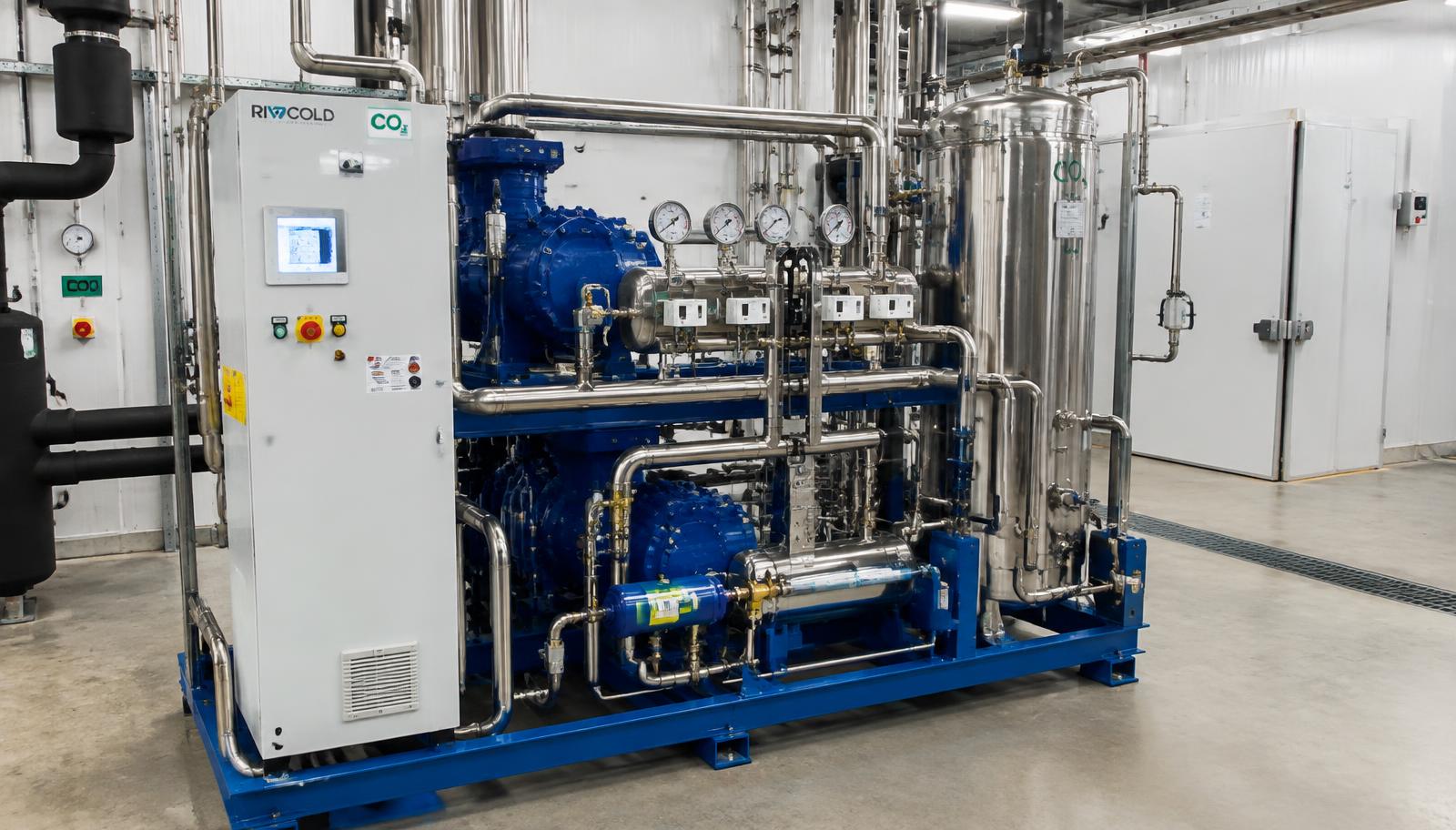
Refrigeration technician checking wall-mounted gas detection equipment beside insulated pipes and ventilation ductwork in an industrial cold-storage machinery room.
Natural-refrigerant installations require coordinated safety systems, accessible equipment and trained maintenance personnel.

“Natural” does not mean harmless. Ammonia is toxic and has limited flammability under certain conditions. CO2 can create dangerous concentrations in enclosed spaces and operates at high pressure. Both require engineered containment, appropriate detection, ventilation, pressure protection and documented emergency procedures.

The practical questions extend beyond the machinery room:

  • Where could a release travel, and who could be exposed?
  • How are alarms, ventilation and emergency shutdowns coordinated?
  • What happens during power loss, maintenance isolation or prolonged shutdown?
  • Who can respond locally, and which spares are available?
  • How will technicians safely isolate, service and recommission the plant?

CO2 designs need particular attention to pressure management during standstill and power interruption. Ammonia designs require careful decisions about charge, equipment location, material compatibility and release management.

Maintenance capability should influence procurement before the specification is fixed. Confirm technician competence, inspection responsibilities, training provision and emergency support. A highly efficient installation can become operationally fragile if only a distant specialist understands its controls. Budget for commissioning, operator training and ongoing maintenance—not just equipment delivery.

When do synthetic or hybrid systems still make sense?

A synthetic refrigerant can remain a rational choice when it fits local rules, the required temperature duty and the available service infrastructure. Examples include constrained retrofits, smaller independently operated zones, temporary capacity and sites where introducing ammonia would create disproportionate complexity.

Lower-GWP synthetic options deserve a technically fair assessment, but they are not interchangeable. Some introduce flammability considerations; others involve temperature glide, different operating pressures or equipment compatibility requirements. Require a refrigerant-specific assessment rather than accepting “future-proof” as a specification.

Hybrid layouts can also be practical. A site might combine an ammonia central plant with a secondary fluid loop, use an ammonia/CO2 cascade, or retain serviceable synthetic equipment while expanding with natural refrigerants. Secondary loops add pumping and heat-transfer penalties, while mixed systems broaden maintenance needs. The right transition is the one that manages those trade-offs without undermining uptime.

How should buyers compare lifecycle value?

For projects of USD 250K+, purchase price is only one part of the decision. Compare proposals against the same temperature requirements, product throughput, ambient conditions, operating schedule and redundancy expectations. Otherwise, apparently cheaper bids may simply contain less scope.

Build the comparison around:

  • Installed scope, including electrical works, ventilation, detection and controls.
  • Annual energy modelling using realistic loads and local weather.
  • Maintenance, refrigerant supply, inspections, training and spares.
  • Resilience during equipment failure, defrost and power interruption.
  • Expansion options and future refrigerant-related constraints.

Use the cold-storage cost benchmarks for early budgeting context, then replace assumptions with site-specific quotations. The refrigeration TCO calculator can help organise lifecycle scenarios; its outputs depend on the quality of the inputs.

Require bidders to disclose exclusions, modelling assumptions and performance verification methods. A structured process for comparing supplier proposals helps distinguish genuine value from omitted work or optimistic operating assumptions.

What are the next steps for your cold-storage project?

Define the site, temperature zones, product movements, expansion plans and available utilities before choosing a refrigerant. Include local service capabilities and any restrictions on machinery-room location or refrigerant use.

ColdMatch Group is the industrial refrigeration and cold-chain procurement platform of Global B2B Group. It is vendor-neutral, focuses on projects of USD 250K+ and works with a network of 100+ suppliers. It is not an automatic marketplace: buyers submit a request, ColdMatch reviews it and prepares a brief, then manually introduces qualified suppliers.

Submit your project for review to start a requirements-led sourcing process that keeps refrigerant selection tied to your operating needs.

Plan it with ColdMatch tools

Turn this guide into project numbers with these planning tools. Results are estimates from your own inputs, not supplier quotations.

  • Refrigeration total cost of ownership calculator
  • Cooling load calculator
  • Submit your project for a reviewed supplier brief — For commercial projects from USD 250,000, ColdMatch reviews the brief before introducing independent suppliers.

Related reading: Cold Storage Design for Hot Climates: Planning Guide · How to Reduce Cold Storage Energy Costs: 2026 Guide

Sources and how to read this guide

Regulatory and technical statements refer to the official sources below. Project-specific values such as capacities, loads and costs must be confirmed by your engineer and supplier proposals.

  • Regulation (EU) 2024/573 on fluorinated greenhouse gases
  • US EPA — Reducing hydrofluorocarbons (AIM Act)
  • UNEP Ozone Secretariat — Kigali Amendment

Turn this guidance into a refrigeration brief for ColdMatch review and organised supplier responses. ColdMatch is supplier-neutral and free for buyers. For industrial projects from USD 250,000, the team qualifies the brief, contacts suitable suppliers on your behalf and presents organised responses; no automatic supplier connection.

Start a structured industrial refrigeration RFQ

Run the numbers

Calculators for this project type

Indicative planning figures only — final sizing belongs to the supplier's or consultant's detailed design.

Refrigeration sizing

Cold storage capacity calculator

Pallet positions, chamber volume and indicative build cost for a refrigerated warehouse.

Energy & backup power

Energy & backup power cost calculator

Annual energy spend from load and running hours, plus the cost of generator hours during outages.

Related solutions
Industrial Refrigeration Systems Cold Rooms Generators & Backup Power All solutions
Turn these numbers into a cold storage RFQ Free for buyers · Supplier-neutral · One scope to several suppliers
Request a quote

Frequently asked questions

Plan the numbers before you send an RFQ

The reference pages buyers use most before requesting quotes.

Cold room cost guideUSD/m³ and USD/pallet benchmarks by temperature class.Cold storage construction cost guideCAPEX breakdown: envelope, refrigeration, racking, civil works.Refrigerant phase-out guideF-gas / Kigali timelines and NH3, CO2 and HFO options.Cold storage calculatorSize the room, load and energy spend in under two minutes.Project financingLease, term and export-credit structures for cold chain CAPEX.RFQ BuilderOne structured RFQ to qualified suppliers and EPCs.

In this article

  1. Why are F-gas rules changing refrigerant decisions?
  2. How do efficiency and climate benefits strengthen the case?
  3. Where do ammonia and CO2 fit best?
  4. What safety, skills and maintenance trade-offs matter?
  5. When do synthetic or hybrid systems still make sense?
  6. How should buyers compare lifecycle value?
  7. What are the next steps for your cold-storage project?
  8. Plan it with ColdMatch tools
  9. Sources and how to read this guide

Planning a project?

One brief, reviewed by a specialist, compared across qualified suppliers.

Start your project

Related insights

Refrigeration Technology

NH₃ vs CO₂ Refrigeration: Total Cost of Ownership Comparison for Large Cold Storage

A vendor-neutral engineering and procurement comparison of ammonia (NH₃, R717) and CO₂ (R744) refrigeration for large-scale cold storage — energy efficiency by climate and evaporating temperature, safety and compliance obligations, capex versus 15-year opex, and how to build a defensible total cost of ownership model before you shortlist suppliers.

Refrigeration Technology

NH₃ vs CO₂ Refrigeration: A Buyer's Guide for 2026

Ammonia or CO₂ for your cold store? Compare efficiency, safety, cost drivers, climate fit and supplier questions before you issue a refrigeration RFQ.

Technical Guides

CO2 vs Ammonia Industrial Refrigeration Systems

How to choose between R744 and R717 for industrial cold-chain projects: scale, climate, safety, efficiency, regulation, service coverage and lifetime cost.

Refrigeration Technology

Blast Freezers: How to Choose and Size One (2026 Guide)

How to choose a blast freezer: blast rooms vs tunnels, spiral and IQF freezers, sizing by product and throughput, refrigerants, energy and supplier RFQs.

Procurement

Cold Storage Projects: Engineering & Lifetime Cost First

Why cold storage buyers should fix heat load, temperature, energy and OPEX before comparing supplier prices: formulas, worksheets and a staged roadmap.

Innovation & Technology

The Next Generation of Cold Chain: Innovation That Actually Changes Project Economics

Automation, natural refrigerants, digital twins, thermal storage and AI-assisted procurement are moving from pilot projects into mainstream cold storage builds. This guide separates the innovations that measurably change energy cost, delivery time and project risk from the ones that only look impressive in a brochure — and shows how to write them into an RFQ.

Project request

Submit your project for expert review

Send your requirements. A ColdMatch specialist reviews every request, prepares a brief and introduces qualified suppliers — free for qualified buyers.

ColdMatch Group — industrial cooling and cold chain procurement platform
ColdMatchGroup

Because we care more.

ColdMatch Group is the industrial refrigeration and cold-chain procurement platform of Global B2B Group, where commercial and industrial buyers build a project and submit an RFQ; the ColdMatch team validates and organizes it, contacts suitable refrigeration technology and equipment suppliers on the buyer's behalf, and presents organized responses through ColdMatch.

support@coldmatchgroup.com
Follow on LinkedIn
Language
Sourcing & Financing
  • Get Free Quotes
  • RFQ Builder
  • Urgent Procurement
  • Solutions
  • Suppliers
  • Refrigeration Marketplace
  • Global Coverage
  • Project Financing
  • Financing Center
Tools & Knowledge
  • Planning Center
  • Calculators
  • Innovation & Technology
  • Projects Hub
  • Knowledge Hub
  • Cold Chain Answers
  • Cost Benchmarks 2026
  • AI Agents (MCP)
Markets
  • All Country Markets
  • Zambia
  • Ghana
  • Malawi
  • Kenya
  • Nigeria
  • Mauritius
  • Israel
  • Finland
  • Hungary
Company
  • About ColdMatch
  • How ColdMatch Works
  • Solutions by Buyer Type
  • Consultant Partner Program
  • Supplier Qualification
  • Trust Center
  • Case Studies
  • Blog
  • Contact
Business and supplier disclaimer

ColdMatch Group is the industrial refrigeration and cold-chain procurement platform of Global B2B Group, where commercial and industrial buyers build a project and submit an RFQ; the ColdMatch team validates and organizes it, contacts suitable refrigeration technology and equipment suppliers on the buyer's behalf, and presents organized responses through ColdMatch. It helps buyers prepare technical requirements and structured RFQs before suitable third-party suppliers, manufacturers, EPC contractors and turnkey providers are introduced manually. ColdMatch is not an equipment manufacturer, reseller, distributor, EPC contractor, installer, insurer, lender, bank or financial advisor, and is not a party to any supply, construction or finance contract. Quotes, equipment and services are provided solely by the matched third-party supplier, who is solely responsible for quality, delivery, installation, safety and performance. ColdMatch makes no guarantee of availability, price, quality or approval and disclaims all liability for any service provided by a supplier or other third party. See Terms and How ColdMatch Works.

Financing disclaimer: ColdMatch does not provide or guarantee finance. Any financing pathway is evaluated and supplied solely by independent third-party providers under their own checks and terms. See Terms.

ColdMatch Group is the industrial refrigeration and cold-chain procurement platform of Global B2B Group, where commercial and industrial buyers build a project and submit an RFQ; the ColdMatch team validates and organizes it, contacts suitable refrigeration technology and equipment suppliers on the buyer's behalf, and presents organized responses through ColdMatch. It helps buyers prepare technical requirements and structured RFQs before suitable third-party suppliers, manufacturers, EPC contractors and turnkey providers are introduced manually. ColdMatch is not an equipment manufacturer, reseller, distributor, EPC contractor, installer, insurer, lender, bank or financial advisor, and is not a party to any supply, construction or finance contract. Quotes, equipment and services are provided solely by the matched third-party supplier, who is solely responsible for quality, delivery, installation, safety and performance. ColdMatch makes no guarantee of availability, price, quality or approval and disclaims all liability for any service provided by a supplier or other third party. See Terms and How ColdMatch Works.

Disclaimer: ColdMatch Group is the specialized industrial refrigeration and cold-chain procurement platform of Global B2B Group. ColdMatch Group is not a manufacturer, reseller, distributor, EPC contractor, installer, insurer, lender, bank, credit provider, financial advisor, investment advisor, underwriter or regulated financial services provider. Any financing, leasing, trade finance, working capital or project-finance option mentioned on this website is provided solely by independent third-party financing providers, subject to their own eligibility checks, KYC, due diligence, compliance review, approval, terms and documentation. ColdMatch Group does not provide financial advice, does not arrange regulated financial products, does not guarantee financing approval, and is not responsible for any financing decision, offer, rejection, delay, cost, term or outcome. Quotes, equipment, services, delivery, installation, commissioning, warranties and project performance are provided solely by independent third-party suppliers, EPC contractors or service providers. See Terms.

ColdMatch Group · Global Refrigeration & Cold-Chain Sourcing
How ColdMatch Works·Cold Chain Project Markets·Project Guide·RFQ Process·AI Agent Brief·For AI Cold Chain & Refrigeration Procurement Agents·Supplier Qualification·Trust Center·Legal Center·Terms of Service·Privacy Policy·Agency Policy·Contact·Client Login (Buyer Portal)·Accessibility·Accessibility Support
Legal Documents
Terms of Service·Privacy Policy·Agency Policy·Cookie Policy·General Disclaimer·Legal Notice·RFQ Terms·Buyer Terms·Supplier Terms·Financing Disclaimer·Acceptable Use Policy·Marketplace Rules·Intellectual Property & Copyright Policy·Data Protection & GDPR·AML, Sanctions, Export & Anti-Bribery Policy·Cyber Security & Responsible Disclosure·AI & Third-Party Content Disclaimer
EnglishالعربيةעבריתPortuguêsPortuguês (Brasil)РусскийSuomiMagyarTürkçe
Operated from the Republic of Cyprus · We are committed to WCAG 2.1 AA accessibility — report barriers to accessibility@coldmatchgroup.com.© 2026 ColdMatch Group · All rights reserved.ColdMatch Group is the specialized commercial cold-chain platform of Global B2B Group — a global B2B procurement & project development ecosystem. Sister platforms: FishMatch Group, HatchMatch Group, FeedMatch Group, SeedMatch Group. About ColdMatch Group.ColdMatch helps buyers prepare cold chain RFQs and source suitable suppliers. Supplier matching and introductions are managed manually by ColdMatch — not an automatic marketplace. How it works.
CalculatorsGuidesFinancingGet a Quote

Get updates

Cold-chain reading, project resources and technology evidence.

Email subscriptions are not active. Your details will not be sent or saved.

Get updates

Separate from project enquiries. You can unsubscribe or change preferences in every update email once the service is active. Privacy notice