
The Next Generation of Cold Chain: Innovation That Actually Changes Project Economics
Automation, natural refrigerants, digital twins, thermal storage and AI-assisted procurement are moving from pilot projects into mainstream cold storage builds. This guide separates the innovations that measurably change energy cost, delivery time and project risk from the ones that only look impressive in a brochure — and shows how to write them into an RFQ.
Quick answer
Automation, natural refrigerants, digital twins, thermal storage and AI-assisted procurement are moving from pilot projects into mainstream cold storage builds. This guide separates the innovations that measurably change energy cost, delivery time and project risk from the ones that only look impressive in a brochure — and shows how to write them into an RFQ. Energy architecture and digital control. A natural-refrigerant plant with variable-speed compressors, floating head pressure and a proper monitoring and set-point strategy changes annual electricity cost — which over 15 years usually…
Key takeaways
- What is the most cost-effective cold chain innovation for a mid-size facility?
- Is automated cold storage worth it below 10,000 pallet positions?
- What does a digital twin actually do for a cold storage project?
- How do I stop innovation being cut during value engineering?
Reviewed: Aug 2026 · ColdMatch Group
Cold chain innovation has a credibility problem. Every equipment brochure promises intelligence, sustainability and Industry 4.0, yet most facilities commissioned this year still run the same architecture as facilities commissioned a decade ago. The difference between the two groups is rarely technology availability — it is whether the buyer wrote the innovation into the specification early enough for it to be priced, financed and supported.
This guide is written for project owners, plant managers and procurement directors planning a cold storage or cold chain investment between USD 150,000 and USD 100M+. It reviews the innovations that are commercially mature in 2026, what each one realistically changes in energy cost, delivery time or risk, and how to convert them into RFQ language that suppliers can quote against.
What actually counts as next-generation in 2026
A useful filter: an innovation is next-generation when it changes at least one number on the project's own business case — annual kWh, throughput per square metre, spoilage rate, labour hours, commissioning weeks or cost of capital. Anything that only changes the presentation deck is a feature, not an innovation. Five clusters clear that bar today: automation and robotics, natural refrigerants with heat recovery, digital twins and predictive control, thermal and electrical storage, and AI-assisted procurement and design.
Each cluster has a distinct payback profile. Automation is capital-heavy with a long payback that depends on labour cost. Refrigerant and energy strategy pays back everywhere. Digital control pays back fastest of all, because software retrofits do not need civil works. Understanding that order stops buyers from spending their innovation budget in the wrong place.
Automation: footprint, labour and cold-side ergonomics
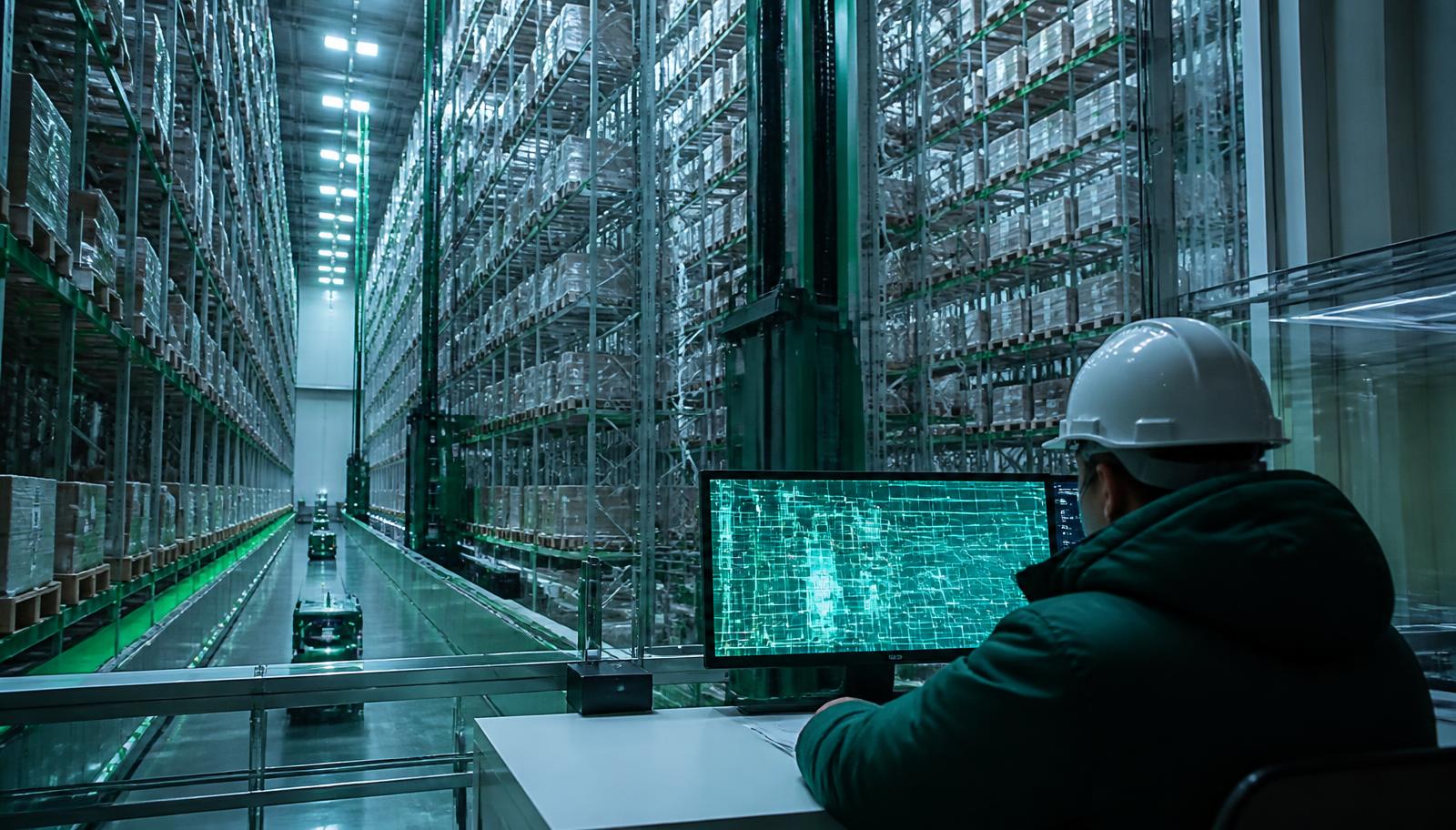
Automated storage and retrieval systems (AS/RS) in freezer environments are no longer experimental. High-bay automated freezers reach 30–40 m clear height against 10–12 m for conventional racking, which cuts the building envelope and the surface area through which heat leaks in. Removing people from a −25 °C aisle also removes the need for lighting levels, door traffic and heating loops designed for human comfort — infiltration and defrost load fall accordingly.
The trade-off is capital. Automated freezers typically carry a significant premium over a conventional build of the same capacity, and the payback depends heavily on local labour cost, land price and utilisation. As a screening rule, automation deserves a serious business case above roughly 8,000–10,000 pallet positions, on constrained or expensive land, or where reliable freezer-rated labour is hard to retain. Below that, semi-automation — automated pallet shuttles, conveyor infeed, automated doors and cold-rated AGVs — usually captures most of the benefit at a fraction of the cost.
One practical warning: automation raises the cost of being wrong about throughput. Model peak-hour pallet moves, not annual averages, and demand that the supplier's simulation is shared as part of the bid.
Energy is the innovation that pays first
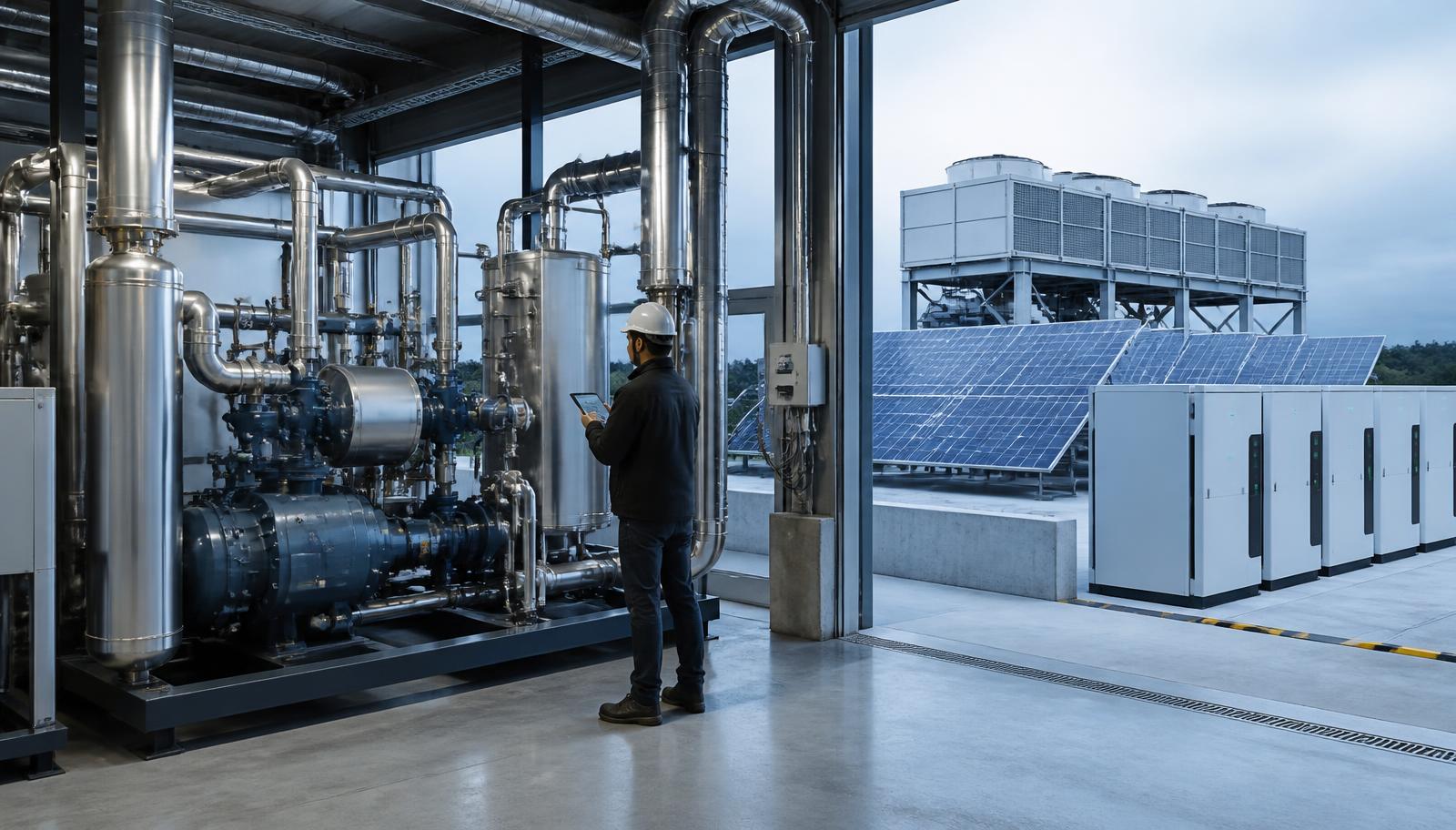
Over a 15-year life, electricity typically outweighs the entire capital cost of the refrigeration plant. That single fact makes energy architecture the highest-leverage innovation available to any buyer, at any project size.
Natural refrigerants are the baseline, not the upgrade. Low-charge ammonia and CO₂ transcritical systems avoid F-gas phase-down price and availability risk entirely, and modern designs — variable-speed compressors, floating head pressure, parallel compression, adiabatic gas coolers and mechanical subcooling in hot climates — have removed most of the historical efficiency penalty. Our NH₃ vs CO₂ total cost of ownership comparison sets out how to model the choice against your own weather and tariff data.
Around that core, four measures are now routine on well-designed projects:
Digital twins, sensors and predictive control
The fastest-moving layer is software. A digital twin — a calibrated model of the building, load profile and refrigeration plant — lets a buyer test rack layouts, door strategies, set-points and failure scenarios before concrete is poured, then keep the model alive as an operating baseline. In operation, the same model turns continuous temperature, pressure and power data into deviation alerts long before product is at risk.
Predictive maintenance is where the operational case is strongest. Vibration, discharge-temperature and current signatures on compressors reliably flag developing faults weeks ahead of failure. For a facility holding high-value product, avoiding a single unplanned outage in the peak season can justify the entire monitoring investment.
For regulated cargo — pharmaceutical, seafood, dairy — continuous monitoring with an immutable audit trail is increasingly a commercial precondition rather than an optimisation. Buyers pursuing ISO 22000 cold storage compliance should specify data retention, alarm escalation and validation reporting in the same document as the mechanical scope.
AI-assisted design and procurement
The least visible innovation is changing the front end of projects. Sizing a cold room, screening a refrigerant strategy, building a capex and opex envelope by country and drafting a complete request for quotation used to take weeks of consultant time. Structured tools now compress that into a working session, which matters because early-stage specification quality is the strongest predictor of whether a project lands on budget.
This is where ColdMatch Group operates. Buyers use the cold storage cost guide and the planning calculators to build a defensible envelope, then issue one structured RFQ through the RFQ builder to a shortlist of qualified suppliers, with human expert guidance from specification through delivery. The platform is supplier-neutral: it does not manufacture equipment, so the recommendation follows the engineering, not an inventory position.
Where innovation still fails
Three failure patterns repeat across markets. First, innovation specified after the budget is fixed — automation and heat recovery cannot be retrofitted into a locked capex line. Second, technology bought without local support: an advanced control platform with no service engineer within a day's travel becomes a liability the first time it faults. Third, data collected but never used — sensors installed with no owner, no alarm threshold and no review routine deliver nothing.
The remedy is procedural rather than technical. Name an owner for every intelligent system, require documented local service coverage and spare-parts lead times inside the bid, and score suppliers on training and commissioning support as well as price.
How to write innovation into your RFQ
The practical takeaway
Next-generation cold chain is not a single technology purchase. It is a sequence: get the energy architecture right because it pays everywhere, add digital control because it pays fastest, and treat automation as a capacity decision justified by throughput and labour economics rather than ambition. Everything else follows from a specification written early enough to be priced honestly.
Buyers planning a project can compare qualified suppliers across global markets through ColdMatch Group, with human expert guidance at every stage. Request free supplier quotes with your load profile and target markets, and the engineering review comes back with the options — and the trade-offs — already modelled.
Run the numbers
Calculators for this project type
Indicative planning figures only — final sizing belongs to the supplier's or consultant's detailed design.
Fish & seafood cold storage calculator
Chilled and frozen volume, ice demand and storage capacity for landing sites and processing plants.
Energy & backup powerSolar & backup power calculator
Solar-assisted cooling, generator run hours and indicative savings where grid supply is unstable.
Frequently asked questions
Plan the numbers before you send an RFQ
The reference pages buyers use most before requesting quotes.