
Quick answer
What 'cold chain solutions' really means in 2026 — refrigeration systems, cold storage, reefer logistics, GDP pharma and financing — and how to source them globally with qualified suppliers in 48 hours. A cold chain solution is the complete temperature-controlled system that keeps a perishable product within its required temperature window from origin to end consumer. It is not one product. It is an integrated stack of refrigeration equipment, insulated envelope, monitoring, logistics and operating procedures.
Key takeaways
- What 'cold chain solutions' actually means A cold chain solution is the complete temperature-controlled system that keeps a perishable product within its required temperature window from origin to end consumer.
- The seven blocks of a modern cold chain solution 1.
- Cold chain solutions by industry Food & beverage.
- How much do cold chain solutions cost? Indicative 2026 ranges (CAPEX, turnkey, before site-specific civils): a 500 m³ chilled room from USD 80–150K; a 2,000 m³ frozen room from USD 350–700K; a 10,000-pallet automated freezer from USD 18–35M; a 2 MW…
Reviewed: Jun 2026 · ColdMatch Group
If you searched for 'cold chain solutions' you probably did not want a dictionary definition or a generic LinkedIn company page. You want to know what a modern cold chain actually contains, who builds the credible parts of it, how much it costs, how to finance it, and how to source the right supplier without spending three months on RFQs. This guide answers all of that, written by ColdMatch Group — an independent global sourcing platform that has matched buyers across food, pharma, retail and industrial projects with verified refrigeration manufacturers, EPCs, 3PL operators and project financiers worldwide.
What 'cold chain solutions' actually means
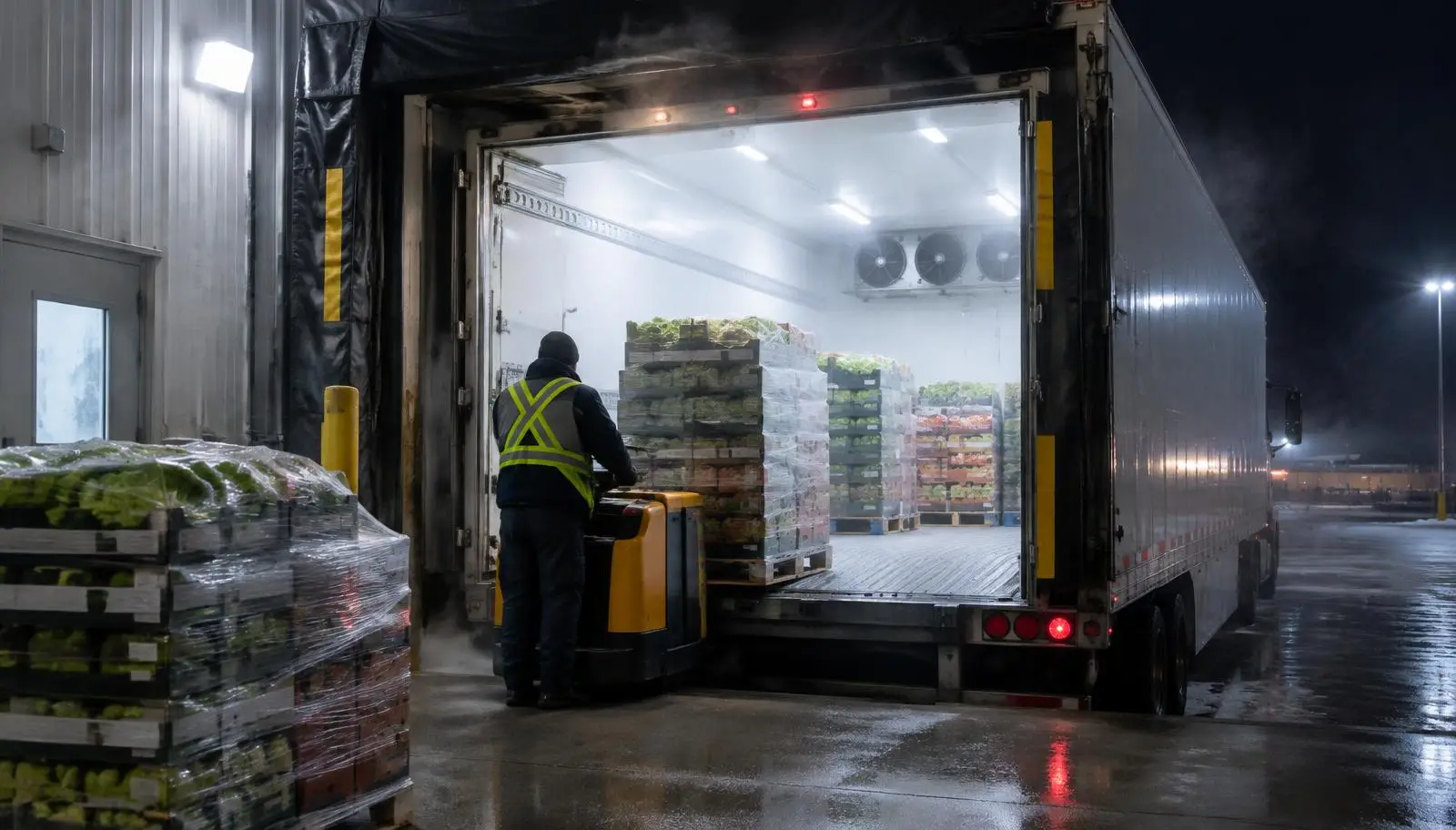
A cold chain solution is the complete temperature-controlled system that keeps a perishable product within its required temperature window from origin to end consumer. It is not one product. It is an integrated stack of refrigeration equipment, insulated envelope, monitoring, logistics and operating procedures. A real cold chain solution typically includes industrial refrigeration plant (ammonia / NH₃, CO₂ transcritical, HFO or propane), insulated panels and doors, cold storage warehousing (chilled +2/+8 °C, frozen −18/−25 °C, blast −35/−40 °C, pharma GDP, ULT for biotech), automation (AS/RS, shuttle, conveyors, WMS), reefer transport (trucks, containers, last-mile vans), IoT temperature monitoring and a compliance layer (HACCP, BRCGS, FSSC 22000, GDP, FDA).
Different industries weight these blocks differently. A salmon exporter in Chile cares about IQF tunnels and reefer container availability. A Saudi food security program cares about 50,000-pallet automated freezers and rooftop PV. A German pharma 3PL cares about GDP validation and dual-redundant chillers. A Vietnamese QSR rollout cares about modular cold rooms and last-mile reefer vans. 'Cold chain solutions' is the umbrella that holds all of them — and choosing the right combination is what separates a profitable project from an expensive lesson.
The seven blocks of a modern cold chain solution
1. Industrial refrigeration plant. Screw or reciprocating compressors, condensers, evaporators. Refrigerant choice (NH₃, CO₂, HFO, propane) drives long-term OPEX and regulatory exposure. For new builds above 500 kW, NH₃ or CO₂ transcritical typically win on energy and F-gas compliance.
2. Cold storage envelope. PUR/PIR insulated panels (100–200 mm), vapor barriers, sectional and high-speed doors, dock seals and shelters. Wrong envelope = wrong OPEX for 25 years.
3. Storage type. Chilled, frozen, blast, controlled atmosphere, pharma GDP, ULT. Each has different airflow, redundancy and validation requirements.
4. Automation. Manual VNA, shuttle, AS/RS, mobile racking. Automation halves labor and increases density but adds CAPEX and integration risk.
5. Reefer logistics. Refrigerated trucks, intermodal containers, last-mile vans, GDP-validated pharma vehicles. Often outsourced to specialized 3PLs.
6. Monitoring and digital layer. IoT temperature loggers, WMS, TMS, predictive maintenance, energy dashboards. The block where AI is changing the most.
7. Compliance and certification. HACCP, BRCGS, FSSC 22000 for food; GDP, FDA, EU GMP Annex 1 for pharma; ISO 50001 for energy. Sourcing the wrong supplier here kills the asset's resale value.
Cold chain solutions by industry
Food & beverage. Meat, dairy, seafood, fresh produce, QSR and retail grocery. Typical scope: chilled and frozen rooms, blast freezing, IQF, picking automation, reefer distribution.
Pharma & life sciences. GDP +2/+8 °C, −20/−80 °C ULT, vaccine storage, biotech, clinical trials. Requires validated equipment, dual redundancy, calibrated monitoring, qualified personnel.
E-commerce grocery. Dark stores, micro-fulfillment, urban cold rooms, last-mile reefer vans. Density and speed matter more than scale.
Industrial & chemical. Process cooling, low-temperature reactors, LNG/LPG storage. Engineering-led, low tolerance for downtime.
Agriculture & post-harvest. Pre-cooling rooms, ripening chambers, controlled atmosphere stores for apples, kiwi, citrus.
How much do cold chain solutions cost?
Indicative 2026 ranges (CAPEX, turnkey, before site-specific civils): a 500 m³ chilled room from USD 80–150K; a 2,000 m³ frozen room from USD 350–700K; a 10,000-pallet automated freezer from USD 18–35M; a 2 MW NH₃ industrial plant from USD 1.5–3.5M; a CO₂ transcritical rack for a supermarket from USD 180–350K; a 40 ft reefer container from USD 25–45K. Pharma GDP adds 25–40% to equivalent food specs. Energy and refrigerant choice change 25-year OPEX by 30–60%. These are sourcing ranges, not quotes — every project deserves three to five comparable proposals.
How to source cold chain solutions globally (the ColdMatch way)
Traditional sourcing eats three to six months: RFQs, trade shows, consultants, site visits, translation. ColdMatch Group compresses this into a structured workflow. You describe the project — in any of 19 languages — to our AI sourcing assistant. The assistant converts the brief into a clean technical scope, matches it against verified manufacturers, EPCs and 3PL operators across our global network, and orchestrates competing proposals on a normalized comparison sheet. Human deal leads then handle qualification, references and contract support. When the project qualifies, we connect you with independent third-party financing partners — leasing, project finance, ECA-backed export credit, working capital. We are not a lender, not a broker and not a reseller. We are the neutral sourcing layer between buyers and the global supplier base.
Financing cold chain solutions
Most cold storage and refrigeration projects above USD 1–2M benefit from structured financing rather than full equity. Equipment leasing is fastest for OEM-supplied refrigeration and reefer fleets. Project finance fits 10,000+ pallet warehouses and industrial NH₃/CO₂ plants. ECA-backed export credit unlocks long tenors when equipment is sourced from countries with active export credit agencies (Italy SACE, Germany Euler Hermes, Korea K-SURE, Japan NEXI and others). Working capital and factoring lines support operating cold-chain businesses. ColdMatch Group introduces qualified projects to independent financing partners; terms, pricing and approval are entirely the partners' decision.
Cold chain solutions — frequently asked
What is the difference between 'cold chain' and 'cold chain solutions'?
'Cold chain' is the temperature-controlled supply chain itself. 'Cold chain solutions' refers to the equipment, infrastructure, software and services that make that supply chain work — refrigeration systems, cold storage, reefer logistics, monitoring and compliance.
How do I find the right cold chain supplier globally?
There is no single best-fit supplier for every project — the right choice depends on geography, scale, refrigerant, certification target and budget. ColdMatch Group maintains a qualified global network of independent manufacturers, EPCs and 3PL operators, and matches each project with three to five candidates for direct comparison.
What refrigerant should I choose for a new cold chain project?
For new industrial-scale projects, ammonia (NH₃) and CO₂ transcritical dominate on energy efficiency and long-term F-gas compliance. HFO blends remain common in smaller commercial systems. Propane suits compact plug-and-play units. The right choice depends on capacity, location and regulatory horizon.
How fast can I get quotes for a cold chain solution?
Through ColdMatch Group, a typical project receives three to five comparable supplier proposals within 48 to 72 hours of submitting a clear brief.
Do you finance cold chain projects directly?
No. ColdMatch Group is an independent sourcing platform. We introduce qualified projects to independent third-party financing partners (leasing companies, project-finance lenders, ECA-backed export credit institutions). All commercial terms and approval decisions belong to those partners.
Is the sourcing service free for buyers?
Submitting a brief and receiving matched supplier proposals through the platform carries no fee to the buyer. Buyers contract directly with the chosen supplier.
Which industries do you cover?
Food and beverage (meat, dairy, seafood, fresh, QSR, retail), pharma and life sciences (GDP, ULT, biotech), e-commerce grocery, industrial and chemical process cooling, and agricultural post-harvest.
What languages does your AI sourcing assistant support?
Nineteen, including English, Spanish, Portuguese, French, German, Italian, Russian, Arabic, Hebrew, Chinese, Japanese, Korean, Turkish, Greek, Hindi, Indonesian, Thai, Vietnamese and Dutch.
Source cold chain solutions in 48 hours
Describe your project — chilled, frozen, blast, GDP pharma, automated, industrial NH₃/CO₂, reefer logistics — and ColdMatch Group will return three to five comparable proposals from verified global suppliers, plus optional introductions to independent third-party financing partners. Free for buyers, no commitment.
Run the numbers
Calculators for this project type
Indicative planning figures only — final sizing belongs to the supplier's or consultant's detailed design.
Blast freezer cost calculator
Size freezing capacity and indicative cost from daily tonnage, entry and target core temperature.
Energy & backup powerSolar & backup power calculator
Solar-assisted cooling, generator run hours and indicative savings where grid supply is unstable.
Frequently asked questions
Plan the numbers before you send an RFQ
The reference pages buyers use most before requesting quotes.