
Quick answer
Specify milk cooling tanks, collection centres, reliable power and hygiene systems for a dependable farm-to-processor dairy cold chain. Raw milk should generally reach about 4 °C within a few hours of milking, but the binding deadline depends on local regulations and processor specifications. Measure elapsed time from milking, not arrival at the cooling centre. Refrigeration slows bacterial growth; it does not make contaminated milk safe or replace hygienic handling.
Key takeaways
- How quickly should raw milk reach 4 °C? Raw milk should generally reach about 4 °C within a few hours of milking, but the binding deadline depends on local regulations and processor specifications.
- What size bulk milk tank do I need? Start with the maximum milk accumulated between collections, then allow for seasonal peaks, delayed pickup and the equipment’s usable operating volume.
- Is an ice bank better than direct-expansion cooling? Neither system is universally better.
- Can solar power operate a milk cooling centre? Solar PV can supply part or potentially all of a centre’s electricity demand when correctly engineered, but sunlight and milking schedules rarely align perfectly.
Reviewed: Oct 2026 · ColdMatch Group
Milk cooling procurement starts with a biological constraint: raw milk leaves the animal warm, while collection routes, electricity interruptions and processing schedules create opportunities for bacterial growth. For project owners and procurement managers, the objective is not simply to buy a refrigerated tank. It is to specify a controlled chain from milking through collection, transport, processing and finished-product storage. This means matching cooling speed, usable storage volume, hygiene, power resilience and operating responsibilities. A farm bulk milk tank and a centralised milk cooling centre may serve similar daily volumes but face very different arrival patterns and contamination risks. This guide explains the decisions that make a dairy refrigeration RFQ comparable, technically credible and ready for supplier review.
Short answer: Raw milk should generally be cooled to about 4 °C within a few hours of milking, subject to local regulations and processor requirements. Select milk cooling equipment around peak arrivals, milkings, collection intervals, cleaning requirements and available power—not daily litres alone.
Why must raw milk be cooled quickly?
Rapid cooling slows bacterial multiplication; it does not sterilise milk or reverse deterioration that has already occurred. Hygienic milking, prompt collection and refrigeration therefore work together. Define the maximum elapsed time from milking to target temperature, including transport before cooling. Confirm the legally applicable temperature and time limits with the processor and competent authority. A centre receiving warm milk after a long journey cannot compensate simply by installing a larger tank.
Should buyers choose farm tanks or centralised milk cooling centres?
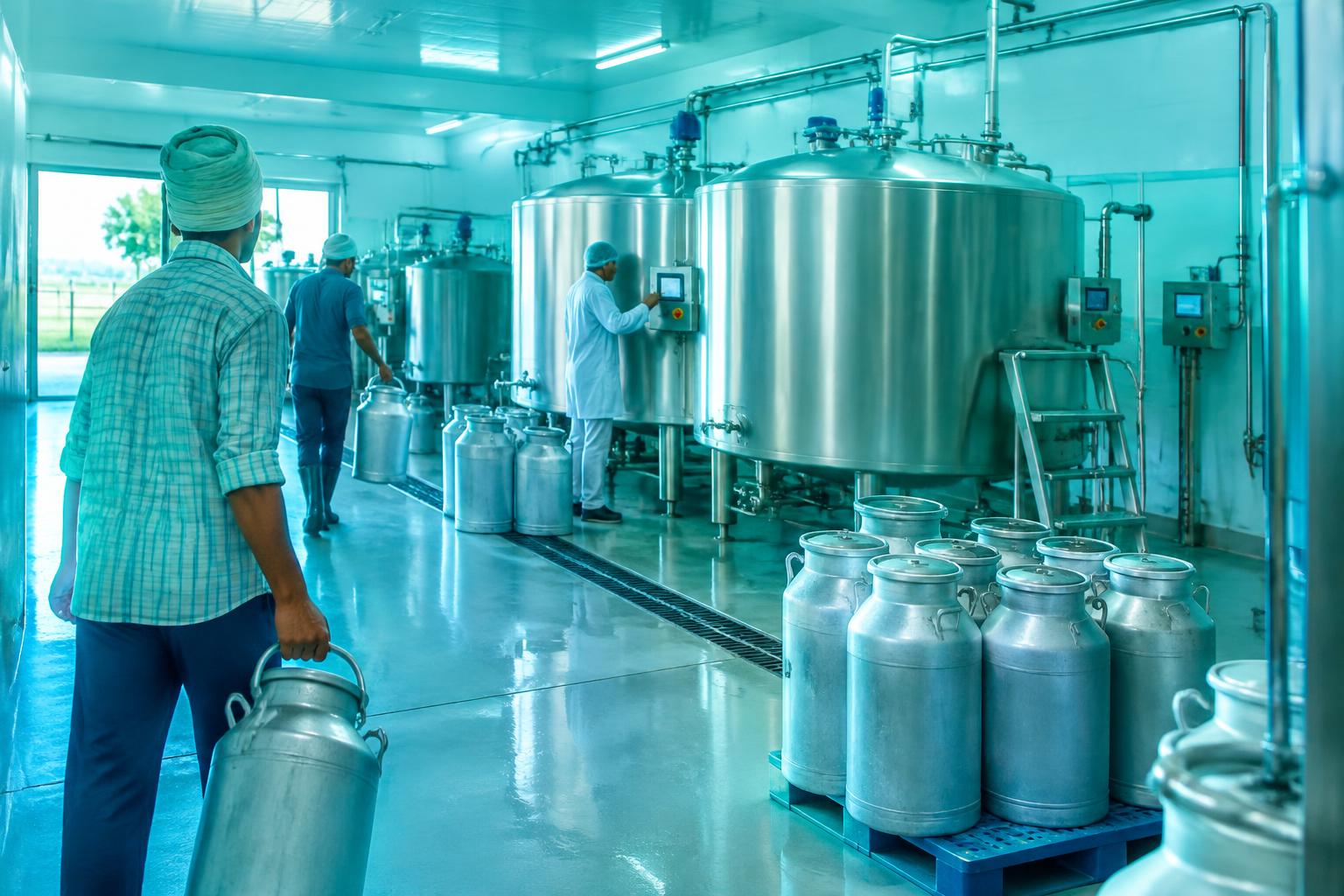
A bulk milk tank is an insulated, agitated vessel that cools and stores milk, commonly at the farm. A centralised milk collection and cooling centre receives milk from multiple producers and combines reception, quality checks, cooling, storage and dispatch. Farm cooling reduces warm transport time but spreads maintenance across sites. Centralisation concentrates infrastructure and supervision, yet requires dependable collection routes, traceability and acceptance controls. Compare the complete route to the processor, including tanker availability and responsibility for rejected loads.
How do ice-bank and direct-expansion milk cooling differ?
Direct-expansion cooling passes refrigerant through an evaporator associated with the tank or cooling equipment. It removes heat as milk arrives, so compressor capacity and electricity availability must match the cooling window. An ice-bank system builds ice beforehand and uses the stored cooling during reception. It can shift compressor operation away from arrival peaks, but adds equipment, controls and thermal losses. Ice storage is not electrical backup: pumps, agitation and controls still need power. Request performance at the specified ambient temperature, minimum milk volume and arrival profile.
How should milk cooling capacity be sized?
- Establish daily litres, seasonal peaks, milkings per day and the volume and temperature of each delivery.
- Set the maximum collection interval, usable tank volume, cleaning downtime and contingency for delayed tanker pickup.
- Calculate peak cooling duty separately from storage capacity. Use the cooling load calculator for preliminary screening, then obtain a supplier calculation for the actual milk system.
Worked example: assume 6,000 litres daily, delivered in two equal batches, with collection every 24 hours. The centre needs at least 6,000 litres of usable storage before operational allowances; a 48-hour collection interval raises that base requirement to 12,000 litres. Cooling one 3,000-litre batch from 35 °C to 4 °C in three hours requires approximately 35 kW of average product-cooling duty, using assumed milk density of 1.03 kg/litre and specific heat of 3.9 kJ/kg·K. This excludes heat gains and equipment effects. It is not compressor electrical input. The supplier must also prevent warm arrivals from pushing previously cooled milk outside the agreed temperature limit.
How should buyers plan for unreliable electricity?
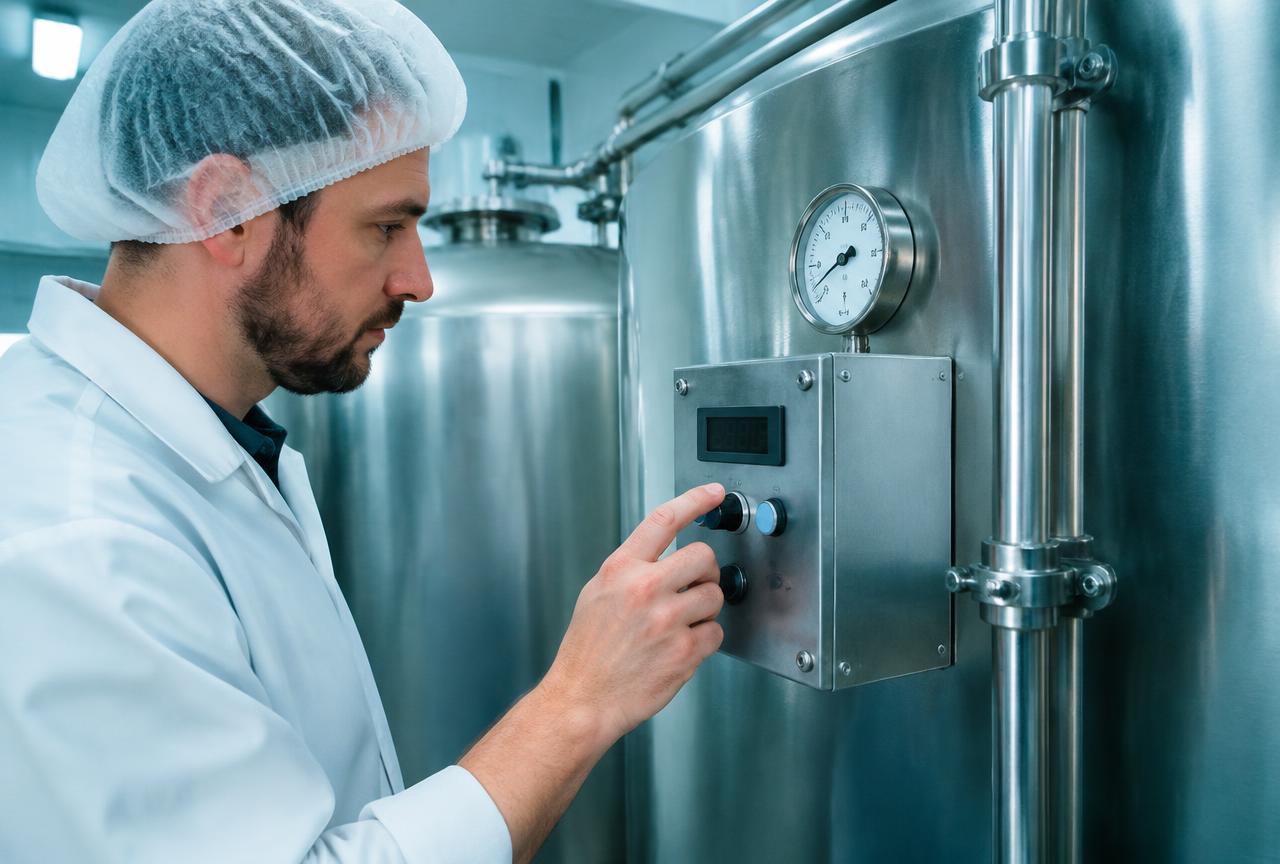
In emerging markets with unstable grids, record outage duration, voltage variation and service availability rather than assuming continuous supply. Evaluate a generator, solar PV, batteries and thermal storage as a coordinated system. Solar output may not coincide with evening milking, and an ice bank must recharge before the next reception peak. Define essential loads, motor-starting requirements, automatic transfer and fuel arrangements. Require an outage scenario showing milk temperatures and recovery time. Temperature alarms also need resilient power and a response plan; use the monitoring guide to structure requirements.
What hygiene and CIP requirements belong in the specification?
Clean-in-place, or CIP, means cleaning internal equipment surfaces through a defined circulation process without routine dismantling. Specify hygienic materials, drainability, accessible inspection points, suitable water quality and separation of dirty reception activities from cleaned equipment. The cleaning programme must define chemical concentration, temperature, contact time, flow conditions and verification methods appropriate to the equipment. Do not assume every tank or transfer component supports automated CIP. Ask suppliers to identify manual tasks, cleaning utilities, wastewater requirements and the downtime needed between emptying, cleaning and receiving milk again.
How should finished dairy products be stored?
Finished-product refrigeration is a separate design duty, not an extension of raw-milk tank sizing. Pasteurised milk, yoghurt, butter and cheese have different storage, humidity and handling requirements; shelf-stable products may not need chilled storage before opening. Confirm each product specification rather than applying one temperature universally. Use the storage temperature chart as an initial reference, then size rooms for inventory, product entry temperature, airflow, picking and dispatch.
What should a milk cooling centre RFQ include?
- Process basis: collection catchment, daily and peak litres, number of milkings, delivery schedule, incoming temperature, target temperature, cooling deadline and tanker collection interval.
- Equipment scope: usable tank capacities, reception testing, filtration, precooling, agitation, refrigeration, transfer pumps, metering and interfaces with transport or processing equipment.
- Site and utilities: ambient conditions, electrical supply, outage profile, water quality, drainage, cleaning utilities, access constraints and local service expectations.
- Acceptance and commercial boundaries: guaranteed performance conditions, temperature records, cleaning verification, operator training, spare parts, installation responsibilities and exclusions. Use the RFQ readiness check before tendering and define tests using the commissioning guide. For budget planning, consult the cost guide.
What common mistakes should buyers avoid?
- Buying nominal tank volume without confirming usable capacity and minimum operating fill.
- Sizing refrigeration from daily throughput while ignoring clustered milk arrivals.
- Treating ice storage or solar panels as complete outage protection.
- Omitting cleaning downtime, rejected-milk handling, calibration and local maintenance capability.
How does ColdMatch support dairy cold chain procurement?
ColdMatch Group is Global B2B Group’s vendor-neutral industrial refrigeration and cold-chain procurement platform for projects USD 250K+, with 100+ qualified suppliers. It is not an automatic marketplace: a buyer submits a request, a specialist reviews it and prepares a brief, and suppliers are introduced manually. Buyers should retain explicit responsibility for specification approval, contractual acceptance criteria and ongoing food-safety management.
Bring your milk volumes, collection schedule, site conditions and cooling targets to start your project with a clearer procurement brief.
Run the numbers
Calculators for this project type
Indicative planning figures only — final sizing belongs to the supplier's or consultant's detailed design.
Fruit & vegetable cold storage ROI calculator
Pre-cooling and storage capacity plus indicative payback from spoilage reduction.
Energy & backup powerSolar & backup power calculator
Solar-assisted cooling, generator run hours and indicative savings where grid supply is unstable.
Frequently asked questions
Plan the numbers before you send an RFQ
The reference pages buyers use most before requesting quotes.