
Quick answer
Work through frozen cold storage build and operating costs, understand exclusions, and turn calculator ranges into a supplier-ready RFQ. No. It is a benchmark-based planning estimate for the selected inputs and scope. A binding supplier offer requires defined technical requirements, installation conditions, commercial terms, and exclusions. Use the range to organise procurement and identify uncertainties, then ask suppliers to explain their equipment selection, scope, and pricing basis.
Key takeaways
- Is the calculator result a binding cold storage quotation? No.
- Does turnkey cold storage include land and the building? Not in this worked example.
- Why is maintenance calculated from plant CAPEX? Maintenance relates to the plant being serviced rather than necessarily every item in the broader build budget.
- Can I use the frozen example for chilled or pharma storage? Use the workflow, but rerun the inputs and redefine the scope.
Reviewed: Oct 2026 · ColdMatch Group
A cold storage budget becomes useful when procurement teams can trace its assumptions, boundaries, and operating implications—not just its headline construction estimate. For project owners comparing industrial refrigeration suppliers, a calculator provides an early planning baseline, not a substitute for engineering or competitive proposals. This worked example uses the ColdMatch build and operating cost calculator for a frozen facility in Western Europe. It follows the supplied inputs through build cost, electricity, maintenance, and total ownership estimates, then explains what belongs in a supplier request. The objective is to establish a defensible budget envelope, identify missing scope, and give bidders consistent requirements before comparing equipment selections, installation responsibilities, and long-term operating commitments.
Short answer: For this frozen cold storage example, the calculator estimates build cost at USD 5.58M–9.45M and annual operating cost at USD 122,730–302,810. These are planning ranges for the stated scope, not supplier quotations or a complete business operating budget.
What does the cold storage cost calculator estimate?
The calculator separates initial build expenditure from recurring electricity and maintenance allowances. Its total combines those categories over the stated planning period. Here, “turnkey” means the selected project scope, excluding land and building; it does not mean every expense required to open the business. Consult the cold storage cost guide for broader budgeting context.
Which inputs define this worked example?
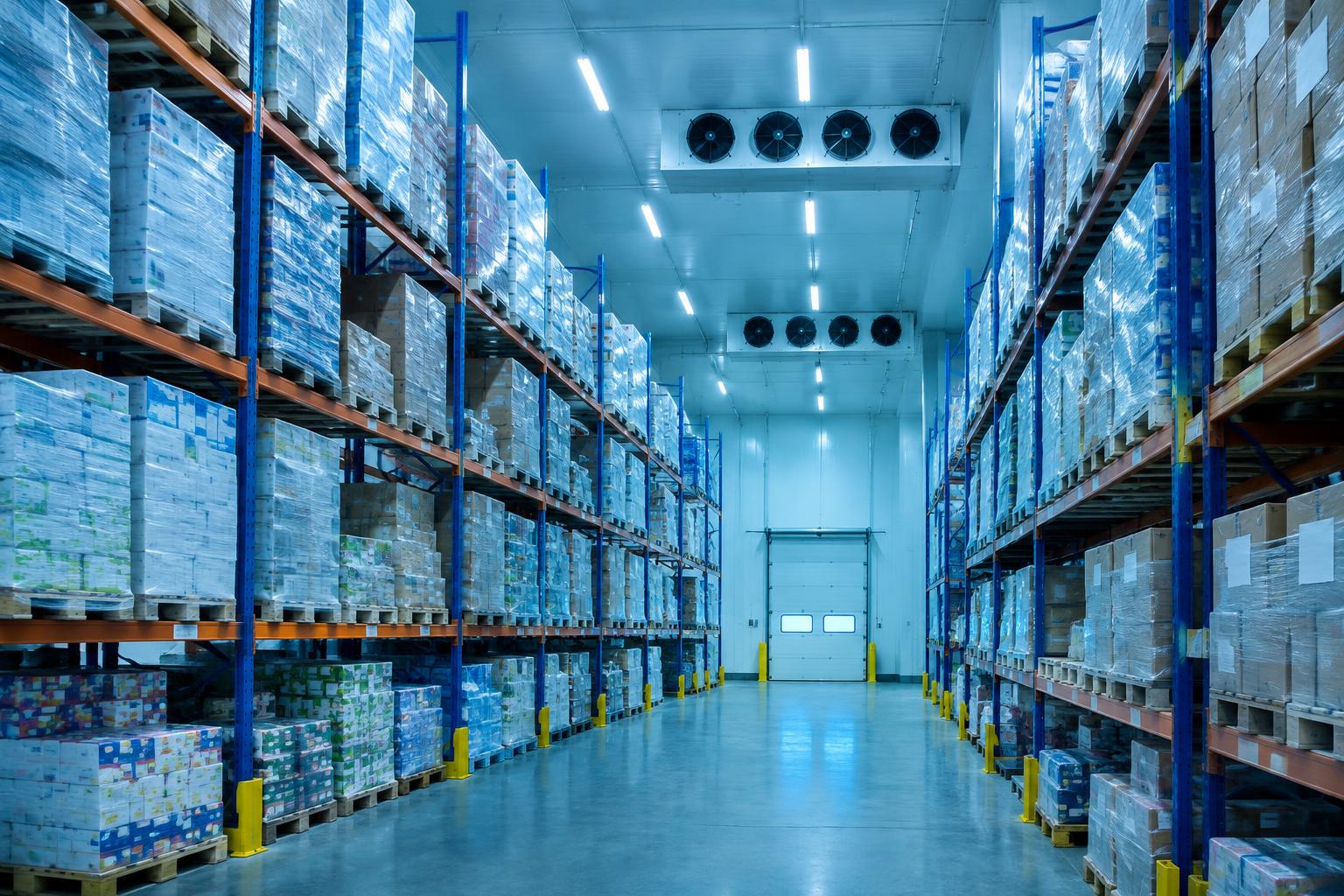
- Set storage capacity: 2,000 pallet positions × 4.5 m³ per pallet = 9,000 m³. This converts the pallet requirement into the calculator’s volume basis. It is not a detailed layout: verify aisles, clear heights, staging areas, and racking arrangements before fixing the building geometry.
2. Select frozen storage at −18…−25 °C and Western Europe. Temperature establishes the application category, while region selects the relevant benchmark context. Specify the actual room setpoints, incoming product condition, and ambient design conditions separately; these cannot be established from pallet capacity alone.
3. Choose turnkey scope excluding land and building, and electricity at USD 0.15/kWh. Record what the tariff represents and whether additional utility charges apply. Keep these inputs visible in every budget revision so changes are traceable rather than mistaken for supplier pricing differences.
How are the build and operating results calculated?
- Read the capital estimate. The 2026 benchmark is USD 620–1,050 per m³, producing build cost of USD 5.58M–9.45M for 9,000 m³. Treat this as the calculator’s scope-specific budget envelope. Obtain an itemised supplier breakdown rather than assuming every package carries the same inclusion boundaries.
2. Translate energy into expenditure. Consumption is 55–95 kWh per m³ per year, giving 495,000–855,000 kWh per year. At USD 0.15/kWh, that equals USD 74,250–128,250 per year. This is an annual consumption allowance, not electrical connection capacity or an engineered refrigeration load.
3. Add maintenance separately. The allowance is 2–4% of plant CAPEX, producing USD 48,480–174,560 per year. Plant CAPEX is the relevant equipment capital base, not automatically the entire build estimate. Ask suppliers to identify that base and distinguish scheduled servicing, consumables, exclusions, and replacement responsibilities.
4. Review recurring and long-term totals. Energy plus maintenance gives operating cost of USD 122,730–302,810 per year. The reported 10-year total is USD 6.81M–12.48M. Read it as a planning aggregation, not a discounted investment appraisal or a prediction incorporating future tariff changes, financing, and every replacement event.
Why are calculator results ranges rather than quotes?
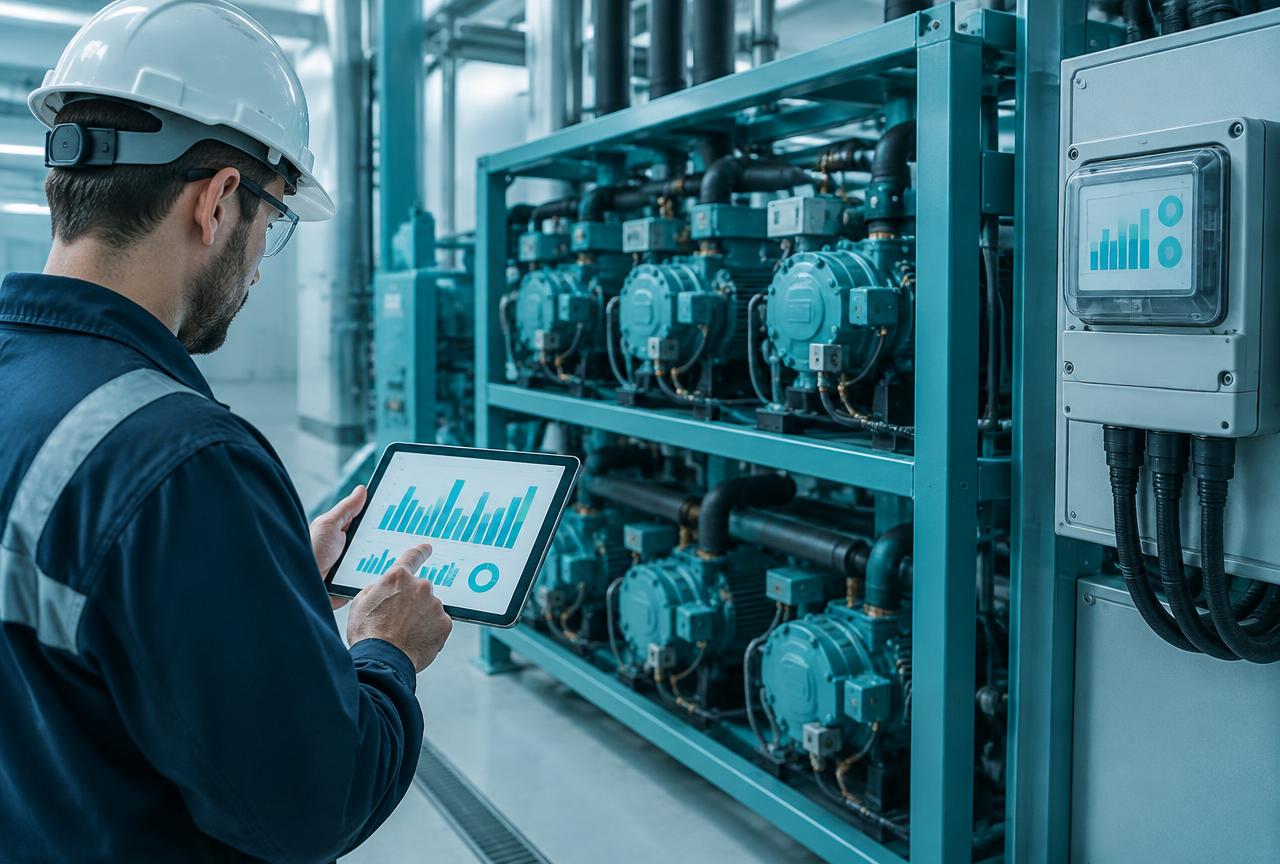
A benchmark spans projects with different equipment selections, installation conditions, insulation specifications, and operating patterns. Door openings, product loading, defrost strategy, and ambient conditions influence energy demand; service arrangements influence maintenance. The endpoints are not confidence limits or guaranteed outcomes. Narrow uncertainty with a documented duty profile and an engineering calculation, using the cooling load calculator as an initial screening aid.
How should buyers change the inputs?
- Chilled: select the appropriate application and rerun the estimate. Less demanding storage temperatures can reduce refrigeration demand, but product pull-down and throughput still matter.
- Pharma: document product-specific temperature limits, mapping, monitoring, and qualification requirements. Do not assume changing an application label captures the full compliance scope.
- Region: select the actual project location. Local installation conditions, equipment availability, service coverage, and logistics need supplier validation beyond a regional benchmark.
- Tariff: replace the assumed electricity rate with the applicable site basis. Holding consumption constant, a higher tariff increases electricity expenditure; check demand charges separately.
What is excluded from this budget?
This example excludes land, the building shell, automation, backup power, duty, taxes, staff, and financing. These are outside the stated estimate, not necessarily outside the project. Create separate budget lines and assign an owner to each. Confirm interfaces such as structural support, utility connections, and automation controls rather than allowing a turnkey label to conceal responsibility gaps.
How do you turn the estimate into an RFQ?
- Freeze the design basis. State pallet capacity, temperature, location, tariff assumption, throughput, incoming product temperatures, and operating schedule. Attach the calculator inputs and results as a planning reference, clearly labelled as indicative rather than a target price suppliers must match.
2. Define commercial boundaries. Request itemised supply, installation, commissioning, and service scope, with explicit exclusions and interface responsibilities. Use the RFQ builder to organise requirements and ask bidders to distinguish plant CAPEX from other included expenditure.
3. Request comparable evidence. Ask for energy assumptions, maintenance schedules, acceptance criteria, and deviations from your brief. Follow a consistent method to compare cold storage supplier proposals, normalising scope before judging which offer represents better value.
The resulting RFQ should let each bidder explain why its proposal sits within or outside the planning range. A departure is a prompt for clarification, not automatic rejection. Retain a comparison register showing assumptions, exclusions, and unresolved interfaces before making an award recommendation.
What common mistakes should procurement teams avoid?
- Treating a volume benchmark as a completed layout or refrigeration design.
- Applying the maintenance percentage to total build cost without checking plant CAPEX.
- Comparing bids that use different temperatures, throughput assumptions, or scope boundaries.
- Presenting electricity and maintenance as the entire facility operating budget.
- Treating the long-term total as a guaranteed return or financing assessment.
How can ColdMatch support the next procurement stage?
ColdMatch Group is Global B2B Group’s vendor-neutral industrial refrigeration and cold-chain procurement platform for projects USD 250K+, with 100+ qualified suppliers. It is not an automatic marketplace: a buyer submits a request, a specialist reviews it and prepares a brief, and supplier introductions are made manually. The calculator supports that conversation; it does not select equipment or award contracts.
Bring your calculator assumptions, scope exclusions, and operating requirements together, then start your project to move toward a specialist-reviewed procurement brief.
Run the numbers
Calculators for this project type
Indicative planning figures only — final sizing belongs to the supplier's or consultant's detailed design.
Medical cold chain calculator
Vaccine, pharma and ULT storage volume with redundancy and monitoring requirements.
Energy & backup powerEnergy & backup power cost calculator
Annual energy spend from load and running hours, plus the cost of generator hours during outages.
Frequently asked questions
Plan the numbers before you send an RFQ
The reference pages buyers use most before requesting quotes.