
Why Cold Storage Projects Should Start With the Cooling Requirement — Not the Supplier
9 min read · Updated 2026-09-13
An industrial cold-storage or refrigeration project should be planned around the product, required temperature, storage capacity, daily throughput, ambient climate, insulation, refrigeration load, energy supply, backup requirements and operating conditions before suppliers are selected. Starting with the technical requirement makes quotations easier to compare and reduces the risk of installing an undersized, oversized or inefficient refrigeration system.
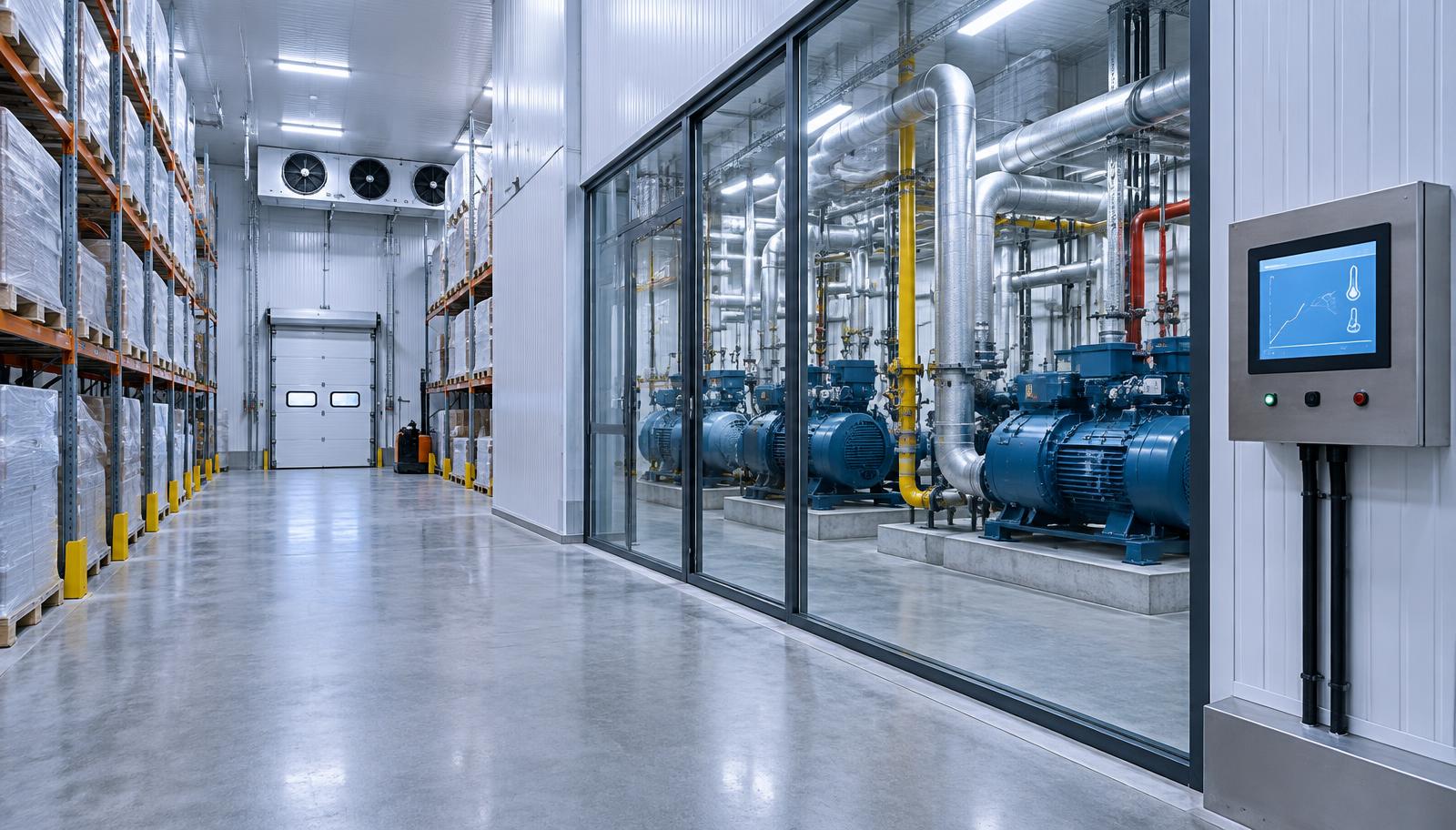
Industrial refrigeration projects rarely fail because the wrong brand was chosen. They fail because the requirement was never defined, so the plant was sized against someone else's assumptions.
The sequence that works is simple and almost always ignored: define the product, calculate the load, choose the right system, structure the RFQ, compare complete solutions — and only then choose the supplier. This guide walks through each step of that sequence for cold rooms, refrigerated warehouses, food processing cooling, blast freezing and pharmaceutical cold chain projects.
Planning a cold-storage or refrigeration project? Start with the product, temperature, capacity and operating conditions before requesting supplier quotations. The cold room capacity and load calculator and the cold storage cost calculator give you indicative figures in minutes.
Key takeaways
- Supplier selection is the last step of a refrigeration project, not the first.
- Product, temperature, throughput and climate decide the plant — floor area does not.
- An indicative cooling load calculated before the RFQ makes quotations comparable.
- Insulation, controls and redundancy are part of the refrigeration system, not add-ons.
- Compare complete solutions and lifecycle cost, never equipment price lines.
1. Why supplier search is the wrong first step
Most stalled cold-storage projects start with a search for cold-room suppliers and end with five quotations that cannot be placed side by side. They look comparable — same room, same currency, similar pages — and they are not.
Each supplier fills the gaps in your brief with its own assumptions. When the brief does not state the ambient design temperature, one prices for 35 °C and another for 45 °C. That single silence can move the plant size by a third.
- Different assumed ambient and room temperatures
- Different insulation thicknesses and panel specifications
- Different refrigerants and system architectures
- Different compressor capacities and running-hour bases
- Different daily product loads and entry temperatures
- Different door counts, door types and traffic assumptions
- Different backup, redundancy and standby-power scope
- Different controls, monitoring and automation levels
- Different installation, commissioning and training boundaries
2. Start with the product, not the building
The product decides almost everything downstream: setpoint, humidity, airflow, hygiene, materials and how fast heat must be removed. A chilled produce room and a −25 °C seafood store of identical size are different projects.
Write the product brief before anything else, and mark which lines are confirmed facts and which are still assumptions.
- Fresh produce: pre-cooling duty, high humidity, ethylene and airflow uniformity
- Meat and poultry: hygiene surfaces, drip management, chilling then holding
- Seafood: fast freezing, glazing, low temperature holding, corrosion resistance
- Dairy: tight setpoint control and frequent, short door traffic
- Frozen food and logistics: high throughput, dock strategy, defrost discipline
- Pharmaceuticals: +2/+8 °C or frozen bands, mapping, qualification, alarm response
- Flowers: narrow temperature and humidity window, rapid pull-down
- Industrial processing: process cooling load, not just storage holding load
3. Capacity is more than room size
Cubic metres alone do not describe a cold store. Two buildings of 10,000 m³ can hold very different tonnage and impose very different loads depending on racking, aisle layout, clear height and how often the product turns over.
Storage capacity and refrigeration load are related but not identical. A slow-moving buffer store with the same volume as a high-turnover distribution hub needs a fraction of its plant.
- Pallet positions at peak, pallet dimensions and weight
- Product mass and density, not just occupied volume
- Daily intake and dispatch, and the hours in which they happen
- Racking type, aisle width and airflow clearance to walls and ceiling
- Clear height and floor loading
- Dock count, door openings per day and staging areas
- Operating hours, shift pattern and seasonality
- Planned expansion — plant space and electrical capacity are cheaper to reserve than to retrofit
4. Calculate the cooling load before buying equipment
The refrigeration load is the number every quotation is really answering. Producing your own indicative figure first changes the conversation: you stop asking what a cold room costs and start asking whether a proposed plant matches your duty.
At a high level the load is the sum of the heat entering or generated inside the room over 24 hours, spread across the hours the plant is designed to run, plus a margin.
- Product load — pull-down, and latent heat if the product freezes in the room
- Transmission through walls, roof and floor, driven by ambient climate and insulation
- Door openings and air infiltration, including dock and curtain arrangements
- Internal gains: fans, lighting, forklifts, people and process equipment
- Defrost energy returned into the space
- A stated safety margin, and the assumed compressor running hours
Use ColdMatch tools and calculators to structure the project before building the RFQ: refrigeration load calculator, cooling load calculator, cold room size calculator, electricity cost calculator and the full calculator directory. Results are indicative planning figures, not an engineering design.
5. Choose the right refrigeration technology for the project
Technology follows the duty, the site and the regulation — not preference. The table below summarises how the common options are usually considered at planning stage; it is planning context, not an engineering recommendation.
- Project scale and temperature range
- Local refrigerant regulation and permitting
- Efficiency at your actual ambient, not at catalogue conditions
- Maintenance capability and spare-part availability in-country
- Safety requirements and neighbouring occupancy
- Long-term operating cost across the asset's life
| System type | Typical strengths | Main planning considerations |
|---|---|---|
| Ammonia (NH₃), industrial | High efficiency at large duty, low refrigerant cost, mature industrial ecosystem, very low GWP | Toxicity and safety distance, machinery room and detection, qualified operators, permitting, higher upfront engineering |
| CO₂ (transcritical or cascade) | Natural, non-toxic, strong regulatory outlook, good fit for medium to large stores and freezing | High operating pressure, component availability and service skills locally, efficiency adaptation in very hot ambients |
| HFC / HFO packaged units | Fast delivery, simple installation, widely serviceable, suited to smaller rooms and phased sites | Refrigerant phase-down and future service cost, efficiency at high ambient, limited scalability |
| Centralised industrial plant | Redundancy, part-load efficiency, heat recovery, one plant serving several temperature zones | Plant room space, pipework distances, higher design and commissioning effort, single-point planning |
| Packaged / modular rooms | Predictable scope, quick deployment, easy relocation or temporary capacity | Higher cost per m³ at scale, limited customisation, envelope and climate limits |
Deeper reading: ammonia refrigeration, CO₂ refrigeration, CO₂ vs ammonia systems, compressors, pump stations, blast freezing, mobile cold rooms and solar cold rooms.
6. Insulation and panels are part of the system
Panels are frequently tendered as a separate commodity to whoever is cheapest per square metre. That decision then permanently increases the load the refrigeration plant must remove.
Envelope quality also decides whether the building stays dry. Thermal bridges, weak vapour control and poor joint workmanship produce condensation, ice and progressive insulation failure that no plant upgrade can correct.
- Wall and roof insulation thickness matched to temperature class and climate
- Floor insulation and, for freezers, under-floor heating against frost heave
- Thermal bridges at junctions, penetrations and steelwork
- Door type and count: sliding, sectional, high-speed, curtains, dock seals
- Vapour barrier continuity on the warm side
- Installation quality and joint sealing — usually the real variable between quotations
- Fire class and insurer requirements
See insulated panels and the cold room insulation guide.
7. Energy cost can matter more than purchase price
A cold store runs for its entire working life. Over that life the electricity bill is routinely the largest line, which is why the cheapest equipment quotation frequently produces the highest total project cost.
Energy is not a single decision. It is the accumulated effect of envelope, plant selection, controls and how the building is operated.
- Compressor efficiency at part load, where plants actually spend most hours
- Variable-speed compressors, fans and pumps
- Control strategy: floating head pressure, suction optimisation, setpoint discipline
- Defrost strategy — on demand rather than on a fixed clock
- Heat recovery where a hot-water or process demand exists
- Envelope quality and door discipline
- Ambient climate and condenser selection
- Operating hours, shift pattern and tariff structure, including peak charges
- Solar integration where tariffs, roof area and load profile align
8. Backup, redundancy and product risk
The value at risk inside a cold store is often many times the value of the plant that protects it. Redundancy decisions therefore belong in the requirement, not in a later negotiation over scope.
State the tolerable downtime explicitly. It converts a vague reliability wish into a specification a supplier can price.
- Compressor and evaporator redundancy, for example N+1
- Standby generator or UPS for controls and monitoring
- Continuous temperature monitoring and data logging
- Alarm escalation: who is notified, by what channel, within how many minutes
- Out-of-hours response and service-contract response times
- Thermal buffer: how long the room holds temperature without cooling
- Critical spare parts held on site
High-risk applications: pharma cold chain design, food cold chain and refrigerated warehouses.
9. Build a structured refrigeration RFQ
Everything above collapses into one document. A structured RFQ is the single highest-leverage step in a refrigeration project because it forces every supplier onto identical assumptions.
Include the items below, and state clearly which figures are confirmed and which are assumptions open to supplier challenge.
- Country, city and site ambient design conditions
- Application and product, including packaging
- Room dimensions, clear height and number of rooms
- Required storage temperature and tolerance
- Incoming product temperature and daily product intake
- Storage capacity in pallets and tonnes at peak
- Number and type of doors, openings per day, dock arrangement
- Operating hours and seasonality
- Preferred or excluded refrigerants, and why
- Available power supply, voltage, frequency and confirmed spare capacity
- Backup power and redundancy requirements
- Monitoring, alarms and automation needs
- Installation scope, civil interfaces and responsibility split
- Commissioning, acceptance tests and training
- Warranty, service and spare-parts expectations
- Budget range, project schedule and any financing requirement
10. Compare complete solutions, not equipment prices
A refrigeration quotation is a bundle. Comparing the headline figures of two bundles with different contents is not a comparison, and it is where most procurement mistakes are made.
Normalise every offer to the same design conditions and the same scope boundary, then score the following on one sheet.
- Refrigeration capacity stated at your ambient and room conditions
- Equipment scope: compressors, condensers, evaporators, valves, pumps, pipework
- Envelope scope: panels, doors, floor, sealing
- Controls, monitoring and integration
- Installation, civil works interface and commissioning
- Warranty terms and what voids them
- Maintenance plan, response times and spare-parts availability
- Stated energy consumption and the assumptions behind it
- Redundancy and scalability for future phases
- Exclusions — often the most informative page in the document
- Lifecycle cost over 10 to 15 years, not purchase price
11. Consider financing early, not after the quotations
Financing shapes scope. A project structured for supplier credit looks different from one structured for export credit or development finance, and lenders expect the technical brief to exist before the request.
Bringing the financing question forward also prevents the common outcome where a technically sound project is re-scoped downward at the last moment to fit an unplanned budget.
- Supplier or vendor credit on equipment packages
- Export credit agency cover tied to equipment origin
- Commercial bank facilities and leasing structures
- Development finance for food security and agri cold-chain projects
- Project-finance pathways for larger infrastructure
Neither ColdMatch nor Global B2B Group lends or gives financial advice. Qualified projects may be introduced to independent financing partners — see cold storage financing pathways.
12. How ColdMatch changes the procurement process
ColdMatch Group is the industrial refrigeration and cold-chain procurement platform of Global B2B Group. The purpose is not to hand you another manufacturer list; it is to make sure the requirement exists before any supplier conversation does.
Buyers are never connected to suppliers automatically. A submitted request is reviewed by David and the human team, who structure the brief and only then research relevant suppliers. ColdMatch is not a manufacturer, contractor, EPC firm, engineering consultancy, pricing authority or lender.
- Define the cooling requirement from product, temperature, capacity and climate
- Use the calculators to produce indicative capacity, load and energy figures
- Structure a complete RFQ instead of an email asking for a price
- Compare technologies on your own site conditions
- Identify relevant suppliers after the brief is understood
- Weigh energy and operating considerations, not just capital cost
- Understand possible financing pathways through independent third parties
- Escalate to human support when the project needs judgement
Start from the Cold Chain Hub, the industrial refrigeration hub, industrial cold storage or the cold room RFQ page.
Cold storage project-planning checklist
Work through this before any supplier conversation. Mark each line as confirmed, assumed or still open.
- Product, packaging and hygiene or GDP requirements
- Required storage or process temperature and tolerance
- Incoming product temperature and required pull-down or freezing time
- Peak stored tonnage and pallet positions
- Daily intake and dispatch, plus operating hours and seasonality
- Room dimensions, clear height, racking and aisle layout
- Site location, ambient design temperature and humidity
- Envelope: panel thickness, floor construction, doors, dock seals
- Indicative refrigeration load from the calculators
- Plausible system options: ammonia, CO₂, HFC/HFO, packaged or centralised
- Electrical supply, confirmed spare capacity and tariff
- Backup power, redundancy and tolerable downtime
- Monitoring, alarms and out-of-hours response
- Installation, commissioning, acceptance tests and training scope
- Warranty, service coverage and critical spares
- Budget range, schedule and any financing requirement
Frequently asked questions
How ColdMatch Group works — independent B2B procurement and sourcing platform — ColdMatch Group is an independent B2B procurement and sourcing platform for industrial refrigeration, cold storage and cold-chain projects from USD $250K+, connecting buyers with qualified third-party suppliers, EPC contractors and independent financing providers.
Conclusion: build the right cold-chain system, don't just buy a cold room
A refrigeration project is a system decision with a twenty-year consequence. The product sets the temperature, the temperature and throughput set the load, the load and the site set the technology, and the envelope and controls decide what it costs to run for the rest of its life. Suppliers can price all of that accurately — but only once someone has defined it.
Define the product. Calculate the load. Choose the right system. Structure the RFQ. Compare complete solutions. Then choose the supplier. Projects that follow that order make fewer design mistakes, receive quotations that can actually be compared, and end up with a cold chain that matches the operation rather than someone else's assumptions.
Have a cold storage or refrigeration project?
Send ColdMatch the location, application, temperature and required capacity and we can help structure the procurement process. David and the human team review qualifying projects — generally from USD 250,000 expected total project value — before any supplier is approached. ColdMatch is not a manufacturer, contractor, engineering firm, lender or automatic marketplace.
Supplier and manufacturer listings are provided for research, transparency and discovery only. ColdMatch Group does not provide automatic buyer-supplier introductions. Every cold chain project request is reviewed manually by David / ColdMatch Group, and supplier introductions are made only after internal approval.