Pull to refresh
ColdMatch Group — industrial cooling and cold chain procurement platform
ColdMatchGroupMulti-Bid Cold Chain Sourcing
SolutionsIndustriesKnowledge CenterMarketsToolsFinancingLogistics
ColdMatch Group — industrial cooling and cold chain procurement platform
ColdMatchGroup
SolutionsIndustriesKnowledge CenterIntelligence Center & CalculatorsIndustry IntelligenceExecutive Knowledge CenterPlanning CenterEquipment IntelligenceInnovation & TechnologyProcurement AcademyCase StudiesMarkets by CountryTools & CalculatorsCertificationsFind SuppliersFinancingLogisticsGet Free Quotes
DashboardPrepare a Professional RFQ
DashboardSign inPrepare a Professional RFQ
Cold-chain project financing.Financing for qualified cold-chain projects — introduced to independent financing partners.FinancingFinancing Center
Home

Offline — reconnect before saving or submitting. Changes on this page have not been sent.

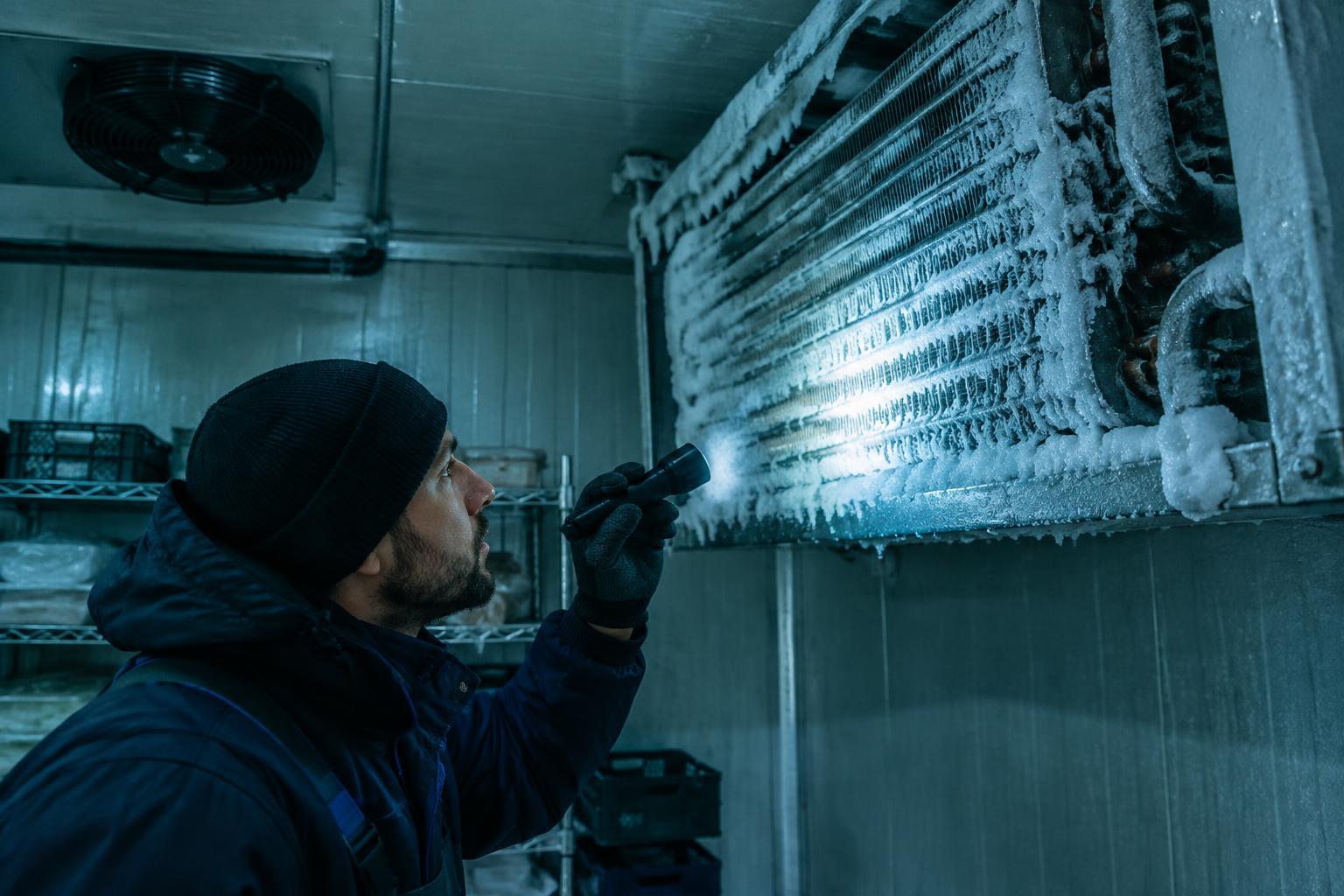
Refrigeration technician inspecting an iced-up evaporator coil with a flashlight
← Insights
Tools Oct 2026·7 min read

Cold Room Problems: Troubleshooting & Health Checks

How to diagnose warm cold rooms, ice build-up, high energy bills and door problems — and when to use ColdMatch's troubleshooting and health-check tools.

EnglishالعربيةPortuguês (Brasil)עבריתРусскийfi

Quick answer

How to diagnose warm cold rooms, ice build-up, high energy bills and door problems — and when to use ColdMatch's troubleshooting and health-check tools. Common causes are frequent door openings, damaged seals, blocked or iced evaporators, dirty condensers, overloading with warm product, or refrigerant problems. Check simple causes first.

Key takeaways

  • ▸Why is my cold room not holding temperature? Common causes are frequent door openings, damaged seals, blocked or iced evaporators, dirty condensers, overloading with warm product, or refrigerant problems.
  • ▸What causes ice build-up in a freezer room? Moisture from warm air entering through doors, damaged gaskets, faulty door heaters or pressure relief valves, combined with defrost settings that do not remove ice fully.
  • ▸How can I reduce cold room energy costs? Clean condensers, repair door seals, optimise defrost, use LED lighting and variable-speed fans, and check setpoints.
  • ▸When should a cold room refrigeration system be replaced? Consider replacement when the plant is around 15–20 years old, uses a phase-out refrigerant, needs frequent repairs, or no longer matches capacity and energy benchmarks.

In this article

  1. 01. Why a structured approach saves money
  2. 02. Symptom 1: The room cannot hold temperature
  3. 03. Symptom 2: Energy bills are rising
  4. 04. Symptom 3: Ice on evaporators, floors or walls
  5. 05. Symptom 4: Condensation and dripping
  6. 06. Symptom 5: Alarms, short cycling and noise
  7. 07. Simple weekly checks for site teams
  8. 08. Repair, retrofit or replace?
  9. 09. When to bring in a project review
  10. 10. Keep a simple record
  11. 11. A short case illustration
  12. 12. Safety first

Reviewed: Oct 2026 · ColdMatch Group

Most articles about cold storage focus on building new facilities. Yet a large share of operators' real problems happen in existing rooms: temperatures that drift upward in summer, evaporators that ice up, rising electricity bills, condensation on ceilings or alarms at night. Some issues are minor and can be fixed by the site team in an afternoon; others signal that the refrigeration system or the building envelope has reached the end of its useful life and that an upgrade or replacement should be planned. This guide explains the most common symptoms, their typical causes, what to check first and how ColdMatch's free tools help you decide whether you need a service visit, a retrofit or a new project.

Short answer: start with the symptom, then check the simple causes first — doors, seals, airflow, defrost and condenser cleanliness — before suspecting the compressor or refrigerant. Record temperatures, door openings and energy use for a week. If problems persist or the system is old, use the cold storage health check to judge whether a retrofit or replacement project makes sense.

Why a structured approach saves money

When a cold room runs warm, the instinct is to call for more cooling capacity. Often that is the wrong answer. Many 'capacity' problems are really heat or moisture problems: warm air entering through doors, blocked airflow around evaporators, dirty condensers that cannot reject heat, or defrost settings that leave coils half-blocked with ice. Adding refrigeration to a room with these problems raises energy costs without fixing the cause. A structured diagnosis — symptom, likely cause, simple check, then expert visit — saves money and avoids unnecessary investment.

Symptom 1: The room cannot hold temperature

If the room temperature creeps up during the day and recovers at night, look at heat entering the room. Count door openings and check whether doors are left open during loading. Inspect strip curtains and high-speed doors. Check whether warm product is loaded in quantities larger than the system was designed for. Then look at the refrigeration side: are evaporator fans all running, are coils clean and free of ice, is the condenser outside clean and in the shade, and is airflow around it unobstructed? The cold room troubleshooting tool walks through these checks in order and suggests the most likely causes.

Symptom 2: Energy bills are rising

Rising electricity use without more throughput usually points to declining efficiency. Common causes include dirty condenser coils, failing door seals, ice-blocked evaporators, damaged insulation panels, incorrect setpoints, or compressors running long hours because of refrigerant leaks. Compare monthly energy use with the same months in previous years and with stored volume. The energy savings calculator and the cold storage OPEX estimator help put numbers on potential improvements, such as LED lighting, variable-speed fans, better doors or heat recovery.

Symptom 3: Ice on evaporators, floors or walls
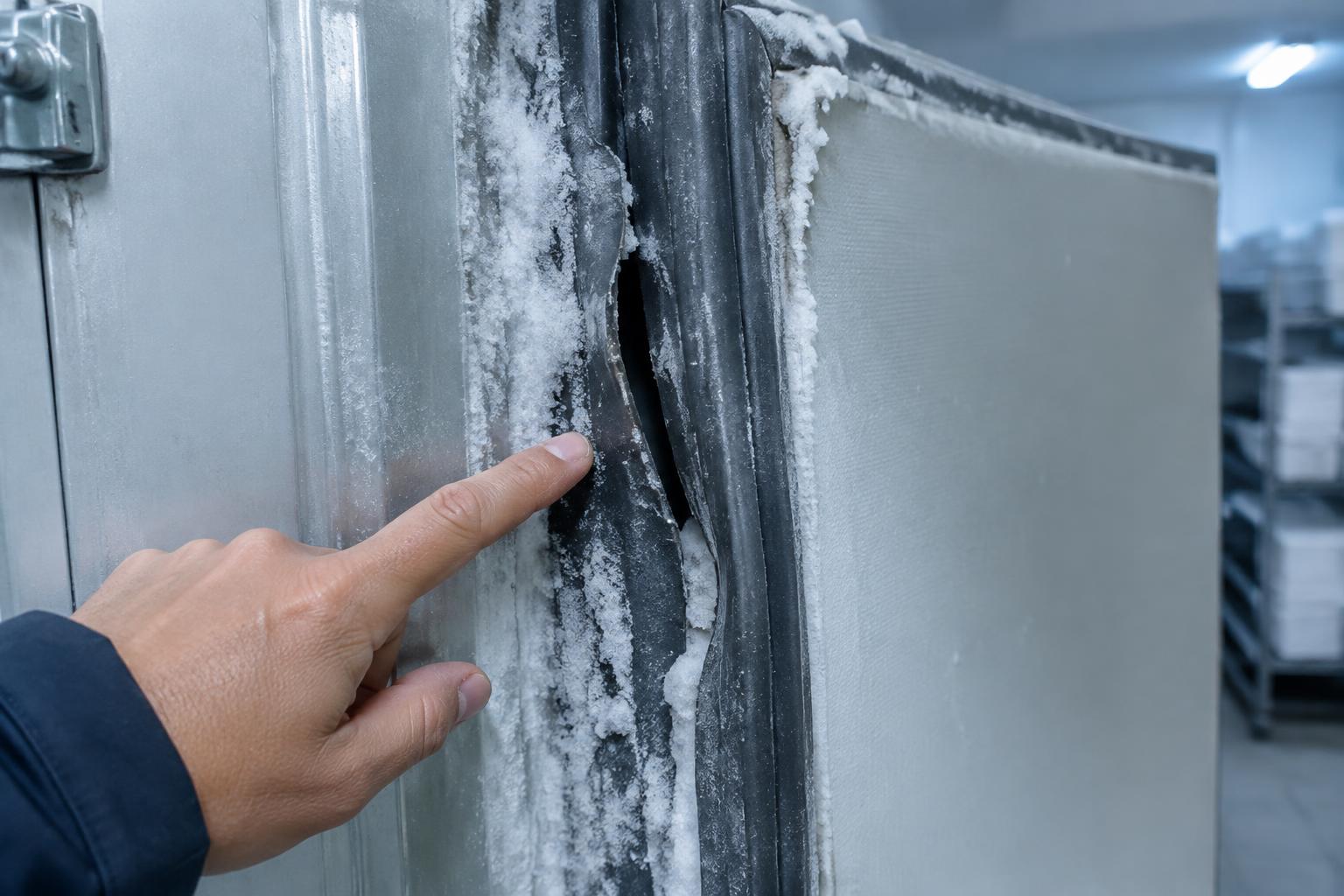
Damaged and frosted cold room door seal with a finger pointing at the gap
A torn door gasket lets warm, moist air in — the most common hidden cause of ice and high energy use.

Ice is almost always a moisture problem. Warm, humid air enters the room and its moisture freezes on the coldest surfaces — evaporator coils first, then door frames, ceilings and floors. Check door gaskets for tears and gaps, heater cables in door frames of freezer rooms, and the pressure relief valve. Look at defrost settings: too few or too short defrost cycles leave ice that blocks airflow; too many waste energy. Ice on the outside of panels or under the floor may indicate a damaged vapour barrier or failed underfloor heating, which needs urgent specialist attention because frost heave can lift and crack floor slabs.

Symptom 4: Condensation and dripping

Water dripping from ceilings or forming on walls in chilled rooms usually means warm air is leaking into the insulation or meeting cold surfaces. Typical sources are gaps at panel joints, penetrations for pipes and cables that were never sealed, or warm adjacent rooms with poor separation. Condensation is not only a hygiene risk for food and pharma; it also degrades insulation over time. Seal penetrations properly and ask a contractor to inspect the panel joints.

Symptom 5: Alarms, short cycling and noise

Frequent high- or low-pressure alarms, compressors switching on and off every few minutes, or new noises from the plant room point to the refrigeration system itself: incorrect refrigerant charge, failing valves, controller faults or worn compressors. These need a qualified refrigeration technician. Keep a log of when alarms occur and under which conditions — it shortens diagnosis considerably.

Simple weekly checks for site teams

  • Walk the room and check that every evaporator fan runs and coils are free of heavy ice.
  • Inspect door seals, strip curtains and door closers.
  • Check that nothing blocks airflow in front of evaporators or in the racking.
  • Look at the condenser: clean fins, no leaves, plastic or dust.
  • Compare the room display with an independent thermometer or logger.
  • Record energy meter readings and note any alarms.

Repair, retrofit or replace?

At some point, repeated repairs cost more than a planned upgrade. Signs that a larger project may be justified include refrigeration plants older than about 15–20 years, refrigerants that are being phased out under local rules, damaged or wet insulation across large areas, capacity that no longer matches the business, or energy use well above benchmarks. The cold storage health check scores these factors and suggests whether a service visit, a targeted retrofit or a full replacement is the sensible next step.

When to bring in a project review

If the health check points to a retrofit or replacement of USD 250K and above — for example a new central refrigeration plant, a switch to natural refrigerants or an envelope renovation — the next step is a clear project brief. Our NH₃ vs CO₂ buyer's guide helps with refrigerant decisions, and the RFQ builder structures the request. A specialist reviews each brief before introducing suitable suppliers, so you compare proposals that address the actual cause of your problems rather than generic equipment offers.

Keep a simple record

A short case illustration

An operator of a frozen store noticed that the room took longer each afternoon to recover after loading, and energy use had risen over two summers. The first instinct was to add another compressor. A structured check instead found three causes: a high-speed door that stayed open too long after a sensor fault, torn gaskets on a personnel door, and condenser coils partly blocked by dust from a nearby road. Fixing these restored temperature stability and reduced running hours. Only after the simple causes were addressed did the operator use the health check to plan a longer-term refrigerant upgrade — on facts rather than assumptions.

Safety first

Never enter a plant room with an active gas alarm, and do not attempt work on refrigerant circuits without proper certification. Ammonia and CO₂ systems in particular require trained personnel and correct protective equipment. The tools on this site support planning and diagnosis; they are not a substitute for qualified technicians or local safety rules.

Whatever the outcome, a log of temperatures, door openings, alarms, energy use and maintenance actions is the most valuable diagnostic tool you can have. It turns vague complaints into evidence — and it gives any technician or supplier a much faster route to the real cause.

Turn this guidance into comparable supplier quotes for your cold room project. ColdMatch is supplier-neutral and free for buyers. For industrial projects from USD 250,000, the team qualifies the brief, contacts suitable suppliers on your behalf and presents organised responses; no automatic supplier connection.

Start a structured cold room RFQ

Run the numbers

Calculators for this project type

Indicative planning figures only — final sizing belongs to the supplier's or consultant's detailed design.

Refrigeration sizing

Medical cold chain calculator

Vaccine, pharma and ULT storage volume with redundancy and monitoring requirements.

Energy & backup power

Energy & backup power cost calculator

Annual energy spend from load and running hours, plus the cost of generator hours during outages.

Related solutions
Industrial Refrigeration Systems Cold Rooms Generators & Backup Power All solutions
Turn these numbers into a medical cold chain RFQ Free for buyers · Supplier-neutral · One scope to several suppliers
Request a quote

Frequently asked questions

Plan the numbers before you send an RFQ

The reference pages buyers use most before requesting quotes.

Cold room cost guideUSD/m³ and USD/pallet benchmarks by temperature class.Cold storage construction cost guideCAPEX breakdown: envelope, refrigeration, racking, civil works.Refrigerant phase-out guideF-gas / Kigali timelines and NH3, CO2 and HFO options.Cold storage calculatorSize the room, load and energy spend in under two minutes.Project financingLease, term and export-credit structures for cold chain CAPEX.RFQ BuilderOne structured RFQ to qualified suppliers and EPCs.

In this article

  1. Why a structured approach saves money
  2. Symptom 1: The room cannot hold temperature
  3. Symptom 2: Energy bills are rising
  4. Symptom 3: Ice on evaporators, floors or walls
  5. Symptom 4: Condensation and dripping
  6. Symptom 5: Alarms, short cycling and noise
  7. Simple weekly checks for site teams
  8. Repair, retrofit or replace?
  9. When to bring in a project review
  10. Keep a simple record
  11. A short case illustration
  12. Safety first

Planning a project?

One brief, reviewed by a specialist, compared across qualified suppliers.

Start your project

Related insights

Tools

How to Use a Cold Storage Temperature Chart

Turn product temperature, humidity and storage-life requirements into compatible cold-room zones, cooling loads and a supplier-ready RFQ.

Planning & Procurement

Free Tools to Size and Compare Cold Storage

Use ColdMatch's free calculators to plan cold room capacity, cooling load, refrigeration energy cost and lifecycle cost, then compare complete proposals.

Calculators & Tools

Cold Storage Calculators: Which One to Use and When

A practical map of ColdMatch's cold storage calculators — room size, cooling load, compressor, energy, CAPEX, OPEX and ROI — and the order to use them in.

Calculators & Tools

Cold Chain Project Planning Tools: From Idea to Ready RFQ

Use ColdMatch planning tools — master planner, decision wizard, readiness check, RFQ builder and health check — to move a cold chain project from idea to RFQ.

Diagnostics

How to Diagnose Capacity and Energy Bottlenecks in an Existing Cold Store

A practical method for operators to find what actually limits an existing cold room, warehouse or refrigeration plant (plant, envelope, doors, docks, controls or operations) before paying for an upgrade.

Calculators

Cold Room Sizing Worked Example: Pallets to m²

A step-by-step worked example turning pallet positions into floor area, room volume and racking levels — and how to check it with ColdMatch's calculators.

Project request

Submit your project for expert review

Send your requirements. A ColdMatch specialist reviews every request, prepares a brief and introduces qualified suppliers — free for qualified buyers.

ColdMatch Group — industrial cooling and cold chain procurement platform
ColdMatchGroup

Because we care more.

ColdMatch Group is the industrial refrigeration and cold-chain procurement platform of Global B2B Group, where commercial and industrial buyers build a project and submit an RFQ; the ColdMatch team validates and organizes it, contacts suitable refrigeration technology and equipment suppliers on the buyer's behalf, and presents organized responses through ColdMatch.

support@coldmatchgroup.com
Follow on LinkedIn
Language
Sourcing & Financing
  • Get Free Quotes
  • RFQ Builder
  • Urgent Procurement
  • Solutions
  • Suppliers
  • Refrigeration Marketplace
  • Global Coverage
  • Project Financing
  • Financing Center
Tools & Knowledge
  • Planning Center
  • Calculators
  • Innovation & Technology
  • Projects Hub
  • Knowledge Hub
  • Cold Chain Answers
  • Cost Benchmarks 2026
  • AI Agents (MCP)
Markets
  • All Country Markets
  • Zambia
  • Ghana
  • Malawi
  • Kenya
  • Nigeria
  • Mauritius
  • Israel
  • Finland
  • Hungary
Company
  • About ColdMatch
  • How ColdMatch Works
  • Solutions by Buyer Type
  • Consultant Partner Program
  • Supplier Qualification
  • Trust Center
  • Case Studies
  • Blog
  • Contact
Business and supplier disclaimer

ColdMatch Group is the industrial refrigeration and cold-chain procurement platform of Global B2B Group, where commercial and industrial buyers build a project and submit an RFQ; the ColdMatch team validates and organizes it, contacts suitable refrigeration technology and equipment suppliers on the buyer's behalf, and presents organized responses through ColdMatch. It helps buyers prepare technical requirements and structured RFQs before suitable third-party suppliers, manufacturers, EPC contractors and turnkey providers are introduced manually. ColdMatch is not an equipment manufacturer, reseller, distributor, EPC contractor, installer, insurer, lender, bank or financial advisor, and is not a party to any supply, construction or finance contract. Quotes, equipment and services are provided solely by the matched third-party supplier, who is solely responsible for quality, delivery, installation, safety and performance. ColdMatch makes no guarantee of availability, price, quality or approval and disclaims all liability for any service provided by a supplier or other third party. See Terms and How ColdMatch Works.

Financing disclaimer: ColdMatch does not provide or guarantee finance. Any financing pathway is evaluated and supplied solely by independent third-party providers under their own checks and terms. See Terms.

ColdMatch Group is the industrial refrigeration and cold-chain procurement platform of Global B2B Group, where commercial and industrial buyers build a project and submit an RFQ; the ColdMatch team validates and organizes it, contacts suitable refrigeration technology and equipment suppliers on the buyer's behalf, and presents organized responses through ColdMatch. It helps buyers prepare technical requirements and structured RFQs before suitable third-party suppliers, manufacturers, EPC contractors and turnkey providers are introduced manually. ColdMatch is not an equipment manufacturer, reseller, distributor, EPC contractor, installer, insurer, lender, bank or financial advisor, and is not a party to any supply, construction or finance contract. Quotes, equipment and services are provided solely by the matched third-party supplier, who is solely responsible for quality, delivery, installation, safety and performance. ColdMatch makes no guarantee of availability, price, quality or approval and disclaims all liability for any service provided by a supplier or other third party. See Terms and How ColdMatch Works.

Disclaimer: ColdMatch Group is the specialized industrial refrigeration and cold-chain procurement platform of Global B2B Group. ColdMatch Group is not a manufacturer, reseller, distributor, EPC contractor, installer, insurer, lender, bank, credit provider, financial advisor, investment advisor, underwriter or regulated financial services provider. Any financing, leasing, trade finance, working capital or project-finance option mentioned on this website is provided solely by independent third-party financing providers, subject to their own eligibility checks, KYC, due diligence, compliance review, approval, terms and documentation. ColdMatch Group does not provide financial advice, does not arrange regulated financial products, does not guarantee financing approval, and is not responsible for any financing decision, offer, rejection, delay, cost, term or outcome. Quotes, equipment, services, delivery, installation, commissioning, warranties and project performance are provided solely by independent third-party suppliers, EPC contractors or service providers. See Terms.

ColdMatch Group · Global Refrigeration & Cold-Chain Sourcing
How ColdMatch Works·Cold Chain Project Markets·Project Guide·RFQ Process·AI Agent Brief·For AI Cold Chain & Refrigeration Procurement Agents·Supplier Qualification·Trust Center·Legal Center·Terms of Service·Privacy Policy·Agency Policy·Contact·Client Login (Buyer Portal)·Accessibility·Accessibility Support
Legal Documents
Terms of Service·Privacy Policy·Agency Policy·Cookie Policy·General Disclaimer·Legal Notice·RFQ Terms·Buyer Terms·Supplier Terms·Financing Disclaimer·Acceptable Use Policy·Marketplace Rules·Intellectual Property & Copyright Policy·Data Protection & GDPR·AML, Sanctions, Export & Anti-Bribery Policy·Cyber Security & Responsible Disclosure·AI & Third-Party Content Disclaimer
EnglishالعربيةעבריתPortuguêsPortuguês (Brasil)РусскийSuomiMagyarTürkçe
Operated from the Republic of Cyprus · We are committed to WCAG 2.1 AA accessibility — report barriers to accessibility@coldmatchgroup.com.© 2026 ColdMatch Group · All rights reserved.ColdMatch Group is the specialized commercial cold-chain platform of Global B2B Group — a global B2B procurement & project development ecosystem. Sister platforms: FishMatch Group, HatchMatch Group, FeedMatch Group, SeedMatch Group. About ColdMatch Group.ColdMatch helps buyers prepare cold chain RFQs and source suitable suppliers. Supplier matching and introductions are managed manually by ColdMatch — not an automatic marketplace. How it works.
CalculatorsGuidesFinancingGet a Quote

Get updates

Cold-chain reading, project resources and technology evidence.

Email subscriptions are not active. Your details will not be sent or saved.

Get updates

Separate from project enquiries. You can unsubscribe or change preferences in every update email once the service is active. Privacy notice