
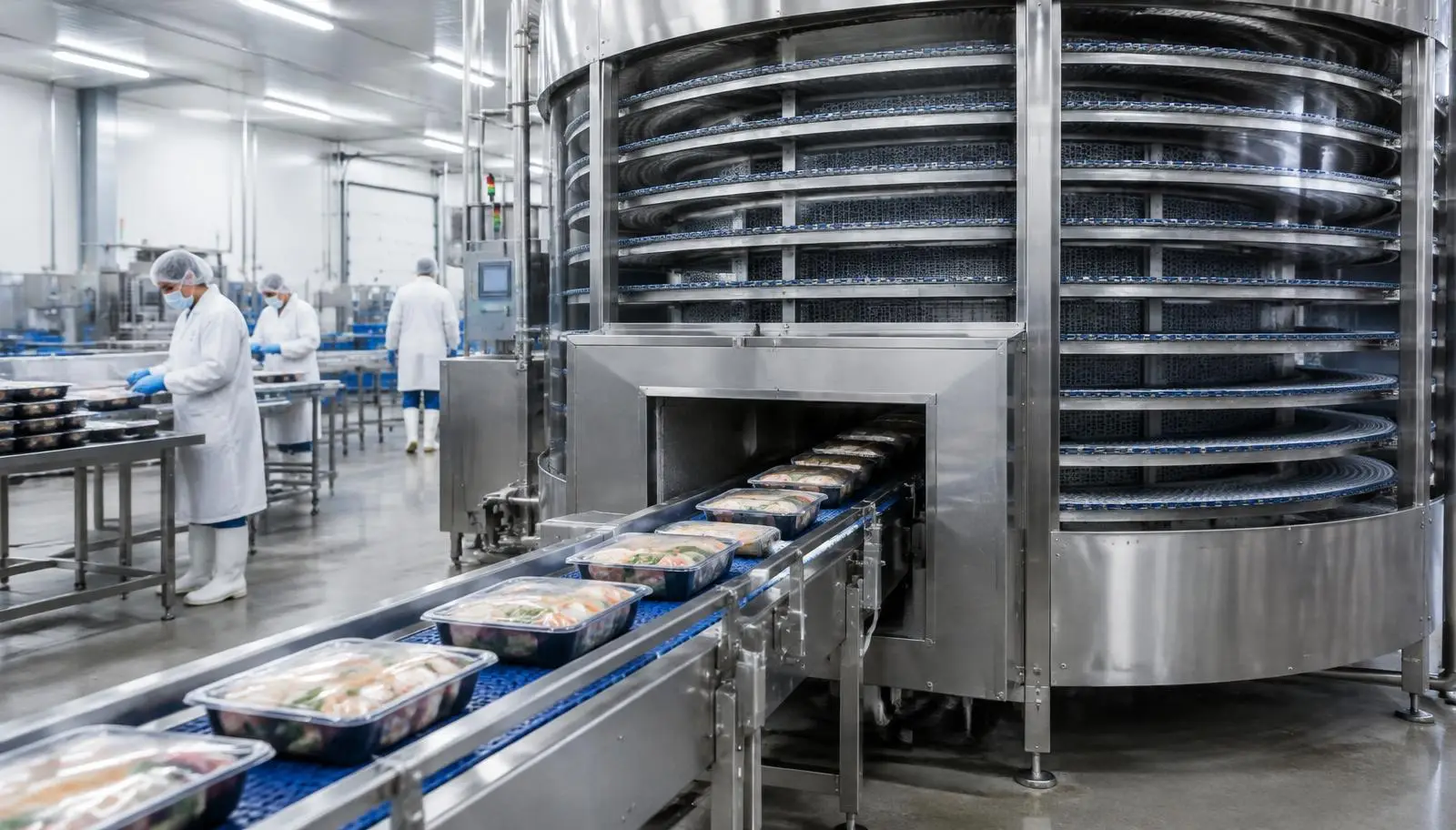
Quick answer
From meat and seafood processing to dairy, bakery and ready meals — a practical guide to specifying refrigeration that meets HACCP, energy and throughput targets. Chilling tunnels at -2 to +2 °C with high-velocity air, followed by blast freezing for export cuts. NH₃ wins on plants above 500 kW; CO₂ packaged systems work well for mid-size processors.
Key takeaways
- Meat and processed protein Chilling tunnels at -2 to +2 °C with high-velocity air, followed by blast freezing for export cuts.
- Seafood and IQF IQF tunnels for shrimp, fish fillets and value-added seafood need -35 to -40 °C with very high air velocity.
- Dairy Chilling at +2 to +4 °C with rapid pull-down.
- Bakery Retarder-provers and freezers at -25 °C for dough storage.
Reviewed: Jun 2026 · ColdMatch Group
Food processors face tighter HACCP enforcement, rising energy costs and shorter delivery windows than ever. The refrigeration choices you make today decide your margin targets for the next 15 years.
Meat and processed protein
Chilling tunnels at -2 to +2 °C with high-velocity air, followed by blast freezing for export cuts. NH₃ wins on plants above 500 kW; CO₂ packaged systems work well for mid-size processors.
Seafood and IQF
IQF tunnels for shrimp, fish fillets and value-added seafood need -35 to -40 °C with very high air velocity. Plate freezers are still the gold standard for whole fish.
Dairy
Chilling at +2 to +4 °C with rapid pull-down. Glycol systems are common for tanks and silos; direct expansion for cold rooms.
Bakery
Retarder-provers and freezers at -25 °C for dough storage. Defrost cycles matter as much as freezing capacity.
Ready meals
Two-stage chilling (+90 °C to +3 °C in under 90 minutes) is mandatory under HACCP. Blast chillers sized to throughput, not just product weight.
Energy and ESG
Variable-speed compressors, heat recovery and solar PV cut energy by 25–40%. Most new projects include all three from day one.
Financing the upgrade
Equipment leasing and project finance fund full retrofits for qualifying food processors — see /financing.
How ColdMatch helps
Submit your brief — we source qualified quotes from global OEMs and EPCs specialised in your category. See Blast Freezer UAE, Refrigeration Saudi Arabia or start your request.
Run the numbers
Calculators for this project type
Indicative planning figures only — final sizing belongs to the supplier's or consultant's detailed design.
Blast freezer cost calculator
Size freezing capacity and indicative cost from daily tonnage, entry and target core temperature.
Energy & backup powerSolar & backup power calculator
Solar-assisted cooling, generator run hours and indicative savings where grid supply is unstable.
Frequently asked questions
Plan the numbers before you send an RFQ
The reference pages buyers use most before requesting quotes.